Sassenpoort
This imposing medieval gate, a symbol of Zwolle's prosperity, once served a surprisingly mundane purpose for the Dutch government.
Full story unlocks in the tour
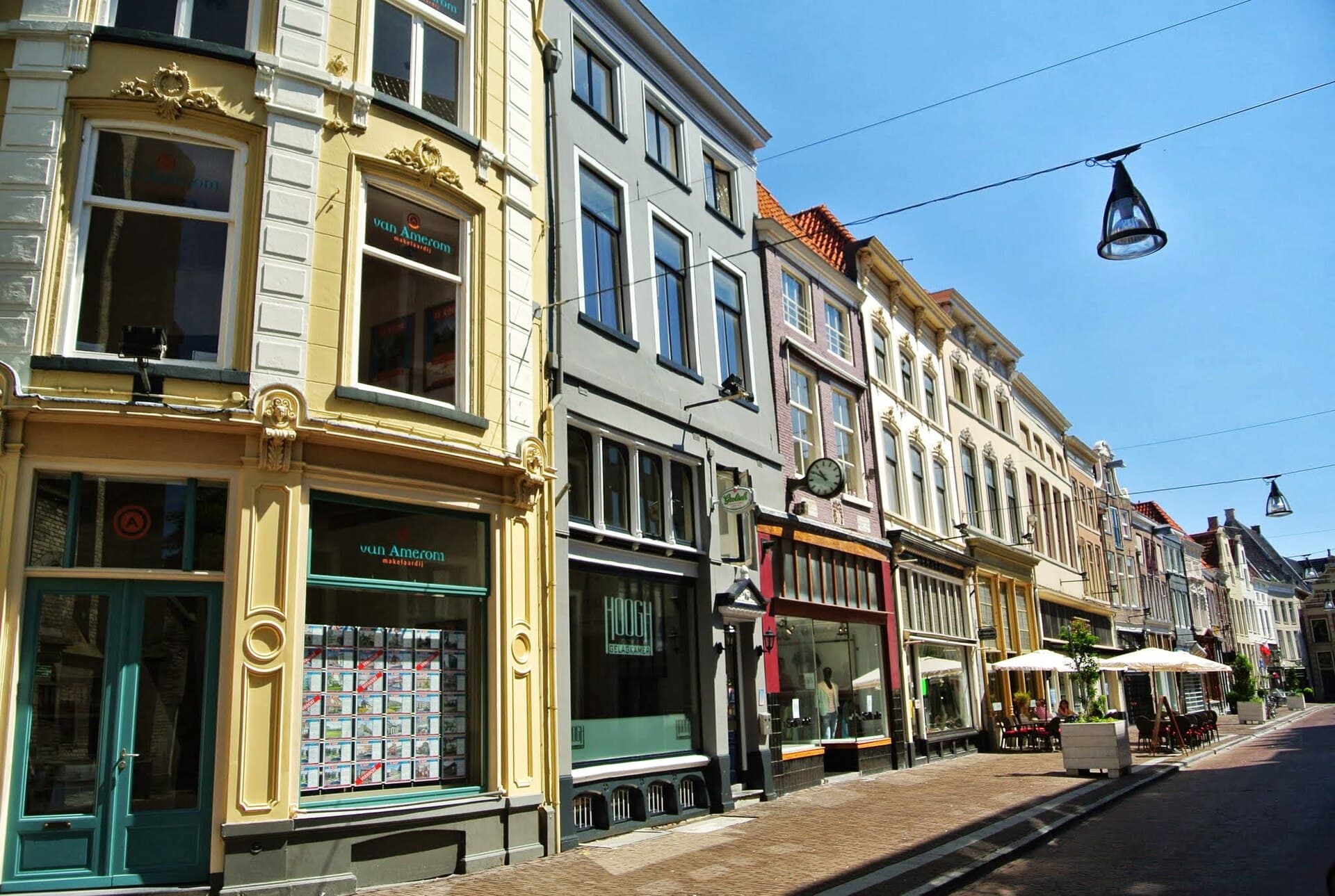 Ben Bender / CC BY-SA 3.0, via Wikimedia Commons
“Beyond the Hanseatic facade, Zwolle keeps its most intriguing stories close.”
Not the postcards. The stories even locals don't know — whispered in your ear, right where they happened.
This imposing medieval gate, a symbol of Zwolle's prosperity, once served a surprisingly mundane purpose for the Dutch government.
The iconic 'Pepperpot' tower, a dominant feature of Zwolle's skyline, received its distinctive shape after a dramatic event.
Locals in Zwolle are known by a peculiar nickname, 'Blauwvingers' (Blue Fingers), stemming from a centuries-old dispute with a neighboring city.
Discover every secret of Zwolle
Every address, every reveal in full — in your ear, right where it happened.
You pick your stops. You walk. The voice reveals what the others miss.
No tours available yet. Check back soon — we're preparing them.
Zwolle, the capital of the Overijssel province, is a city where centuries of existence are etched into its star-shaped canals and preserved medieval architecture. Founded around 800 AD on a sandy ridge that offered protection from river floods, Zwolle grew into a significant Hanseatic city, flourishing as a trade hub. Today, it is a lively urban center with a population of over 129,000, offering a blend of historical character and contemporary culture.
The city's compact historic core, encircled by remnants of its ancient fortifications and a distinctive star-shaped canal, makes it ideal for exploration on foot or by bicycle. Beyond its historical landmarks, Zwolle is recognized for its numerous parks and canals, even earning the title of 'greenest city in Europe' in 2006. From its impressive medieval gate, the Sassenpoort, to the modern art housed within Museum de Fundatie's cloud-like dome, Zwolle presents a unique Dutch experience that balances its enduring past with a spirited present.
The origins of Zwolle trace back to approximately 800 AD, when merchants and troops, possibly from Friesland or led by Charlemagne, established a settlement on a natural hill. This elevation, known as 'Suolle' (meaning 'hill'), was strategically important as it remained dry during the frequent floods from the surrounding rivers IJssel, Vecht, and Zwarte Water. The area had been inhabited much earlier, with evidence of human presence dating back to the Bronze Age.
Zwolle officially gained city rights in 1230 from the Bishop of Utrecht, a reward for its inhabitants' assistance in building fortifications. This marked a turning point, allowing the city to construct its own defensive walls and moats. Its strategic location at the confluence of rivers, providing access to the sea via the former Zuiderzee, made it an ideal transshipment point for goods. This geographical advantage was further leveraged when Zwolle joined the powerful German Hanseatic League in 1407 (or 1294, depending on the source). This membership ushered in a 'Golden Age' for Zwolle, particularly in the first half of the 15th century, as it became a key trading center across the Baltic and North Sea regions.
During this prosperous period, monumental structures like the Sassenpoort gate and St. Michael's Church were constructed. Zwolle also emerged as a significant spiritual and educational center, playing a crucial role in the 'Modern Devotion' religious movement and attracting scholars and students from across Europe. Johan Cele founded the world's first secondary school in Zwolle in the 15th century, drawing students globally.
While the city experienced periods of prosperity, it also faced challenges, including fires set by disgruntled noblemen in 1324 and 1361. The Dutch War of Independence from Spain (1566-1648) also impacted its economy. In more recent history, Zwolle was notably liberated by a single Canadian soldier, Léo Major, during World War II, who was later made an honorary citizen in 2005. By the early 20th century, Zwolle had become a major railway hub, earning it the nickname 'Spoorstad' (Railway City), which attracted industry and fueled its growth into a modern metropolitan area while retaining the character of its historic core.
Begin your exploration at the Sassenpoort, a formidable Gothic brick gate dating back to 1409, a testament to Zwolle's Hanseatic wealth. You can often explore its interior, gaining insight into its defensive past. A short walk will lead you to the Peperbus (Pepperpot) tower, part of the Onze Lieve Vrouwe Basilica. This 75-meter-tall tower is a prominent landmark, and climbing its 236 steps offers expansive views of the city and the surrounding Overijssel countryside.
For art enthusiasts, Museum de Fundatie is a compelling stop, known for its diverse collection spanning from the late Middle Ages to contemporary art, housed in a neoclassical building topped with a striking, cloud-shaped dome. Another unique cultural experience is Waanders In de Broeren, a bookshop housed within a beautifully restored 15th-century Dominican church. Here, you can browse books, enjoy a coffee, and admire the church's original architecture, including impressive ceiling paintings.
Consider a canal cruise to see Zwolle from a different perspective, gliding past historic buildings and under charming bridges. The city also offers numerous parks, such as Park de Wezenlanden and Park Het Engelse Werk, providing green spaces for relaxation and strolls.
While the Herman Brood Museum & Experience has closed, a significant portion of its collection, celebrating the Dutch rock singer and artist Herman Brood, is now housed at IQ Kunstuitleen & Galerie in Zwolle.
The best time to visit Zwolle for warm-weather activities is from late June to early September. During these summer months, average daytime temperatures range from 19°C to 24°C, creating comfortable conditions for sightseeing and outdoor exploration. While rainfall occurs year-round, it is generally not heavy. Spring (March to May) and autumn (September to November) offer cooler, transitional weather with pleasant temperatures. Winters are mild, with average temperatures staying above freezing.
Zwolle is easily accessible by train, with a journey from Amsterdam taking just over an hour. The city center is compact and best explored on foot or by bicycle. Public transport is also available. For those arriving by car, parking facilities are available, though navigating the historic center is often easier without a vehicle. When visiting local shops, especially smaller, independent ones, it's advisable to carry some cash, as not all establishments accept card payments, or may not accept certain debit cards. The city offers a range of accommodation, from hotels to unique stays like the Klein Hotel de Pelsertoren, a former city wall tower. Zwolle is also a good base for day trips to nearby attractions, such as the canal town of Giethoorn.