The Matterhorn Museum – Zermatlantis
The Matterhorn's first ascent in 1865 was a triumph, yet also a tragedy.
Full story unlocks in the tour
 Chensiyuan / CC BY-SA 4.0, via Wikimedia Commons
“Where the Matterhorn ascends and ancient traditions endure.”
Not the postcards. The stories even locals don't know — whispered in your ear, right where they happened.
The Matterhorn's first ascent in 1865 was a triumph, yet also a tragedy.
Zermatt's oldest houses stand on distinctive stilts.
This historic railway holds a special place among European mountain trains.
Discover every secret of Zermatt
Every address, every reveal in full — in your ear, right where it happened.
You pick your stops. You walk. The voice reveals what the others miss.
No tours available yet. Check back soon — we're preparing them.
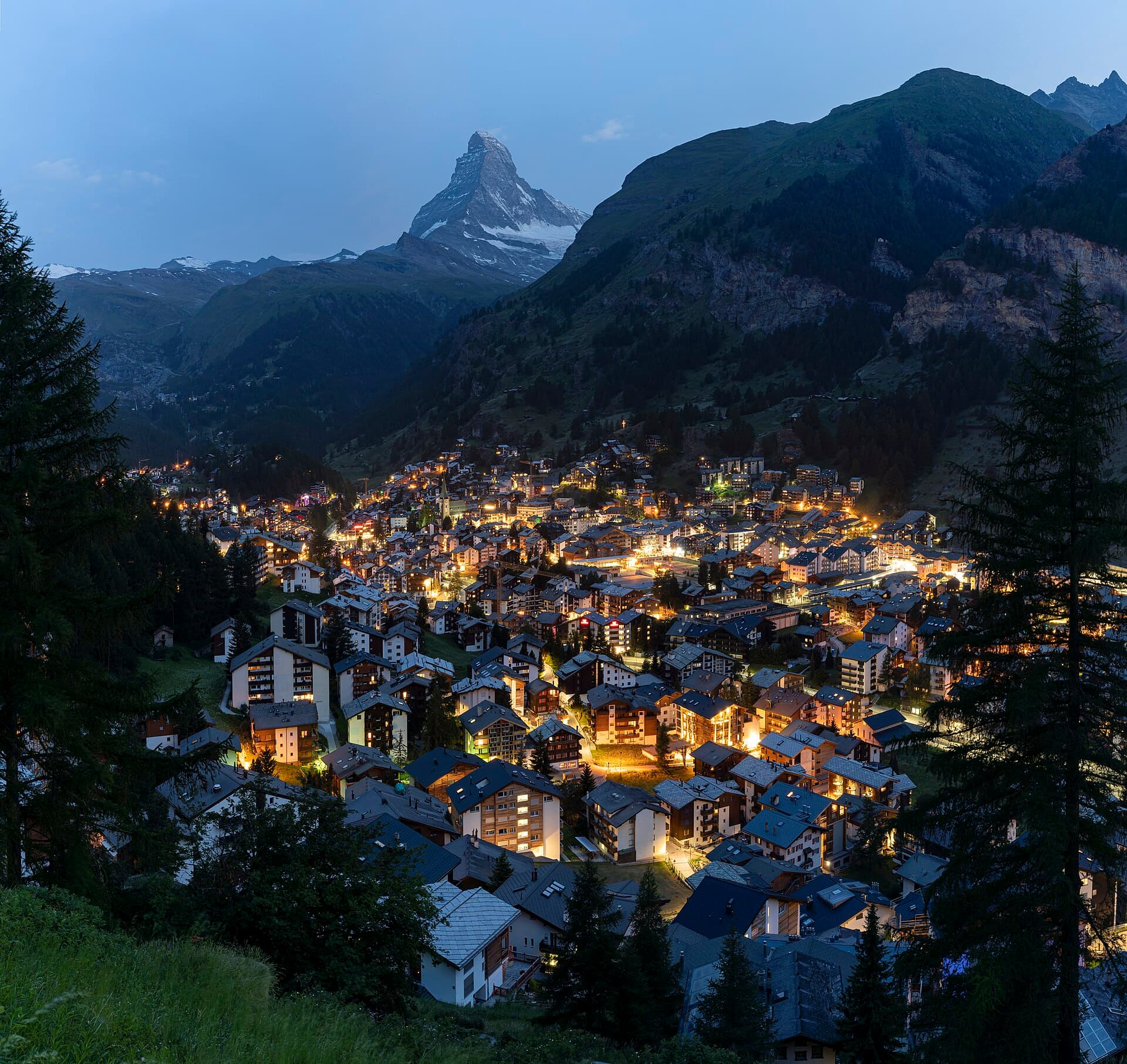
Zermatt, a village free of cars in the Swiss canton of Valais, serves as a celebrated mountain resort. It offers extensive opportunities for skiing, climbing, and hiking. Situated at an elevation of approximately 1,600 meters, it lies below the distinctive, pyramid-shaped Matterhorn peak, which reaches 4,478 meters. The village is nearly encircled by the towering mountains of the Pennine Alps, including Monte Rosa, home to Switzerland's highest peak, Dufourspitze, at 4,634 meters above sea level.
Beyond its dramatic alpine scenery, Zermatt offers a welcoming village atmosphere. Its main thoroughfare, Bahnhofstrasse, is lined with specialty shops, hotels, and eateries, and features a lively après-ski scene. Public outdoor rinks are available for ice-skating and curling, adding to the resort's varied appeal. Zermatt's commitment to being car-free, a policy in effect since 1931, contributes to its peaceful environment, making walks through the village a delightful experience.
For centuries, Zermatt was primarily an agricultural community. The name Zermatt itself, like that of the Matterhorn, comes from the German word "matten," referring to the alpine meadows in the valley. The name first appeared as "Zur Matte" ("at the meadow") and later evolved into Zermatt. Older names for Zermatt, such as Praborno or Prato Borno, also meaning meadow, appeared in ancient maps as early as the 13th century.
The mid-19th century brought a significant change for Zermatt with the arrival of British mountaineers. The village, then a quiet and largely undeveloped mountain community, was explored by these adventurers, most notably Edward Whymper. The Matterhorn was among the last major Alpine mountains to be summited.
On July 14, 1865, Whymper's expedition successfully reached the Matterhorn's summit, an achievement that brought international recognition to Zermatt. However, this triumph was overshadowed by tragedy when four of the seven climbers perished during the descent. This event, which garnered widespread interest, including from Queen Victoria, solidified Zermatt's reputation and initiated an era of tourism.
Following the Matterhorn's ascent, railways were constructed to improve access to the mountain town. In 1891, a narrow-gauge railway connected Zermatt to Visp, significantly reducing travel times and linking Zermatt to broader Swiss and international transport networks. Further enhancing its accessibility, the Gornergrat Railway, Switzerland's first electric rack railway, opened in 1898, climbing nearly 1,500 meters to the Gornergrat summit. By the early 20th century, Zermatt's skiing industry began to flourish, with the first ski classes held and the first full winter season taking place in 1928, establishing its standing as a premier international skiing destination.
The Matterhorn stands as Zermatt's principal attraction, its distinctive pyramid shape captivating all who see it. While visible from various points in the village, including the church square, some of the most expansive panoramic views can be enjoyed from higher elevations like Gornergrat, Sunnegga, and Rothorn. The Gornergrat can be reached via the Gornergrat Railway, Europe's highest open-air railway, providing sweeping views of the Matterhorn and 29 other four-thousand-meter peaks. The Matterhorn Glacier Paradise cable car also offers excellent perspectives of the Matterhorn.
For a glimpse into Zermatt's past, explore the Hinterdorf, the old village, with its traditional Valais mountain farmer houses, some dating from the 16th to 18th centuries. The Matterhorn Museum – Zermatlantis delves into the history of the Matterhorn's ascent and Zermatt's evolution, featuring artifacts from the first ascent. Beyond the striking peak, Zermatt offers numerous hiking trails, including the Zermatt 5-Lakes Trail, and opportunities for paragliding.
Zermatt welcomes visitors throughout the year, with the ideal time depending on individual interests. For skiing and winter sports, December to April offers excellent snowy conditions. July and August are perfect for hiking and enjoying the alpine scenery without winter's chill, with mild temperatures averaging between 8 to 17°C in the village. The shoulder months of April, May, September, and November offer fewer crowds and potentially lower accommodation costs, with pleasant weather for hiking in early autumn.
Zermatt operates as a car-free village. Visitors arriving by car must park in Täsch, approximately 5 kilometers away, and continue their journey by shuttle train or taxi. The train ride from Täsch to Zermatt takes about 12 minutes. Zermatt is also well-connected by train from major Swiss airports like Zurich and Geneva. Within Zermatt, electric taxis, buses, and horse-drawn carriages are available, though the village is quite walkable.
The local currency is the Swiss Franc (CHF). Credit cards, particularly Visa and MasterCard, are widely accepted. While tipping is not strictly necessary as a service charge is usually included in restaurant bills, rounding up to the nearest franc for exceptional service is appreciated. The standard voltage is 230V with a frequency of 50 Hz. Switzerland uses Type C and Type J plugs, so travelers from countries with different standards will need a travel adapter, and potentially a voltage converter for some devices. German is the official language, but English and French are also commonly spoken, especially in the hospitality sector.