Stone Town's Doors
The elaborate brass studs on Zanzibar's famous carved doors aren't merely decorative.
Full story unlocks in the tour
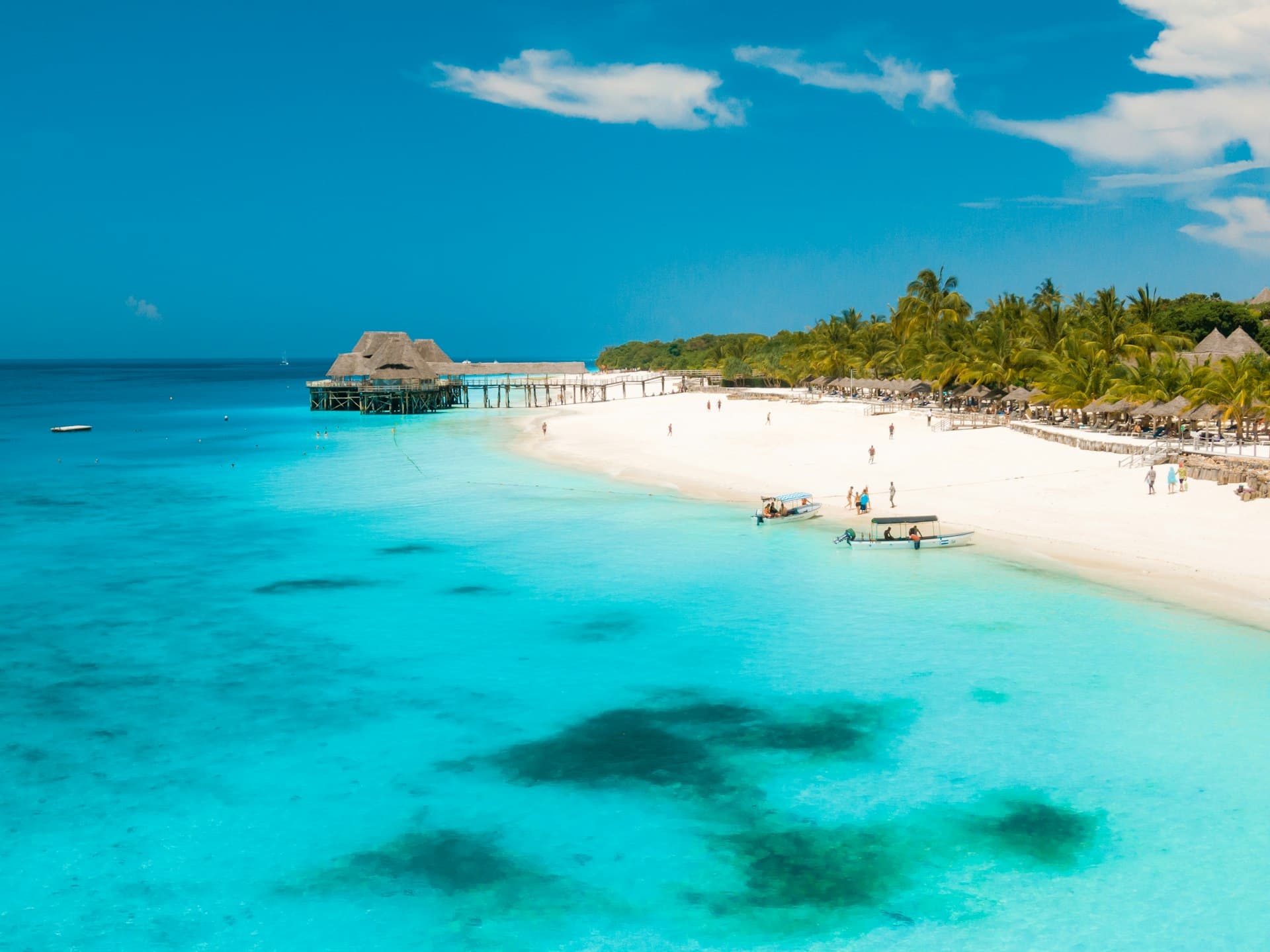 Photo: Humphrey M / Unsplash
“Where ancient trade winds whisper through carved doors and turquoise waters meet a storied past.”
Not the postcards. The stories even locals don't know — whispered in your ear, right where they happened.
The elaborate brass studs on Zanzibar's famous carved doors aren't merely decorative.
This grand palace in Stone Town holds a surprising record in global history.
Beneath the sturdy walls of Stone Town's Old Fort lie remnants of a much older structure, with a linguistic twist.
Discover every secret of Zanzibar
Every address, every reveal in full — in your ear, right where it happened.
You pick your stops. You walk. The voice reveals what the others miss.
No tours available yet. Check back soon — we're preparing them.
Zanzibar, an archipelago off the coast of East Africa, is a place where history and natural beauty intertwine. Comprising numerous small islands and two larger ones, Unguja (often referred to as Zanzibar Island) and Pemba Island, its capital, Zanzibar City, is home to the UNESCO World Heritage site of Stone Town. This semi-autonomous region of Tanzania offers a captivating blend of Swahili, Arab, Persian, Indian, and European influences, evident in its architecture, cuisine, and culture.
Beyond the intricate alleys of Stone Town, Zanzibar offers white-sand beaches, clear turquoise waters, and coral reefs, making it a popular destination for relaxation and water activities. The island's fertile soil also earned it the moniker 'The Spice Islands,' a legacy of its historical spice cultivation, particularly cloves. From exploring ancient ruins to swimming with dolphins, Zanzibar offers a diverse range of experiences for every traveler.
However, beneath its picturesque surface lies a complex past, deeply marked by its role as a major hub in the East African slave trade for centuries. Remnants of this history are preserved in Stone Town, offering a sobering yet essential understanding of Zanzibar's journey.
Zanzibar's strategic location in the Indian Ocean made it a natural hub for trade and cultural exchange for millennia. Archaeological findings suggest human habitation on the islands dating back at least 20,000 years, with Bantu-speaking peoples from the mainland settling by the first millennium BCE. From the 9th century, Swahili merchants on Zanzibar acted as brokers for long-distance traders from the African hinterland and the Indian Ocean world. Persian, Indian, and Arab traders frequented Zanzibar to acquire East African goods like gold, ivory, and ambergris.
The arrival of Vasco da Gama in 1498 marked the beginning of European influence, and Zanzibar became part of the Portuguese Empire in 1503 or 1504, remaining under their control for almost two centuries. In 1698, the Sultanate of Oman gained control, expelling the Portuguese. Under Omani rule, Zanzibar flourished as a center of commerce and culture, with Sultan Seyyid Said moving his capital from Muscat to Stone Town in 1840. This era saw the significant expansion of clove plantations, cementing Zanzibar's reputation as a 'Spice Island.'
However, the Omani period was also deeply marked by Zanzibar's central role in the East African slave trade. For centuries, it served as a major hub where thousands of enslaved people were captured, sold, and transported across the Indian Ocean. By the 18th and 19th centuries, Zanzibar was the largest slave trading center in East Africa, with most of the trade controlled by Arab traders. Enslaved people were brought from the African interior, held in cramped underground cells, and sold at public markets. International pressure, particularly from Britain, led to decrees banning the slave trade in 1873, though slavery continued in secret for years and was not fully abolished until 1909.
In 1890, Zanzibar became a British protectorate. British rule brought changes, including the formal abolition of slavery in 1897 and the introduction of Western education. Zanzibar gained independence from Britain as a constitutional monarchy in December 1963. This was short-lived, as the Zanzibar Revolution in January 1964 overthrew the Sultanate, leading to the establishment of the People's Republic of Zanzibar. In April 1964, the republic merged with mainland Tanganyika to form the United Republic of Tanzania.
Stone Town, a UNESCO World Heritage site, is a labyrinth of narrow streets, bustling markets, and ancient buildings, best explored on foot. Key landmarks include the Darajani Market, the Old Fort, and the former Slave Market and its museum, which offers a poignant look into the island's past. The House of Wonders, once a ceremonial palace, is a prominent building facing the Forodhani Gardens, known for being the first in East Africa with electricity and an elevator.
For wildlife enthusiasts, Jozani Forest (Jozani-Chwaka Bay National Park) is the only place in the world to spot the critically endangered Zanzibar red colobus monkey. Local guides can help you find these playful primates and share insights into the forest's ecosystem. Beyond Stone Town, consider a spice farm tour to learn about the island's aromatic heritage. For marine adventures, snorkeling or diving at Mnemba Atoll is highly recommended for its coral reefs and diverse marine life. Sunset dhow cruises offer a traditional way to experience the coastal beauty.
The best time to visit Zanzibar is during the dry season, from June to October. During these months, the weather is pleasantly warm with average daytime temperatures between 28–32°C (82–89°F), low humidity, and minimal rainfall, making it ideal for beach activities, snorkeling, and exploring Stone Town. There's also a shorter dry season in January and February, which is hotter but still offers minimal rainfall and excellent diving conditions. The 'long rains' occur from March to May, and 'short rains' in November, with hotel rates often lower during these periods.
The official currency of Zanzibar is the Tanzanian Shilling (TZS). While US Dollars are widely accepted in the tourism sector, particularly for larger expenses like hotels, it's advisable to carry Tanzanian Shillings for smaller purchases, local markets, and transactions in rural areas. Only USD banknotes from 2017 or newer are accepted for cash payments. Currency exchange is available at the airport and in Stone Town.
Tipping is not compulsory in Zanzibar but is highly appreciated for good service. For tour guides and drivers, a tip of $5–$10 per person per day is suggested. In restaurants, a 10% tip is customary, while for hotel staff, $5–$10 per night per person for a shared tip box is a nice gesture. Haggling is an integral part of culture in local markets, where starting at half the quoted price and negotiating respectfully is common.