Giewont Mountain
The imposing Giewont peak, visible from much of Zakopane, holds a secret far older than its visible cross.
Full story unlocks in the tour
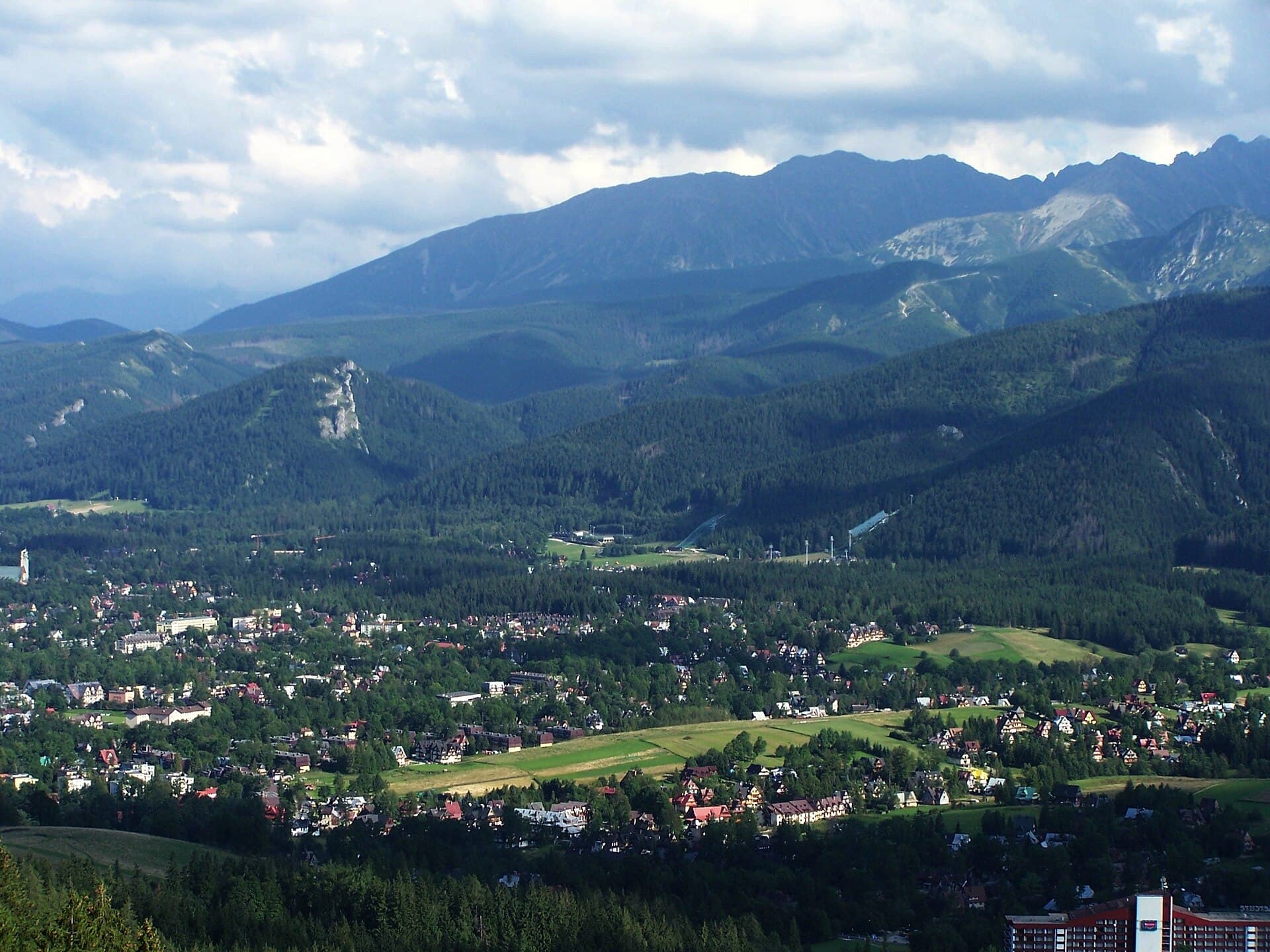 Jerzy Opioła / CC BY-SA 4.0, via Wikimedia Commons
“Where the wild heart of the Tatras beats alongside a Highlander soul.”
Not the postcards. The stories even locals don't know — whispered in your ear, right where they happened.
The imposing Giewont peak, visible from much of Zakopane, holds a secret far older than its visible cross.
Along Zakopane's main street, vendors sell a distinct smoked sheep's cheese, but its true authenticity is a closely guarded secret.
The very name of this mountain town carries a meaning that hints at its origins and unique character.
Discover every secret of Zakopane
Every address, every reveal in full — in your ear, right where it happened.
You pick your stops. You walk. The voice reveals what the others miss.
No tours available yet. Check back soon — we're preparing them.
Zakopane, often called the "Winter Capital of Poland," is a town in the southern part of the Podhale region, at the foot of the Tatra Mountains. This popular destination, situated at an altitude of 750-1126 meters above sea level, is Poland's highest town. It draws over 2.5 million visitors annually, who come for year-round outdoor activities and its unique blend of mountain landscapes, traditional architecture, and local culture.
Beyond its reputation as a ski resort and hiking hub, Zakopane offers an immersive journey into the distinctive Highlander (Góral) culture. The town's unique architectural style, known as Zakopane Style, is a testament to this connection, featuring wooden villas with intricate carvings and steep roofs. From the lively Krupówki Street to the serene mountain trails, Zakopane presents a captivating fusion of ancient myths and modern life.
The first settlers arrived in the Zakopane area as early as the 15th century, with the region initially serving as a refuge for shepherds seeking shelter from the harsh mountain conditions. The settlement was granted rights in 1578. By 1676, it was a village of 43 inhabitants.
Zakopane began to develop more significantly in the 18th century with the discovery of copper, silver, and gold in the Tatras, leading to mining activities in areas like Kościeliska and Chochołowska Valleys. An ironworks was established in the 18th century where Kuźnice stands today, further contributing to the region's metallurgy industry. By the 19th century, Zakopane had become the largest metallurgy center in Galicia.
The town's transformation into a climatic health resort began in the late 19th century, attracting patients suffering from tuberculosis. Dr. Tytus Chałubiński, often called the "discoverer of Zakopane," played a crucial role in popularizing the area from 1873 onwards. The completion of a railway track from Kraków in 1898 dramatically increased tourism, with visitor numbers surging from 1,600 in 1898 to over 10,000 by 1900.
The 1930s marked a sudden boom in skiing, solidifying Zakopane's status as the "winter capital of Poland." Major investments before World War II included the construction of the cableway to Kasprowy Wierch in just six months in 1936, and a chair rail to Gubałówka in 1938. During World War II, Zakopane was a center of resistance and served as an underground staging point between Poland and Hungary, with Highlanders acting as couriers smuggling information through the Tatras.
After the war, Zakopane continued to thrive as a tourist destination, initially for Polish visitors, and increasingly for international travelers after the collapse of communism in 1989. Today, it remains a central point, drawing inspiration from the Tatra Mountains and the enduring Highlander culture.
Zakopane offers a variety of sights, from bustling streets to serene mountain vistas. Krupówki Street is the pedestrian heart of Zakopane, lined with local restaurants, souvenir shops, and cafes. Here, you can sample traditional Oscypek cheese, often served grilled with cranberry jam.
For sweeping views of the Tatra Mountains and Zakopane, take the funicular up Gubałówka Hill. Another popular ascent is the cable car to Kasprowy Wierch, offering access to high-altitude skiing in winter and hiking in summer. Within the Tatra National Park, explore trails leading to natural wonders like Morskie Oko, the largest lake in the Tatra Mountains, known for its clear waters. The Chochołowska Valley, one of the longest valleys in the Tatras, is a haven for hikers and cyclists, dotted with forests, hills, and mountain streams.
Beyond natural beauty, Zakopane showcases its unique architectural heritage. Visit the Willa Koliba, the first building constructed in the distinctive Zakopane Style, or the Wooden Chapel in Jaszczurówka, a beautiful example of intricate wood carvings. For an insight into local culture, visit the Oscypek Museum to learn about the traditional cheese-making process.
Zakopane is a year-round destination, with each season offering a different experience. Summer (June-September) is ideal for hiking, with mild temperatures between 18-24°C in town. July and August are peak season, while September offers golden light and fewer crowds. Winter (December-March) is prime for skiing, with abundant snow, though the town can be very cold. December and the Polish school winter breaks in late January and February are particularly busy. Spring (April-May) sees melting snow and blooming valleys, a quieter period, though conditions can be unpredictable. Autumn (October-November) can be sunny or bring early snowfalls in the mountains.
Getting to Zakopane is straightforward, with the nearest airport being Krakow Balice, about 100km away. The journey from Krakow Balice to Zakopane can take less than 2 hours in good conditions. FlixBus offers multiple routes to this mountain resort town. Once in Zakopane, minibuses are a frequent and convenient way to get around, or you can opt for a taxi. For exploring the Tatra National Park, a daily or weekly pass is required and can be purchased at park entry points. It's advisable to check the mountain weather forecast before hiking, as conditions can change rapidly. While many places accept cards, carrying some Polish zloty (cash) is recommended for smaller shops and markets.