Campo Santo (Old Yungay Cemetery)
When the mountain fell, almost all of Yungay was buried, yet one spot remained miraculously untouched. Why?
Full story unlocks in the tour
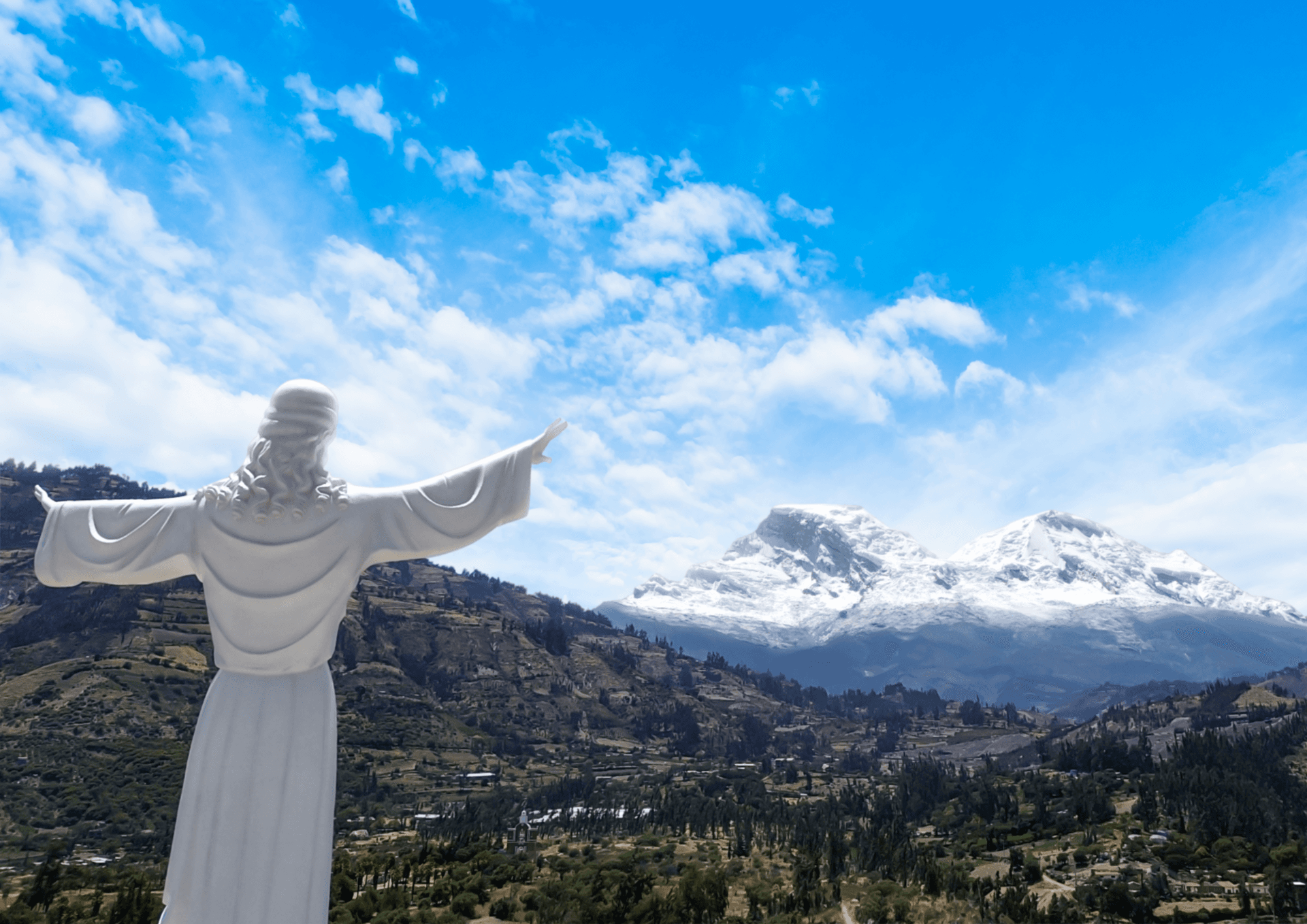 Llilbert / CC0, via Wikimedia Commons
“Where a mountain's roar silenced a town, and life found a new echo.”
Not the postcards. The stories even locals don't know — whispered in your ear, right where they happened.
When the mountain fell, almost all of Yungay was buried, yet one spot remained miraculously untouched. Why?
Before the 1970 disaster, two American scientists issued a dire warning about Yungay's fate. What happened when they tried to alert the authorities?
Amidst the devastation of the 1970 avalanche, a small cluster of palm trees stood firm, seemingly defying the immense force of nature. What makes their survival particularly poignant?
Discover every secret of Yungay
Every address, every reveal in full — in your ear, right where it happened.
You pick your stops. You walk. The voice reveals what the others miss.
No tours available yet. Check back soon — we're preparing them.
Yungay, also known as Yungay Nuevo, is a town in the Ancash Region of north-central Peru, resting in the Callejón de Huaylas valley. It settles at an elevation of approximately 2,500 meters (around 8,200 feet) above sea level, alongside the Río Santa. To its east, the snow-capped peaks of the Cordillera Blanca ascend, with Huascarán, Peru's highest mountain, situated just 15 kilometers away. Today, Yungay serves as a doorway to the Huascarán National Park, a UNESCO World Heritage Site, granting passage to high-altitude natural landscapes, glacial lakes, and prominent mountain peaks.
The modern town of Yungay carries a profound and somber history. The original town was tragically interred on May 31, 1970, by a catastrophic debris avalanche triggered by a magnitude 7.9 earthquake. This event, which claimed an estimated 18,000 to 20,000 lives in Yungay alone, reshaped the landscape and the community. The new town was rebuilt about 1 to 2 kilometers north of the destroyed city on higher, more secure ground. The site of the old town now stands as a national cemetery and memorial, a silent testament to the lives lost.
The area surrounding Yungay holds significant archaeological importance. The Guitarrero Cave, near Yungay, is recognized for containing some of the oldest cultural vestiges in America, dating back to approximately 10,000 BCE, suggesting it was a cradle of early agriculture. The town of Yungay itself was established on August 4, 1540, by Fray Domingo de Santo Tomas.
Yungay played a role in 19th-century South American conflicts. On January 20, 1839, the Battle of Yungay occurred near the town during the War of the Confederation. The 'Restoration' army, a Chilean-Peruvian force, defeated the army of the Peru-Bolivian Confederation, leading to the dissolution of the short-lived confederacy.
The grand Mount Huascarán, while a source of beauty, has also been a harbinger of disaster for Yungay. On January 11, 1962, a tremendous avalanche of ice and rock from Huascarán obliterated the village of Ranrahirca and eight other nearby villages, claiming an estimated 4,000 lives. This event served as a chilling precursor to the tragedy that would strike eight years later.
On May 31, 1970, a powerful earthquake, registering 7.7 to 7.9 on the Richter scale, struck off the coast of Peru. The earthquake triggered a catastrophic debris avalanche from the north peak of Huascarán. A mass of glacial ice and rock, estimated at 50 to 100 million cubic meters, broke loose and hurtled down the mountain at speeds exceeding 280 to 335 kilometers per hour (170 to 200 miles per hour). The avalanche swept 14.5 kilometers (9 miles) to Yungay, interring the entire town and approximately 18,000 to 20,000 of its inhabitants under meters of mud, rock, and water in less than four minutes. Only about 400 people survived, primarily those who were in the cemetery or the local stadium, which were on higher ground. The Peruvian government later declared the site of the old town a national cemetery, prohibiting excavation and reconstruction. The current town of Yungay was subsequently rebuilt on a safer location to the north.
Yungay offers a poignant blend of remembrance and natural grandeur. The primary site of historical significance is Campo Santo, the memorial and national cemetery marking the location of the old town interred by the 1970 avalanche. Here, you can observe the four surviving palm trees and the Christ of Yungay statue, which miraculously withstood the disaster. The area serves as a powerful testament to the tragedy and a place for quiet reflection.
For those seeking natural beauty and adventure, Yungay is a key access point to Huascarán National Park. Within the park, the Llanganuco Lakes (Laguna Chinancocha and Laguna Orconcocha) are known for their luminous turquoise waters set against a backdrop of snow-capped mountains. Another popular and challenging trek is to Laguna 69, recognized for its striking glacial lake and expansive mountain views. Other notable attractions in the region include the Punta Unión Pass, the highest point of the Santa Cruz Trek offering views of 6,000-meter peaks, and the Pastoruri Glacier.
The optimal time to visit Yungay, and the Peruvian Andes generally, is during the dry season, which extends from May to October. During these months, you can anticipate clearer skies, less rain, and agreeable temperatures, making it ideal for outdoor pursuits like hiking and exploring the national park. The height of the dry season, with the clearest weather, is typically from June through August. While nights at high altitudes can be cool, daytime temperatures are comfortable. The shoulder months of April and October can also be favorable, offering lush landscapes and fewer crowds, though with a higher chance of occasional showers.
Yungay is situated at a high altitude (approximately 2,500 meters or 8,200 feet), so it is important to take precautions against altitude sickness. Stay hydrated and avoid strenuous activities for your first couple of days. The official languages are Spanish, but Quechua is also spoken in the region. The local currency is the Peruvian Sol (PEN).
To reach Yungay, you can take a bus from Lima to Huaraz (approximately 8-10 hours), and then a local bus or taxi for the one-hour journey to Yungay. While Peru generally advises a high degree of caution due to violent crime, especially in larger cities like Lima, it is advisable to avoid large gatherings and protests, monitor local media, and follow the advice of local authorities. Always carry your passport or a valid ID. When traveling by bus, use reputable companies and consider avoiding overnight travel in mountainous regions.