Kinrin Lake
Yufuin's Kinrin Lake is famous for its morning mist, but the reason behind it isn't just the cool air.
Full story unlocks in the tour
 Tomo / CC BY 2.0, via Wikimedia Commons
“Where mist-shrouded lakes reflect the sky, and art finds a quiet home.”
Not the postcards. The stories even locals don't know — whispered in your ear, right where they happened.
Yufuin's Kinrin Lake is famous for its morning mist, but the reason behind it isn't just the cool air.
This charming village, inspired by the Cotswolds, has a peculiar resident that isn't a sheep or a squirrel.
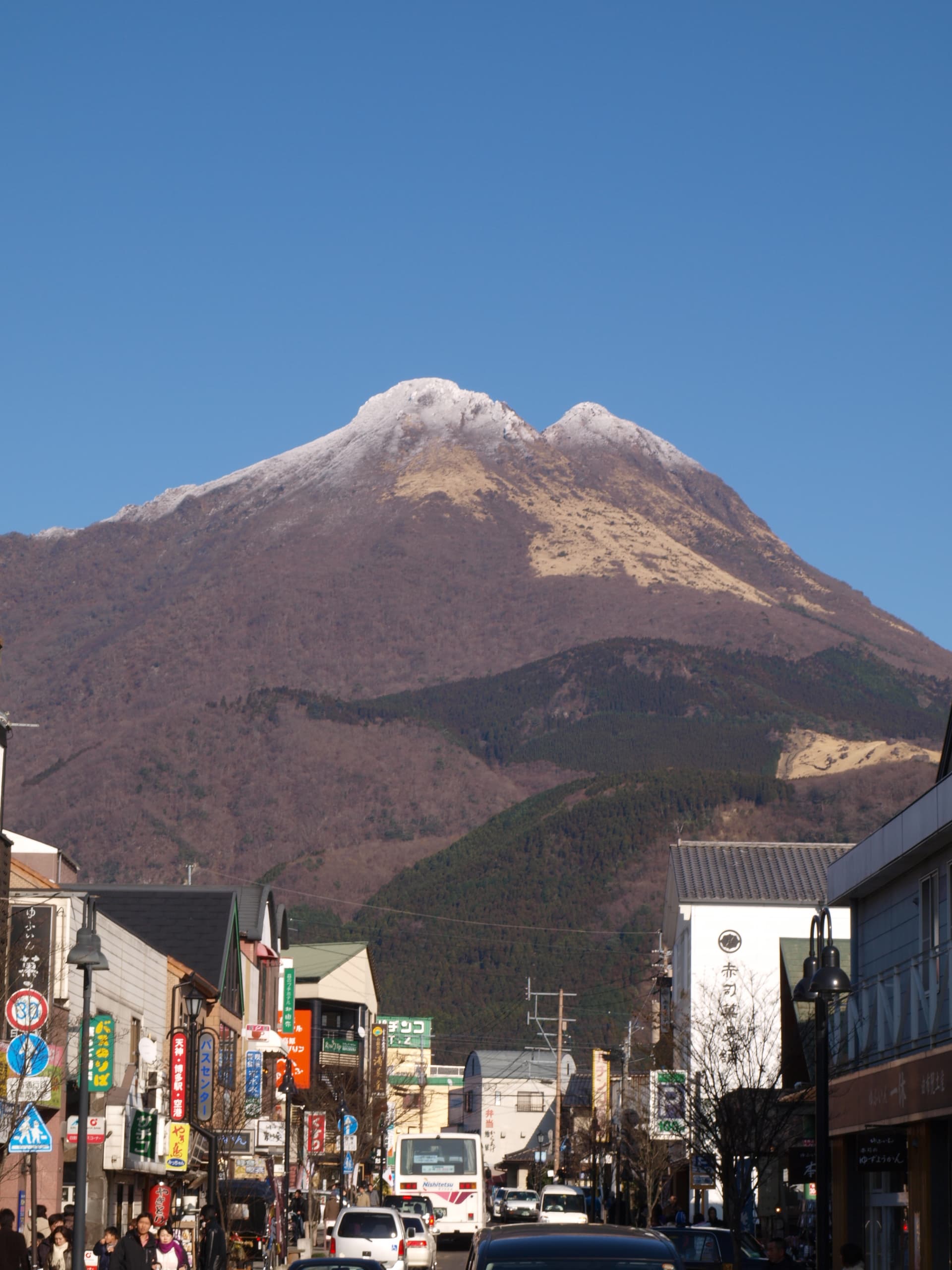
Mount Yufu, the iconic twin-peaked mountain overlooking Yufuin, holds a surprising connection to local folklore beyond its scenic beauty.
Discover every secret of Yufuin
Every address, every reveal in full — in your ear, right where it happened.
You pick your stops. You walk. The voice reveals what the others miss.
No tours available yet. Check back soon — we're preparing them.
Yufuin, situated in a valley beneath the twin peaks of Mount Yufu in Oita Prefecture, is a serene onsen town that offers a different rhythm from Japan's bustling cities. Known for its artistic character and natural splendor, it draws visitors seeking relaxation and a connection with the landscape. The town avoids large hotel chains, favoring smaller, more intimate ryokan and pensions that blend into the surroundings.
Beyond its therapeutic hot springs, Yufuin is a center for art and independent boutiques. Walking along its main street, Yunotsubo Kaido, reveals an array of craft shops, galleries, and cafes, each with its own distinct personality. The town's dedication to preserving its tranquil atmosphere is evident in its thoughtful urban planning, which prioritizes sweeping views and pedestrian-friendly paths.
Yufuin's origins trace back to a quiet agricultural community, much like many rural areas in Japan. Its transformation began in the mid-20th century, not with a sudden explosion, but with a deliberate vision. Unlike other hot spring resorts that focused on large-scale tourism, a group of local residents and artists envisioned Yufuin as a cultural and artistic sanctuary, emphasizing harmony with its natural environment.
This vision gained momentum in the 1970s and 80s, as artists, writers, and craftspeople were drawn to the town's tranquil atmosphere and inspiring landscapes. They established studios, galleries, and unique shops, contributing to Yufuin's growing standing as a creative center. The annual Yufuin Eiga Matsuri (Film Festival), established in 1976, further solidified its cultural identity, attracting filmmakers and cinephiles.
The town's development has been carefully managed to avoid over-commercialization. There's a conscious effort to maintain its character by limiting large developments and encouraging small, independent businesses. This philosophy has allowed Yufuin to retain its distinct personality, offering a blend of traditional Japanese hospitality with a contemporary artistic sensibility. The preservation of its natural allure, particularly the views of Mount Yufu and the calm Kinrin Lake, remains central to its appeal.
Begin your exploration at Kinrin Lake, a picturesque body of water known for its morning mist, fed by both hot and cold springs. The lake's surface often mirrors the surrounding trees and the sky, creating a calm vista. Wander along Yunotsubo Kaido, the main shopping street, where you'll discover an array of artisan shops selling local crafts, unique souvenirs, and delicious regional snacks. Do not overlook the Yufuin Floral Village, a delightful, European-inspired area with small shops and cafes, and even an owl forest. For art enthusiasts, the Yufuin Art Museum showcases contemporary Japanese art, while the Comico Art Museum Yufuin features works by renowned artists like Takashi Murakami and Hiroshi Sugimoto. A visit to a local ryokan for a traditional onsen experience is also highly recommended.
Yufuin is appealing throughout the year. Spring (March to May) brings cherry blossoms and pleasant temperatures. Autumn (September to November) offers brilliant fall foliage, making it a particularly scenic time. Winter (December to February) is ideal for experiencing the onsen, especially when the mist rises from Kinrin Lake. Summer (June to August) is warm, but the surrounding greenery is lush.
Yufuin is easily accessible by train from Fukuoka, with the scenic Yufuin no Mori limited express offering a direct route. The town itself is best explored on foot or by bicycle, with many rental shops available. While some establishments accept credit cards, it's advisable to carry some cash, especially for smaller shops and cafes. English is not widely spoken, so having a translation app or a phrasebook can be helpful. Many ryokan offer dinner and breakfast, so consider booking a stay that includes meals.