Stora Norregatan
Among Ystad's many half-timbered houses, one particular facade reveals a subtle, enduring detail.
Full story unlocks in the tour
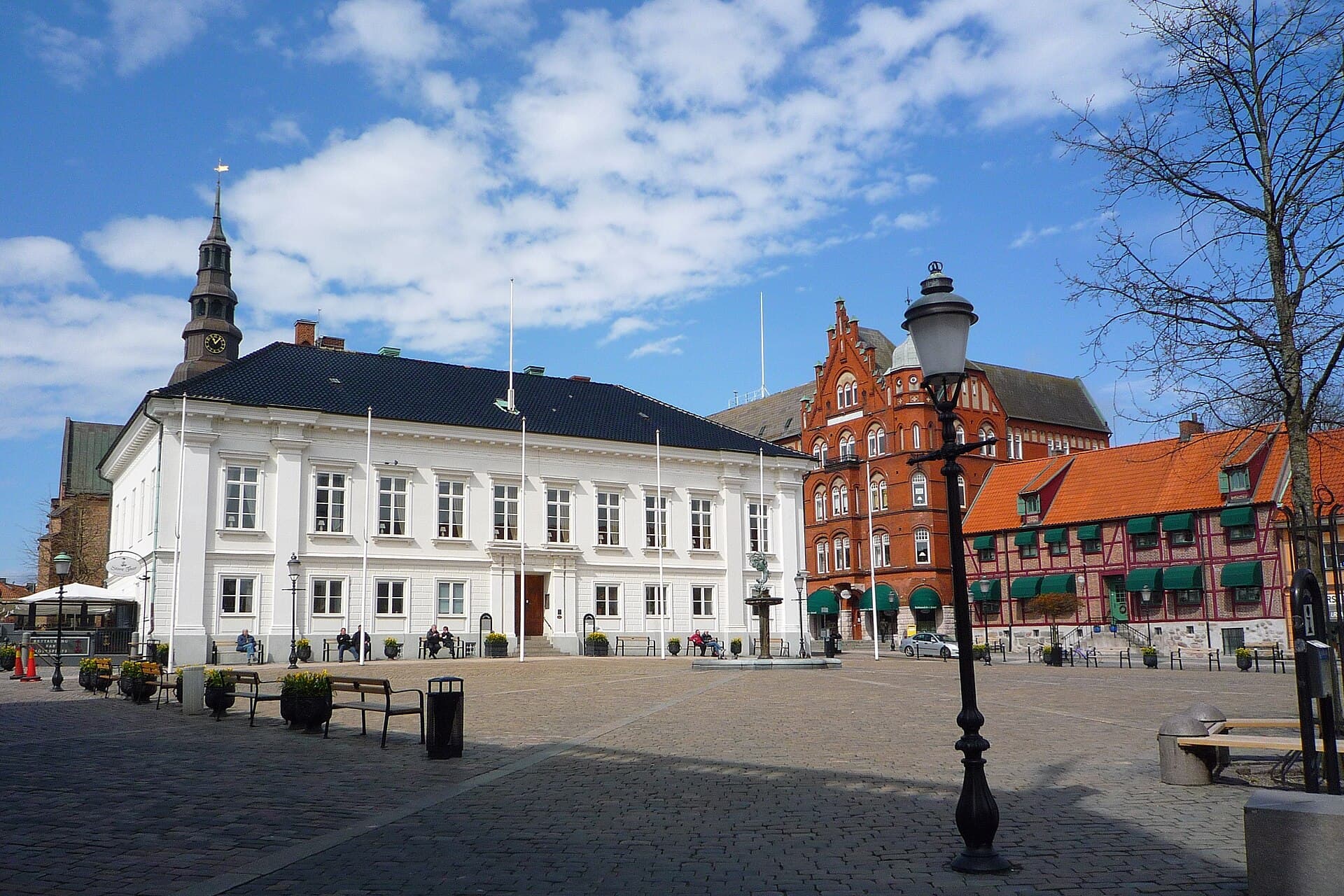 Mickaël Delcey (Silverkey) / CC BY-SA 3.0, via Wikimedia Commons
“Where ancient stones meet the coastal breeze on Sweden's southern edge.”
Not the postcards. The stories even locals don't know — whispered in your ear, right where they happened.
Among Ystad's many half-timbered houses, one particular facade reveals a subtle, enduring detail.
This central plaza, now a tranquil gathering place, once played a more clandestine role in European commerce.
Beyond its venerable streets, Ystad maintains a surprising connection to global entertainment, earning it a unique reputation.
Discover every secret of Ystad
Every address, every reveal in full — in your ear, right where it happened.
You pick your stops. You walk. The voice reveals what the others miss.
No tours available yet. Check back soon — we're preparing them.
Ystad, a coastal town in Skåne County, Sweden, offers a distinctive convergence of long-standing human history and the serene beauty of the shore. With roots reaching back to the 11th century, it functions as both a busy ferry terminal and a local administrative center. Travelers can wander its inviting streets, absorb the expansive coastal vistas, and delve into its deep historical layers. The town's scenic character makes it a favored destination for those seeking both cultural depth and natural allure.
Often recognized as "Wallander Country" due to its role as the backdrop for Henning Mankell's celebrated detective series, Ystad draws admirers who come to tread the same pathways as their cherished fictional inspector. Beyond its modern cultural prominence, Ystad captivates with its well-preserved medieval architecture, including hundreds of timber-framed houses and stone-paved lanes that evoke a sense of journeying into the past.
Ystad's narrative begins in the 11th century as a modest settlement, though its formal documentation dates to 1244 during a royal visit by King Eric. Its strategic position along the coast swiftly established it as a significant center for fishing and trade throughout the Middle Ages. In 1267, the Franciscan monastery, Gråbrödraklostret (Greyfriars Abbey), was established, and by the 14th century, Ystad had joined the influential Hanseatic League, a powerful confederation of trading cities across Northern Europe.
The town's importance continued its ascent, receiving a charter in 1599 that granted it the right to export oxen. For centuries, Ystad, along with the rest of Scania, remained under Danish sovereignty. This changed in 1658 when, following the Treaty of Roskilde, the region was transferred to Sweden. This enduring Danish influence, combined with subsequent Swedish development, contributed to Ystad's particular architectural character, defined by its many timber-framed houses.
The 19th century brought further expansion, with a railway connection established by 1866 and the town becoming a military garrison in the 1890s. After World War II, Ystad broadened its function as a ferry port, initiating services to Świnoujście in Poland and the Danish island of Bornholm. Today, Ystad maintains its identity as a bustling ferry terminal, a local administrative hub, and a popular destination for travelers, recognized for its preserved medieval character and its role in contemporary culture.
A walk through Ystad's core reveals its carefully maintained medieval street plan and buildings. Begin at Stortorget, the main square, encircled by structures of historical significance. Nearby stands the 13th-century Church of the Virgin Mary (Mariakyrkan), Ystad's oldest preserved building and one of Scania's earliest brick churches. Observe the enduring tradition of the tower watchman, who still sounds a nightly horn every 15 minutes until 1 AM, a custom reaching back to the 18th century.
Another important medieval structure is the Greyfriars Abbey (Gråbrödraklostret), established in 1267. This well-maintained monastery now houses a museum chronicling the town's past and features gardens designed in a medieval style. Explore Per Helsas Gård, a wonderfully restored section of timber-framed houses adorned with roses and climbing plants, offering a glimpse into earlier periods. For those interested in film, the Ystad Studios Visitor Center provides insights into the town's role as a filmmaking hub, especially for the 'Wallander' series.
Just beyond the town, approximately 11 miles (18 kilometers) to the east, lies Ales Stenar, a megalithic monument from the Nordic Iron Age. This 67-meter-long stone ship, composed of 59 large sandstone boulders, is a compelling location with an unknown purpose, possibly a burial ground for an ancient leader.
The most favorable time to visit Ystad for outdoor activities spans from late June to late August. During these months, average daytime temperatures range from 18°C to 21°C (64°F to 70°F), with July typically being the warmest month. While this period offers the most pleasant weather, it also coincides with higher numbers of Swedish tourists enjoying their summer breaks. Spring (April-June) provides mild, agreeable weather ideal for exploring historical sites, and autumn (September-November) offers a similar experience. Winters are cold but create a cozy atmosphere for indoor pursuits and museums.
Ystad is readily accessible by train, with connections from Stockholm (approximately 5.5 hours, requiring changes in Lund or Malmö) and Copenhagen (about 1.5 hours across the Øresund Bridge). The town is compact enough for exploration on foot, and many points of interest are within easy reach of the railway station. For those wishing to venture beyond the town, Ystad serves as a ferry port with services to Bornholm, Denmark, and Świnoujście, Poland.
The Ystad Visitor Center, situated in St. Knuts Torg, is an excellent resource for maps, brochures, and certified tourist information in multiple languages, including English, German, and Polish. While dining out can be costly in Scandinavia, Ystad provides a variety of restaurants and cafes. Be aware that full-strength alcoholic beverages are primarily sold at state-owned Systembolaget stores, which operate with limited hours.