Taman Sari Water Castle
Beyond its pools and crumbling walls, a secret passage once offered the Sultan an escape route.
Full story unlocks in the tour
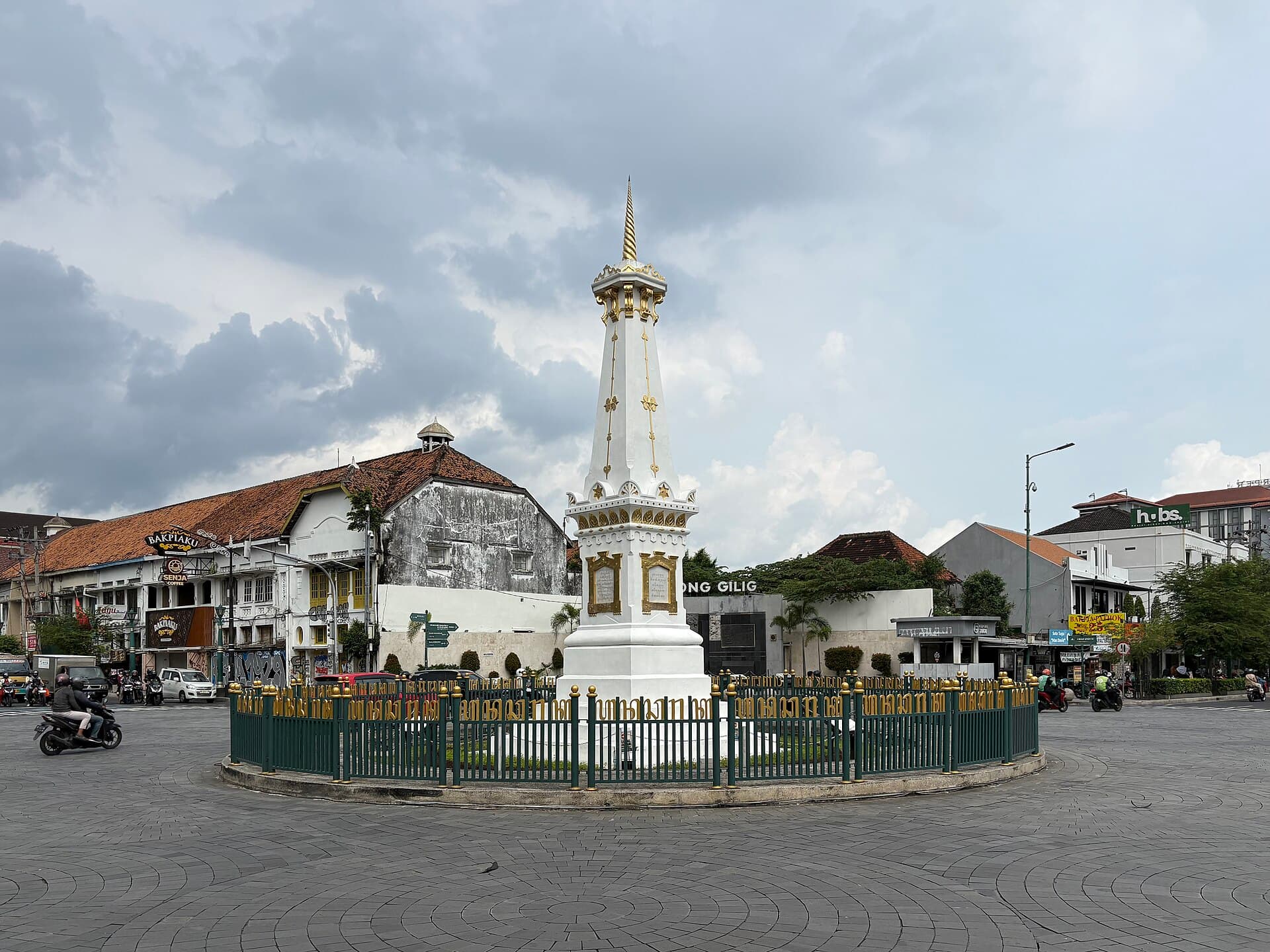 Chainwit. / CC BY 4.0, via Wikimedia Commons
“Where ancient wonders meet Javanese artistry.”
Not the postcards. The stories even locals don't know — whispered in your ear, right where they happened.
Beyond its pools and crumbling walls, a secret passage once offered the Sultan an escape route.
Communities on the slopes of Indonesia's most active volcano offer reverence, not just for safety, but to appease a spiritual guardian.
Attempting to walk blindfolded between two banyan trees here isn't just a game; it's a test of inner purity with a surprising local belief attached.
Discover every secret of Yogyakarta
Every address, every reveal in full — in your ear, right where it happened.
You pick your stops. You walk. The voice reveals what the others miss.
No tours available yet. Check back soon — we're preparing them.
Yogyakarta, affectionately called "Jogja" by its residents, is a city alive with culture and long-standing traditions on the island of Java, Indonesia. It stands as the sole Indonesian royal city still governed by a monarchy, solidifying its place as a unique cultural and spiritual heartland. Esteemed as a center for classical Javanese arts, from ballet and batik to wayang puppetry, the city presents a captivating blend of tradition and contemporary existence. Beyond its lively artistic scene, Yogyakarta is also a significant educational hub, home to numerous universities, including the prestigious Gadjah Mada University.
This special region extends from the active slopes of Mount Merapi in the north to the southern coast's wave-swept beaches, offering a varied landscape for exploration. Travelers can immerse themselves in ancient wonders, lively markets, and a rich culinary landscape. Whether drawn to majestic temples, traditional crafts, or the kindness of its people, Yogyakarta provides an engaging and affordable travel experience.
The story of Yogyakarta is deeply intertwined with the powerful Mataram Sultanate, a dominant force in Java during the 16th and 17th centuries. Kotagede, now a district within southeastern Yogyakarta, served as the capital of the Mataram Sultanate from 1587 to 1613. The Sultanate reached its zenith under Sultan Agung Hanyokrokusumo (1613–1645), extending its influence across much of Java.
However, internal power struggles and the growing presence of the Dutch East India Company (VOC) led to the decline of the Mataram Sultanate. A significant turning point came with the Treaty of Giyanti on February 13, 1755. This agreement formally split the Mataram Sultanate into two independent states: the Sultanate of Yogyakarta (Ngayogyakarta Hadiningrat) and the Sunanate of Surakarta Hadiningrat. Prince Mangkubumi became the first Sultan of Yogyakarta, taking the title Hamengkubuwono I. He then spent 37 years constructing the new capital, Yogyakarta, with the Kraton (Sultan's Palace) as its centerpiece.
During the Indonesian National Revolution (1945–1949), Yogyakarta played a pivotal role, serving as the capital of the Indonesian Republic from 1946 to 1948 after Jakarta fell to the Dutch. The support of Sultan Hamengkubuwono IX and Prince Paku Alam VIII was crucial, leading to the unification of their royal realms into the Special Region of Yogyakarta on August 3, 1950. Today, the Sultan of Yogyakarta holds the unique position of being the hereditary governor of the Special Region, a testament to the region's enduring historical and cultural significance.
A journey to Yogyakarta feels incomplete without experiencing its iconic temples. The majestic Borobudur Temple, a UNESCO World Heritage site, stands as the largest Buddhist monument on Earth, featuring nine levels, 2,672 carved panels, and 504 Buddha statues. Many travelers choose to witness the sunrise over Borobudur for a truly unforgettable experience. Equally impressive is Prambanan Temple, a 9th-century Hindu temple complex dedicated to Shiva, Vishnu, and Brahma, known for its soaring, pointed architecture and intricate reliefs.
Within the city, explore the Kraton, the Sultan's Palace, which serves as both a royal residence and a cultural center. Nearby, the Taman Sari Water Castle, a former royal garden and bathing complex, offers a glimpse into the Sultan's leisure. For a lively urban experience, Jalan Malioboro is the renowned shopping street, bustling with street stalls, shops selling batik fabrics, Javanese sculptures, and local street artists, especially in the evening. Do not miss the chance to try local delicacies like gudeg, a jackfruit curry, from the street vendors.
The dry season, from April to October, is generally considered the most favorable time to visit Yogyakarta. During these months, the weather is warm and sunny with minimal rainfall, making it ideal for outdoor activities and exploration, particularly temple visits. Temperatures typically range between 24°C and 32°C. The busiest tourist season occurs between July and August, coinciding with European summer holidays and Indonesian school breaks, which means larger crowds and potentially higher prices. For a balance of pleasant weather and fewer visitors, consider visiting during the shoulder seasons of May-June or September-October.
Yogyakarta International Airport (YIA) (IATA: YIA) is the primary gateway, located approximately 45 km from the city center in Kulon Progo Regency. From YIA, you can reach the city center by train, which takes about 40 minutes and costs around Rp20,000, or by DAMRI shuttle buses. Within Yogyakarta, public transportation options include the Trans Jogja bus system, which is budget-friendly and covers major tourist spots. For more flexibility, ride-hailing apps like Gojek and Grab are widely available for both motorcycles and cars. Traditional becak (pedicabs) and andong (horse-drawn carriages) offer a unique way to explore areas like Malioboro Street.
The local languages are Javanese and Bahasa Indonesia. While Javanese is the regional language, Bahasa Indonesia is the national language, and many locals, especially in tourist areas, can speak English. The currency is the Indonesian Rupiah (IDR).