Yamadera Temple
The ascent to Yamadera Temple is a journey of a thousand steps, but the true secret lies not just in the sweeping views, but in a quiet, almost imperceptible detail along the path.
Full story unlocks in the tour
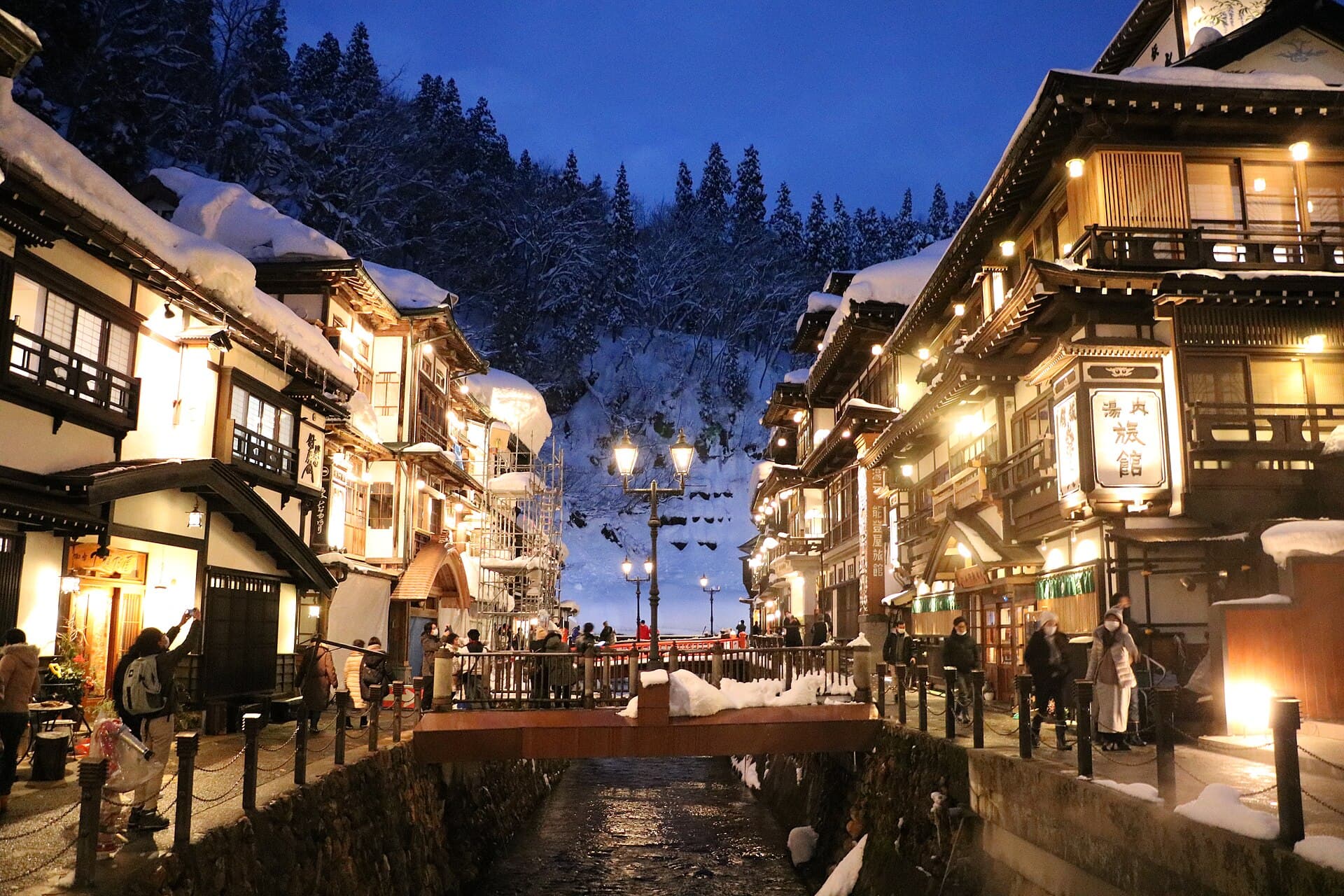 さかおり / CC BY-SA 4.0, via Wikimedia Commons
“Where mountains meet culture, and cherries sweeten the soul.”
Not the postcards. The stories even locals don't know — whispered in your ear, right where they happened.
The ascent to Yamadera Temple is a journey of a thousand steps, but the true secret lies not just in the sweeping views, but in a quiet, almost imperceptible detail along the path.
Among the sacred Dewa Sanzan mountains, Mount Yudono holds a secret so profound that local custom strictly forbids its description.
In a small corner of Yamagata City, a centuries-old pottery tradition thrives, but the inspiration for its distinctive white pieces comes from an unexpected source.
Discover every secret of Yamagata
Every address, every reveal in full — in your ear, right where it happened.
You pick your stops. You walk. The voice reveals what the others miss.
No tours available yet. Check back soon — we're preparing them.
Yamagata City, the capital of Yamagata Prefecture in Japan's northern Tohoku region, offers a captivating blend of natural splendor, enduring heritage, and distinctive local culture. Surrounded by misty mountain ranges like Mount Zao and Mount Gassan, the city's name, meaning "Mountain Shape," perfectly reflects its dramatic landscape. While often celebrated as a premier winter destination with its ski resorts and famous "snow monsters," Yamagata City provides diverse experiences throughout all four seasons, making it a compelling destination year-round.
Beyond its scenic allure, Yamagata City is a center of cultural activity, from its lively summer festivals to its ancient temples and castle ruins. The city has cultivated its own unique rhythm, shaped by its secluded mountainous setting and often harsh winters. Visitors can explore ancient sites, indulge in local culinary delights like imoni stew and cherries, and experience a relaxed countryside charm that coexists with its status as a prefectural capital.
## A Castle Town's Legacy Yamagata City's origins as a significant settlement trace back to the Heian period, with the establishment of Risshaku-ji Temple, commonly known as Yamadera, in 860 AD by Ennin, a disciple of Saichō, the founder of the Tendai sect. This temple flourished as a center of esoteric Buddhism in the Tohoku region.
During the Warring States period, the Mogami clan rose to power, reigning as feudal lords for 275 years from Yamagata Castle. Under the rule of Daimyo Mogami Yoshiaki (1546–1614), Yamagata Castle was extensively renovated, transforming it into one of Japan's largest flatland castles. The city itself developed as a jokamachi, or castle town, with its layout centered around the castle and a hierarchical structure where samurai quarters were closest to the castle, and artisans and merchants settled further out. During the Edo period, Yamagata became the fifth-largest domain in Japan, benefiting from a flourishing agricultural industry that saw high demand for staples like rice and safflower across the country.
Following the Meiji Restoration, Yamagata Castle was abandoned, and its grounds were eventually converted into Kajo Park after World War II. Yamagata officially received city status on April 1, 1889, becoming the capital of Yamagata Prefecture. Today, portions of Yamagata Castle, including impressive gates, have been beautifully restored, and archaeological investigations continue, preserving the city's extensive feudal past.
Begin your exploration at Kajo Park, the site of Yamagata Castle ruins. Here, you can walk among the restored castle gates and earthen ramparts, and visit the Yamagata Prefectural Museum to delve into the region's history. In spring, the park transforms with over 1,500 cherry trees in bloom.
A short journey from the city center leads to Yamadera Temple (Risshaku-ji Temple), a spectacular mountaintop complex with over a thousand stone steps winding through a cedar forest. The ascent rewards visitors with expansive views and a serene atmosphere, famously inspiring poet Matsuo Basho.
For a different kind of natural wonder, head to Mount Zao, which offers hiking in the warmer months and transforms into a ski resort in winter. Witness the unique juhyo, or "snow monsters," where trees are covered in heavy snow and ice, especially from late January to February. The Zao Onsen area also provides opportunities for relaxing hot spring soaks year-round.
Other notable spots include the Bunshokan, a Renaissance-style building that served as Yamagata's original prefectural headquarters, and the artisan crafts village of Hirashimizu, known for its traditional pottery.
Yamagata City offers distinct charms throughout the year. For warm-weather activities and festivals, mid-July to early September is ideal, with August being the hottest month. The Hanagasa Festival, a major summer event with thousands of dancers, takes place annually from August 5th to 7th.
Spring (March–May) brings cherry blossoms, particularly beautiful in Kajo Park in mid-April. Autumn (September–November) is perfect for enjoying vivid fall foliage and comfortable temperatures, with peak colors in late October. Winter (December–February) transforms the region into a snowy wonderland, attracting visitors for skiing and to see the Zao Snow Monsters, which are best viewed from late January to February.
Yamagata City is easily accessible. From Tokyo, the Yamagata Shinkansen offers a direct route, taking approximately 2 hours and 40 minutes. Alternatively, you can fly from Tokyo's Haneda Airport to Yamagata Airport in about 50 minutes, followed by a 30-35 minute bus ride to the city. Buses also connect Sendai Airport to Yamagata City in about 1.5 hours.
Once in Yamagata City, many key attractions like Kajo Park are within walking distance or a short drive from Yamagata Station. Local trains and an extensive bus network connect to major sightseeing spots, including Zao Onsen and Yamadera. Renting a car provides flexibility for exploring the wider region, though winter driving requires confidence due to snow-covered roads.
Accommodation options in Yamagata City include business hotels near the station, while those seeking a more immersive experience might consider staying in ryokans in nearby onsen towns like Zao Onsen or Ginzan Onsen.