Dongguan Mosque
This grand mosque, among the largest in Northwest China, safeguards a particularity within its architectural lines.
Full story unlocks in the tour
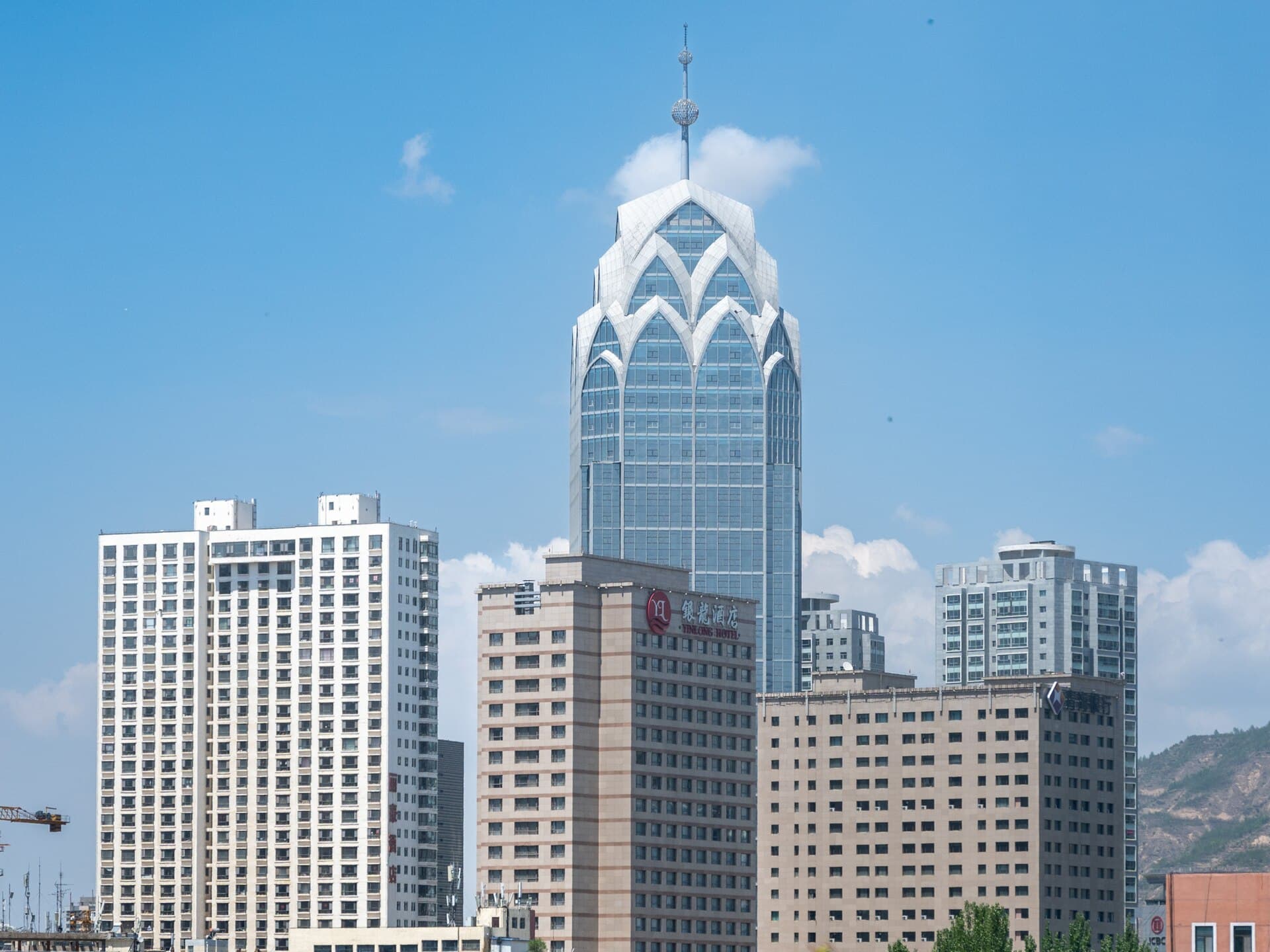 xiquinhosilva / CC BY 2.0, via Wikimedia Commons
“Where the Silk Road breathes ancient narratives and the plateau unfurls its expanse.”
Not the postcards. The stories even locals don't know — whispered in your ear, right where they happened.
This grand mosque, among the largest in Northwest China, safeguards a particularity within its architectural lines.
Beyond its extensive collection, one particular exhibit here holds a global distinction for its sheer scale.
This lively food street is celebrated for its local provisions, yet one specific dish carries a surprising origin for its designation.
Discover every secret of Xining
Every address, every reveal in full — in your ear, right where it happened.
You pick your stops. You walk. The voice reveals what the others miss.
No tours available yet. Check back soon — we're preparing them.
Xining, the capital of Qinghai Province, rests at an elevation of 2,261 meters on the northeastern edge of the Tibetan Plateau, making it the largest city in this elevated region. For over 2,100 years, Xining has served as a crucial intersection, once a key fortification and a significant waypoint on the ancient Silk Road's Hexi Corridor, facilitating the exchange of goods like timber, wool, and salt. Today, it operates as a contemporary metropolis and a vital entry point for travelers venturing deeper into the Tibetan Plateau, particularly as the departure point for the Qinghai-Tibet Railway.
The city presents a lively interplay of cultures, where Han, Hui, Tibetan, and other ethnic groups live alongside one another. This multicultural setting is evident in its varied religious sites, with mosques standing near monasteries, and a culinary landscape that mirrors these diverse influences. Xining is also recognized as a "Summer Resort Capital" due to its agreeably cool summers, offering a refreshing escape when much of China experiences intense warmth.
Xining's history extends back over 2,100 years, with its beginnings as a strategic military outpost. In 121 BC, during the Western Han Dynasty, the Xipingting military garrison was established here by General Huo Qubing, primarily to safeguard the empire's borders from nomadic tribes and control the essential Hexi Corridor. This early fortification swiftly evolved into a significant trade center along the Northern Silk Road, enabling the exchange of goods between Central Asia, Tibet, and the Chinese empire.
Throughout the Sui (581–618) and Tang (618–907) dynasties, Xining remained a frontier county, frequently a focal point of contention with the Tuyuhun and Tibetan peoples. In 763, it came under Tibetan authority and was known to the Chinese as Qingtangcheng. It was not until 1104, when the Song Dynasty reclaimed the area, that it officially received its current name, Xining, meaning "Peace in the West."
With the expansion of Tibetan Buddhism, Xining grew into an important religious center. The Kumbum Monastery, one of the six great monasteries of Tibetan Buddhism's Gelug Sect, was founded in 1577 near Xining, marking the birthplace of Tsongkhapa, the founder of the Yellow Hat sect. The city's religious importance continued to flourish, drawing pilgrims from across the region.
Xining was part of Gansu province for an extended period until it became the provincial capital of the newly established independent Qinghai Province in 1928. The city encountered difficulties, including a devastating 7.6 magnitude earthquake in 1927, one of China's deadliest, and aerial bombardments by Japanese warplanes in 1941 during the Second Sino-Japanese War. Despite these adversities, Xining has steadily progressed, with the completion of the railway connecting it to Lanzhou in 1959, and later to Lhasa via the Qinghai-Tibet Railway, further solidifying its role as a crucial transportation and economic center in Western China.
Xining presents a varied collection of attractions, blending cultural heritage with natural splendor. A visit to the Kumbum Monastery (Ta'er Temple) is vital. Situated about 25 kilometers southwest of the city, it stands as one of the most important Tibetan Buddhist monasteries beyond the Tibetan Autonomous Region, recognized for its intricate butter sculptures, vivid murals, and delicate embroidery. Within the city, the Dongguan Mosque stands as one of the largest mosques in Northwest China, displaying a distinctive blend of Islamic and Chinese architectural styles.
For a deeper understanding of the region's culture, the Qinghai Tibetan Culture Museum in downtown Xining offers extensive insights into Tibetan culture and traditional medicine, featuring an extraordinary 618-meter-long thangka. Those who appreciate the natural world can explore the Xining Wildlife Park (Qinghai-Tibet Plateau Wildlife Zoo), dedicated to the rescue and protection of plateau animals. Just beyond the city, the expansive Qinghai Lake, China's largest inland saltwater lake, offers a striking vista, particularly when surrounded by golden rapeseed fields in summer. Another favored day excursion is to Chaka Salt Lake, known as the "Mirror of the Sky" for its reflective surfaces.
For a more local encounter, wander through Mojiajie Street, a lively night market celebrated for its diverse array of local provisions and street food. The Qinghai Provincial Museum also offers a glimpse into Qinghai's past through various artifacts.
The most agreeable time to visit Xining is from May to September. During these months, the weather remains pleasantly cool, with average high temperatures ranging from 22–25 °C (72–77 °F) in July and August, making it a favored summer retreat. This period also coincides with verdant grasslands and bright rapeseed flower fields around Qinghai Lake. July and August mark the busiest tourist season, so anticipate more people and higher prices. For a balance of pleasant weather and fewer visitors, consider a visit in May-June or September. Winters (October-March) are cold to severely cold, with temperatures decreasing significantly.
Xining Caojiabao International Airport (XNN) connects Xining to major cities across China. The Xining Railway Station serves as a significant hub, especially for the Qinghai-Tibet Railway, with direct trains to Lhasa, Beijing, Shanghai, and Xi'an. Within the city, public buses offer a convenient and affordable way to navigate, with most routes costing around CNY1. Taxis are also readily available, with a base fare starting at CNY6. There is currently no subway system, though three metro lines are planned for the future.
Given Xining's elevation (around 2,275 meters), it is wise to dress in layers, even in summer, as temperatures can fluctuate considerably between day and night. Sunscreen, sunglasses, and a hat are advised due to intense UV radiation. Accommodation options vary from hotels near the city center, particularly around the Dashizi (Grand Cross) area, to those near the railway station for travelers in transit. The district near the Dongguan Giant Mosque provides a culturally immersive experience with access to halal food. Local cuisine is hearty and often features mutton and noodles, with popular dishes like hand-pulled beef noodles, lamb spine hotpot, and local yogurt.