Wuhan University
Wuhan is recognized as one of the world's largest college towns, with 53 universities. Yet, one of its most celebrated institutions holds a surprising claim regarding its age.
Full story unlocks in the tour
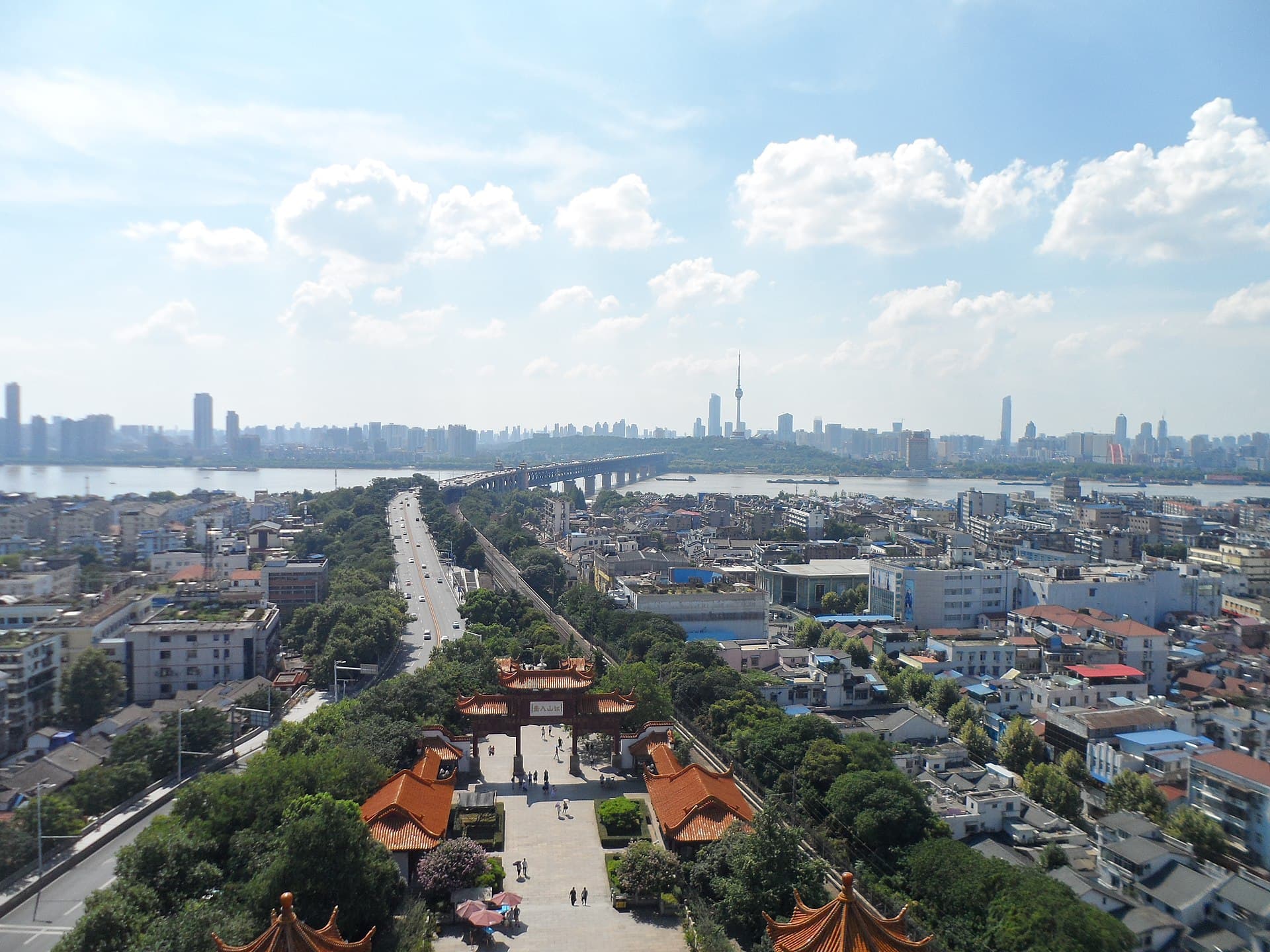 螺钉 / CC BY-SA 4.0, via Wikimedia Commons
“Where ancient rivers converge and history echoes in every street.”
Not the postcards. The stories even locals don't know — whispered in your ear, right where they happened.
Wuhan is recognized as one of the world's largest college towns, with 53 universities. Yet, one of its most celebrated institutions holds a surprising claim regarding its age.
The grand Yangtze River flows through Wuhan. While bridges now link its banks, a legendary method of crossing persists among some locals.
Shanghai's Bund is renowned, but Wuhan possesses its own riverside architectural promenade, a stretch that narrates a story of international influence, and it is remarkably expansive.
Discover every secret of Wuhan
Every address, every reveal in full — in your ear, right where it happened.
You pick your stops. You walk. The voice reveals what the others miss.
No tours available yet. Check back soon — we're preparing them.
Wuhan, the capital of Hubei province, is an expansive metropolis at the confluence of the Yangtze and Han Rivers. Often referred to as 'China's Thoroughfare' (九省通衢) due to its crucial role as a transportation hub, the city gracefully intertwines a long past with contemporary ambition. Comprising three distinct districts—Wuchang, Hankou, and Hanyang—Wuhan offers a diverse urban experience, from venerable temples and revolutionary sites to lively commercial streets and tranquil lake parks.
With a past extending over 3,500 years, Wuhan has been a significant cultural, economic, and political center in central China. It is a city of striking contrasts, where the fragrance of spicy street food mingles with the scent of cherry blossoms in spring, and towering skyscrapers reflect ancient waterways. Whether you are drawn to its revolutionary past, its lively culinary landscape, or its expansive natural settings, Wuhan offers a compelling journey into the heart of China.
Wuhan's past is as layered as the currents of the Yangtze River that flow through it, reaching back over 3,500 years to the Shang Dynasty with the archaeological site of Panlongcheng. During the Han Dynasty, Hanyang emerged as a busy port, and by 223 AD, the Yellow Crane Tower was constructed in Wuchang, marking a foundational moment for the city. This period also saw the region become a noted battlefield during the Three Kingdoms Period.
The city's strategic location at the intersection of the Yangtze and Han rivers led to the independent development of three distinct towns: Wuchang, Hankou, and Hanyang. Wuchang served as the ancient political center, Hankou grew into a prominent trading post after becoming a treaty port in 1861, and Hanyang developed as an important industrial center. These three cities officially merged in 1926 to form modern Wuhan.
Wuhan played a crucial role in shaping modern Chinese history. It was the birthplace of the Wuchang Uprising on October 10, 1911, an event that sparked the Xinhai Revolution and ultimately led to the collapse of over 2,000 years of imperial rule in China. The city even briefly served as the national capital twice, in 1927 and again in 1937 during the Second Sino-Japanese War. This era also saw Hankou's riverfront divided into foreign concessions, leaving a legacy of diverse architectural styles. From its ancient roots as a port and a center for Chu culture to its pivotal role in revolutionary movements and its designation as an industrial and transportation hub, Wuhan's past is a compelling narrative of continuous evolution.
Wuhan presents a diverse array of sights, reflecting its long past and natural beauty. The Yellow Crane Tower stands as an iconic landmark, providing expansive views of the city and the Yangtze River. Close by, Hubu Alley is a lively pedestrian street celebrated for its traditional Wuhan snacks and breakfast options.
For a touch of nature, the East Lake Scenic Area is China's largest urban lake, featuring miles of paths, gardens, and lakeside pavilions. In spring, Wuhan University is a favored location for its blooming cherry blossoms.
The Hubei Provincial Museum houses ancient Chinese relics and regional artifacts, including the legendary Sword of Goujian, a remarkably preserved bronze sword. The Wuhan Yangtze River Bridge, a double-decker engineering marvel, provides a tangible link between the city's historic districts. For a distinctive cultural experience, Guiyuan Temple is a historic Zen Buddhist temple known for its scripture rooms and numerous statues. The Hankou Bund offers a glimpse into Wuhan's colonial past with its varied architectural styles along the riverfront.
The most pleasant times to visit Wuhan are during the spring months of March to May and the autumn months of September to November. Spring brings blooming flowers, including the famous cherry blossoms at Wuhan University and East Lake, with comfortable temperatures. Autumn offers agreeable weather with cooler temperatures and less rainfall, ideal for exploring outdoor attractions. Summers (June to August) are known for intense heat and high humidity, earning Wuhan the nickname 'one of the three furnaces of China,' while winters (December to February) are damp and cool.
Wuhan's public transportation system is efficient and extensive. The Wuhan Metro is the backbone of city travel, connecting the three historic districts and covering most major destinations. Fares are economical, and you can load a card at any station or use mobile payment platforms like Alipay or WeChat Pay. Buses also traverse the city, offering numerous routes. Taxis are readily available and generally inexpensive, though having your destination written in Chinese is helpful. Ride-hailing apps like Didi are also a convenient option. For a scenic crossing of the Yangtze River, consider taking a passenger ferry between Hankou and Wuchang. Wuhan Tianhe International Airport (WUH) has a direct metro connection to the city center.
Wuhan is generally considered a safe city, with violent crime against foreigners being rare. However, like any large city, pickpocketing can occur in crowded areas like railway stations, ferry terminals, and shopping streets. Be mindful of e-bikes that may disregard traffic rules. It is advisable to carry photocopies of your passport and hotel registration separately. English signage can be inconsistent, so having a translation app or written addresses is beneficial.