Goethe's House on Frauenplan
Johann Wolfgang von Goethe, the literary titan, was celebrated for his vast intellect and precise approach to life. Yet, his home holds a surprising secret about his revered art collection.
Full story unlocks in the tour
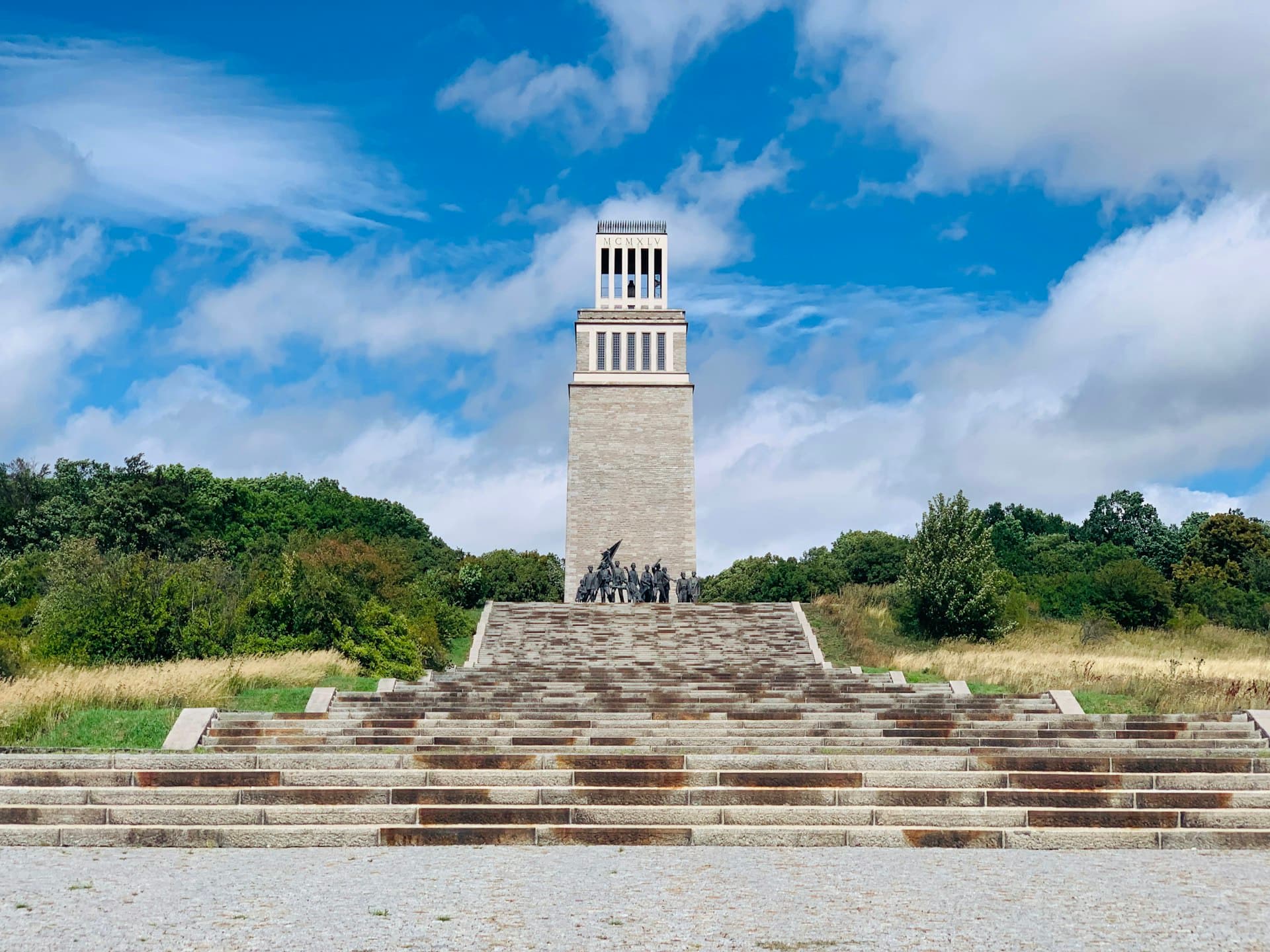 Photo: Louana Rose / Unsplash
“Where the minds of titans shaped enduring thought and design.”
Not the postcards. The stories even locals don't know — whispered in your ear, right where they happened.
Johann Wolfgang von Goethe, the literary titan, was celebrated for his vast intellect and precise approach to life. Yet, his home holds a surprising secret about his revered art collection.
The Bauhaus movement, originating in Weimar, transformed modern design with its focus on utility and mass production. However, its initial phase held a surprising link to more traditional forms.
Franz Liszt, the flamboyant piano virtuoso, made Weimar a center for musical innovation. While known for his generosity as a teacher, he offered rather direct feedback to unprepared students.
Discover every secret of Weimar
Every address, every reveal in full — in your ear, right where it happened.
You pick your stops. You walk. The voice reveals what the others miss.
No tours available yet. Check back soon — we're preparing them.
Weimar, a city in the German state of Thuringia, occupies a significant position in German and European cultural history. Though relatively modest in size, with a population of around 65,000, it served as a focal point of the German Enlightenment and was home to literary giants such as Johann Wolfgang von Goethe and Friedrich Schiller. Their presence, alongside other intellectuals and artists, cemented Weimar's reputation as an intellectual hub in the late 18th and early 19th centuries.
Beyond its classical heritage, Weimar is also the origin point of the influential Bauhaus movement, a school of art and design established by Walter Gropius in 1919. This movement reshaped modern architecture and design, with its influence still resonating globally today. The city's layered history also includes a notable, though somber, period as the namesake of the Weimar Republic, Germany's first democratic government, whose constitution was drafted here in 1919.
Weimar's singular blend of classical artistry, pioneering modernism, and pivotal political moments has earned it two UNESCO World Heritage designations: one for Classical Weimar and another for its Bauhaus sites. This profound and intricate past makes Weimar a compelling destination for those seeking to explore the depths of German culture and history.
Weimar's recorded history extends back to 899, when it was first documented as Wimares, a name derived from Old High German. The town developed around a wooden castle and two churches, becoming an independent parish by 1249. Throughout the Middle Ages, Weimar expanded, acquiring a town hall and a main church in the 15th century, with its castle and walls completed in the 16th century.
The city's most celebrated period, known as Weimar Classicism, flourished in the late 18th and early 19th centuries. This era saw the arrival of literary titans such as Johann Wolfgang von Goethe in 1775, invited by Duke Carl August. Goethe resided in Weimar for 57 years until his passing in 1832, playing a significant role in the court and receiving ennoblement. Friedrich Schiller also made his home here, and together, they established Weimar as the intellectual heart of Germany. This period of cultural heritage is recognized by UNESCO, with protected buildings including Goethe's and Schiller's former residences, parks, and the town castle.
In the mid-19th century, Weimar experienced a second cultural flourishing under Grand Duchess Maria Pavlovna, a member of the Russian royal family. During this time, composers like Franz Liszt established Weimar as a significant music center. Liszt served as Kapellmeister to the court from 1848 to 1861, and later returned in 1869, living in the former court gardener's house until his death in 1886.
The 20th century brought a different kind of prominence to Weimar. In 1919, following the end of World War I and amidst street unrest in Berlin, the German National Assembly convened in Weimar to draft a new constitution. This event gave its name to the Weimar Republic, Germany's first democratic government, which endured from 1919 to 1933. The city also became the origin point of the Bauhaus movement in 1919, founded by Walter Gropius. This influential school of art and design, though compelled to relocate to Dessau in 1925 due to political shifts, laid the groundwork for modern design and architecture.
However, Weimar's history also contains a darker chapter. It became an early center of Nazism after 1929, and the Buchenwald concentration camp was established nearby in 1937, where over 60,000 people were murdered. The city sustained damage during World War II, but many of its monuments were restored due to their cultural importance. Weimar served as the capital of Thuringia until 1948. Today, it remains an important tourist destination, with its old town designated as a UNESCO World Heritage Site.
Weimar offers a rich array of cultural and historical sites. Begin at the Goethe National Museum and Goethe Residence, where Johann Wolfgang von Goethe lived for nearly 50 years. You can explore 18 rooms, including his study and private library, filled with original furnishings and his extensive collections of artworks and scientific specimens. Nearby, the Park an der Ilm provides a tranquil landscape that Goethe himself helped design, featuring his charming garden house.
For a glimpse into the life of another literary giant, visit the Schiller-Museum, the former home of Friedrich Schiller. The Duchess Anna Amalia Library is a compelling visit, particularly its magnificent Rococo Hall, which houses a priceless collection of books from the Age of Enlightenment and Late Romanticism. While you cannot browse the ancient tomes, the sheer beauty of the three-story hall is captivating.
Delve into the world of modern design at the Bauhaus Museum Weimar. This museum displays the world's oldest collection of works from the Bauhaus workshops, including iconic objects like the Wagenfeld table lamp and Marianne Brandt's teapot, exploring the school's profound influence on art, design, and architecture. The Bauhaus University Weimar campus, with buildings designed by Henry van de Velde, also offers insights into the movement's origins. Be sure to see the Haus am Horn, the only Bauhaus building in Weimar that exemplifies the modern living concepts of master and student.
Other notable sites include the German National Theatre, fronted by a famous statue of Goethe and Schiller, where the Weimar Republic Constitution was passed in 1919. The Liszt House, Franz Liszt's former residence, preserves the life and work of the composer, with authentic furnishings including his Bechstein grand piano. For a somber but important experience, the Buchenwald Memorial, located just outside the city, remembers the victims of the concentration camp.
The most agreeable times to visit Weimar are during spring (April to June) and autumn (September to October). During these months, the weather is pleasant, and the city's many parks display their most vivid colors. Summer (late June to early September) is also enjoyable with warm temperatures and open-air concerts and festivals, though it can be busier. While winter brings festive markets and a cozy atmosphere, some attractions may have reduced hours. July is typically the warmest month, with an average high of 73°F (23°C), and January is the coldest, with an average low of 28°F (-2°C).
Weimar is a city easily explored on foot, and wandering its historic district is highly recommended. Many appealing streets, inviting cafés, and restaurants offering everything from traditional German cuisine to international specialties can be discovered during a stroll. The city is situated in the center of Thuringia, between Erfurt and Jena, and is readily accessible by train. Erfurt, the capital of Thuringia, is just a 15-minute train ride away and offers additional historical and cultural sites.
Consider acquiring the Weimar+ app for themed tours and engaging audio clips about key sites. For those interested in deeper exploration, guided walking tours of Classical Weimar and the Old Town are available. The city also provides unique experiences like an escape room centered around Goethe's secrets. Weimar is well-connected by rail, making it a convenient base for exploring the surrounding areas of Thuringia.