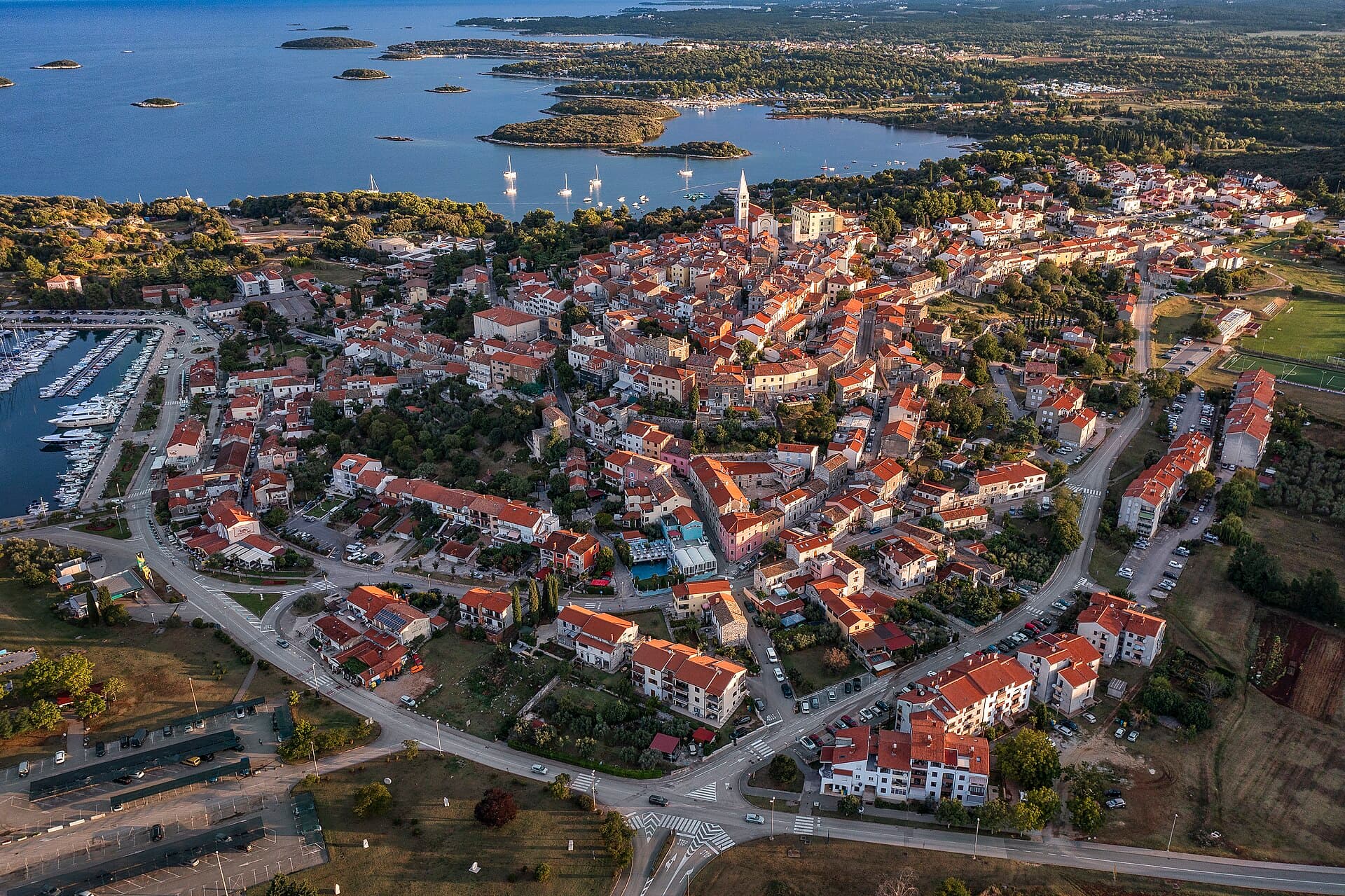
Vrsar, CroatiaEkaterina Polischuk / CC BY-SA 4.0, via Wikimedia Commons
HR

Vrsar

Where history's echoes meet the Adriatic's gentle swell.

The secrets of Vrsar

Vrsar, as no one tells it.

Not the postcards. The stories even locals don't know — whispered in your ear, right where they happened.

3 secrets below. Many more wait inside the tour.
Casanova's Sanctuary

The renowned Giacomo Casanova, a figure of adventurous spirit and romantic escapades, found an unexpected haven in Vrsar. What drew him to this quiet Istrian town, and what intimate stories did he leave in its keeping?

Full story unlocks in the tour
Montraker Quarry

Vrsar's ancient stone quarries provided building materials for Venetian palaces and bridges. Yet, one particular quarry holds a secret, connecting it to a monumental structure far beyond Istria's shores.

Full story unlocks in the tour
Vrsar's Inns and Taverns

During the period of Poreč episcopal authority, Vrsar's social life revolved around its inns and taverns. However, local officials maintained rather unusual and stringent regulations concerning the wine served to patrons.

Full story unlocks in the tour
The full tour

Discover every secret of Vrsar

Every address, every reveal in full — in your ear, right where it happened.

Get the key to Vrsar

You pick your stops. You walk. The voice reveals what the others miss.

Choose your time

How long do you have in Vrsar?

No tours available yet. Check back soon — we're preparing them.

About Vrsar

The story of Vrsar

Vrsar, a captivating coastal town on the western Istrian Peninsula, offers a convergence of historical depth, natural splendor, and a tranquil Mediterranean atmosphere. Situated between the more lively towns of Poreč and Rovinj, Vrsar ascends from its inviting marina up a gentle slope, culminating in the Church of St. Martin. The town's historic core, with its narrow, winding lanes and stone dwellings, encourages unhurried exploration, revealing glimpses of its layered past at every turn.

Beyond the historic hilltop, Vrsar extends to a contemporary coastline graced with clear waters and a succession of beaches, many of which have been honored with the 'Blue Flag' for their environmental quality. The town is also distinguished by its proximity to the Lim Bay, a striking natural formation often likened to a fjord, and an archipelago of 18 uninhabited islands that dot the Adriatic Sea. This combination of cultural heritage and diverse natural landscapes renders Vrsar an appealing destination for those seeking both quiet contemplation and outdoor pursuits.

While Vrsar has matured from a small fishing village into a welcoming resort, it retains a calmer ambiance compared to its larger neighbors. Visitors can savor fresh seafood, engage with art in an open-air sculpture park, or delve into the town's intriguing history, which includes connections to a celebrated adventurer.

History

Vrsar's narrative extends to prehistoric eras, with evidence of settlement by the ancient Histrians and Illyrians on the elevated ground above the port. The Romans later established Vrsar as a significant trading hub for agricultural and livestock products in the 1st century BC, and by the 4th century AD, it had evolved into an important early Christian center with several monastic communities and churches.

Following the decline of the Roman Empire, Vrsar experienced a succession of rulers, including the Goths and Byzantines. From the 10th to the 18th century, Vrsar remained under the continuous authority of the Poreč diocese, serving as its administrative heart. During this period, around the 12th century, the town was fortified with walls and a castle, which constitutes Vrsar's oldest section. Even as Venice asserted control over the western Istrian coast in the 13th century, Vrsar remarkably retained its autonomy under the bishops' governance, exempt from taxes to the Doge or Patriarch of Aquileia.

The Venetian Senate eventually dissolved the church county in Vrsar in 1778, bringing it directly under Venetian administration. With the fall of the Venetian Republic, Vrsar transitioned through Austrian and Italian control before ultimately becoming part of Yugoslavia after World War II, and then the Republic of Croatia in 1991. The town also endured the 'bombing of Vrsar' in December 1991, when its small airport was targeted during Croatia's war for independence. Despite these transitions and trials, Vrsar has transformed into a thriving resort while carefully preserving its historical character, with Roman and Venetian influences still discernible in its ancient thoroughfares.

What to see

Begin your exploration in Vrsar's Old Town, a labyrinth of stone-paved paths ascending to the Church of St. Martin. This 19th-century parish church features a tall bell tower that, when ascended, provides expansive views of Vrsar's terracotta roofs, the Adriatic Sea, and the surrounding islands. Nearby, you will discover the Romanesque Basilica of St. Mary of the Sea, a 12th-century sanctuary that stands as an example of Istrian Romanesque architecture.

For a glimpse into Vrsar's defensive past, seek out the remnants of the city walls and the 12th-century town gates. One gate even displays a stone Venetian lion with a closed book, symbolizing a period of contention with the Venetian Republic. The historic Bishop's Palace, once the abode of the Poreč bishops who governed Vrsar, is another significant structure to observe.

Beyond the old town, visit the Dušan Džamonja Sculpture Park, an outdoor gallery spanning over 10 hectares near Valkanela, displaying monumental works by the acclaimed Croatian sculptor. Take a boat excursion to the Vrsar archipelago, comprising 18 uninhabited islands, ideal for swimming, sunbathing, or simply embracing the tranquility. Do not overlook the Lim Bay (Limski Kanal), a protected natural area resembling a fjord, where you can embark on boat trips and even sample local oysters.
When to visit

Vrsar experiences a Mediterranean climate with warm summers and mild winters. The ideal time for beach holidays is from June to September, when temperatures range from 25°C to 35°C (77°F to 95°F) and sea temperatures are 23°C or warmer. For outdoor activities like cycling and sightseeing, spring (April to June) and early autumn (September to October) offer pleasant temperatures between 15°C and 25°C (59°F to 77°F) and fewer visitors. July is typically the driest and clearest month.

Practical

Vrsar is situated approximately 10 km south of Poreč and 50 km north of Pula. The closest airport is Pula Airport (PUY), about 50 km away, with shuttle buses connecting to Pula's main bus station. From Pula, or other significant Istrian towns like Poreč and Rovinj, you can reach Vrsar by bus; services from Poreč are more frequent. If traveling by car, Vrsar is about a 20-minute drive from the A9 Istrian motorway. Accommodation options include hotels, resorts, apartments, and campsites, catering to various budgets. Many beaches in Vrsar offer conveniences and have been recognized with the 'Blue Flag' for quality. The town is generally calmer than larger tourist centers, providing a more serene experience.

Good to know
What is Vrsar primarily recognized for?
Vrsar is recognized for its picturesque hilltop Old Town, its scenic marina, beautiful beaches with clear waters, and its connection to Giacomo Casanova. It is also known for the Koversada Naturist Park, one of Europe's oldest naturist resorts, and its proximity to the Lim Bay.
Are there appealing beaches in Vrsar?
Yes, Vrsar offers a variety of beaches, including pebble and concrete slab shores, many of which hold Blue Flag status for their water quality and services. Popular options include the town beach, Plaza Porto Sole, and the beaches within Koversada Naturist Park.
What kind of activities can I pursue in Vrsar?
Vrsar offers a range of activities such as exploring the Old Town, visiting the Church of St. Martin for expansive views, taking boat trips to the Vrsar archipelago and Lim Bay, cycling and hiking on coastal and inland trails, and visiting the Dušan Džamonja Sculpture Park. Water sports like paddleboarding, kayaking, and diving are also available.
Is Vrsar suitable for families?
Yes, Vrsar is considered family-friendly, offering organized beaches with facilities for children, various accommodation options, and activities like exploring the Old Town, boat excursions, and visiting nearby attractions such as Dinopark Funtana and Enzian Adventure Park.
How long should I plan to linger in Vrsar?
To fully appreciate Vrsar and its offerings, including the Old Town, beaches, and nearby natural attractions like Lim Bay and the islands, it is recommended to stay at least 5 days.
What is the Casanovafest?
Casanovafest is an annual festival of love and eroticism held in Vrsar, inspired by the historical visits of Giacomo Casanova to the town in the 18th century. It celebrates the connection between the famous adventurer and Vrsar through various art forms.
Vrsar
From€9.00
No booking · activate anytime · 12h to walk it
Get the key to Vrsar