Banke Bihari Temple
Unlike most Hindu temples, the Banke Bihari Temple in Vrindavan is notably silent.
Full story unlocks in the tour
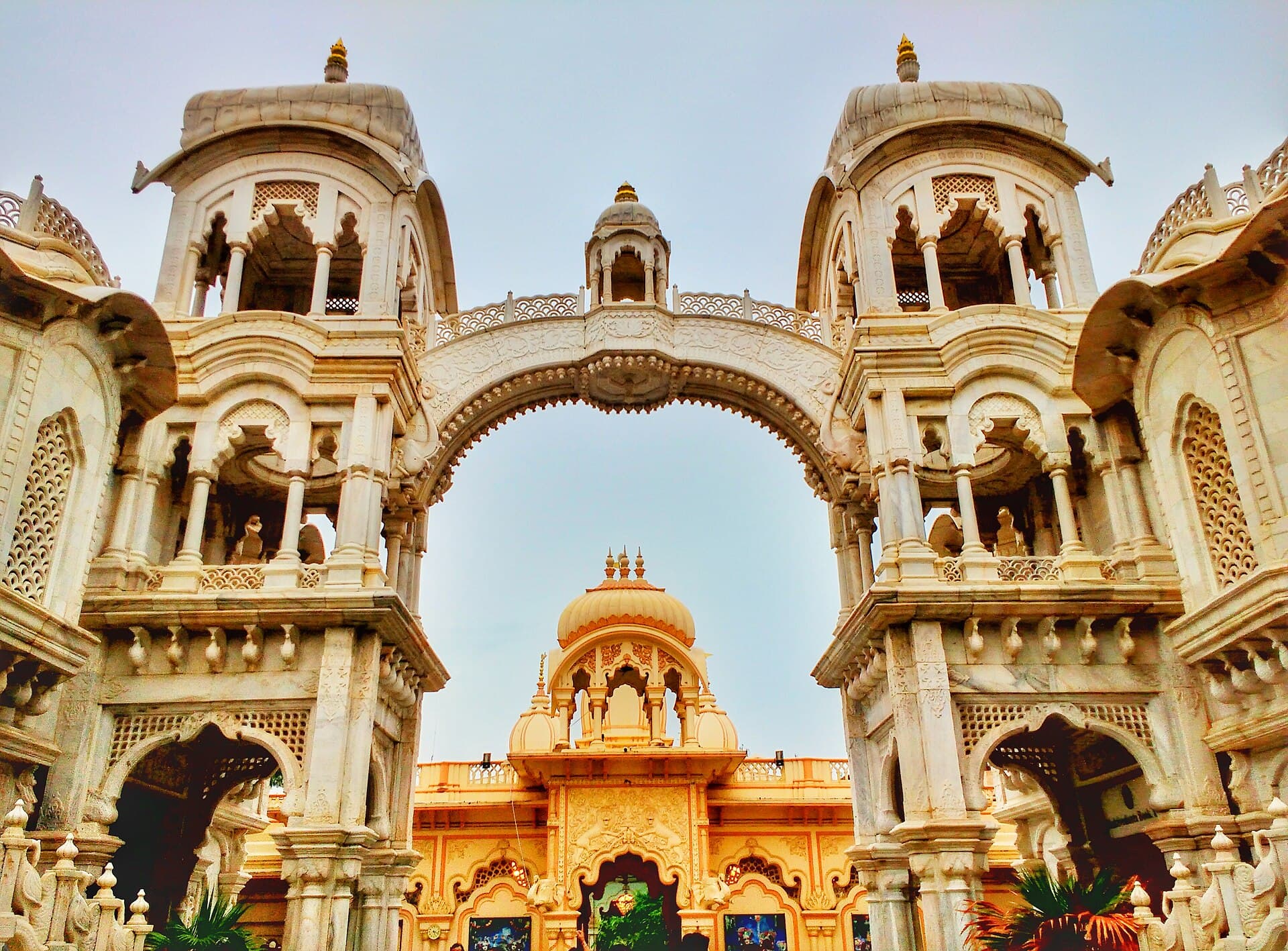 Rishabh gaur / CC BY-SA 4.0, via Wikimedia Commons
“Where every lane echoes devotion, and every temple tells a story.”
Not the postcards. The stories even locals don't know — whispered in your ear, right where they happened.
Unlike most Hindu temples, the Banke Bihari Temple in Vrindavan is notably silent.
After sunset, Nidhivan, a dense forest grove, is strictly off-limits to all, including animals.
The deity of Radha Raman in this temple is said to have manifested in an extraordinary way.
Discover every secret of Vrindavan
Every address, every reveal in full — in your ear, right where it happened.
You pick your stops. You walk. The voice reveals what the others miss.
No tours available yet. Check back soon — we're preparing them.
Vrindavan, also spelled Vrindaban, is a historic city in the Mathura district of Uttar Pradesh, India. It is located in the Braj Bhoomi region and holds immense religious importance for Hindus, who believe that Krishna, one of the main gods in Hinduism, spent most of his childhood here. The name "Vrindavan" comes from "Vrinda," another name for the sacred Tulsi plant, and "van," meaning forest, as the land was once covered with sacred Tulsi groves. Vrindavan is considered a transcendental realm where the material and spiritual worlds converge, with every grain of dust, tree, and stone said to be sacred and imbued with Krishna's divine presence.
Often described as the heartland of Krishna consciousness, Vrindavan draws millions of pilgrims, saints, spiritual seekers, and tourists from across India and the world. Its narrow lanes echo with the sounds of kirtans (devotional chants), temple bells, and the ubiquitous chant of "Radhe Radhe," creating an atmosphere that feels timeless and deeply spiritual. The city is home to approximately 5,500 temples dedicated to the worship of Krishna and his chief consort, Radha. Vrindavan forms a part of the "Krishna pilgrimage circuit" being developed by the Indian Ministry of Tourism.
Vrindavan's past is deeply intertwined with Hindu culture and history, believed to have been established around 5,000 years ago during the time of Lord Krishna. According to Hindu mythology, Krishna was brought to Vrindavan as an infant to protect him from the evil King Kamsa, and he spent his childhood and youth in this city. Here, he performed many divine pastimes, or leelas, including playfully stealing butter, lifting Govardhan Hill, defeating demons, and dancing with the gopis (cowherd maidens), with Radha as his divine consort.
The essence of Vrindavan was largely lost over time until the 16th century when it was rediscovered by Chaitanya Mahaprabhu. In 1515, Chaitanya Mahaprabhu visited Vrindavan with the purpose of locating the lost holy places associated with Krishna's life. He later sent a group of theologians, known as the Six Goswamins of Vrindavan, to reside there, who were instrumental in systematizing the beliefs and practices of the Gaudiya Vaishnavism sect and building many of the magnificent temples seen today.
Following Chaitanya Mahaprabhu's efforts, Vrindavan flourished as a significant center for Vaishnavism, a Hindu denomination that worships Lord Vishnu and his avatars, including Krishna. Vallabhacharya, a 15th-century Indian saint, also visited Vrindavan at the age of eleven and later performed pilgrimages across India, giving discourses that influenced the formation of Pushtimarg. Over the last 250 years, the extensive forests of Vrindavan have undergone urbanization, initially by local Rajas and more recently by apartment developers. Despite these changes, the city continues to be a center of devotion, attracting millions who seek to experience the spiritual energy and connect with the timeless stories of Radha and Krishna.
Vrindavan offers a wealth of spiritual and cultural experiences. The Banke Bihari Temple is one of the most revered shrines, dedicated to Lord Krishna in his childlike form. It is known for its unique 'curtain darshan' system and the absence of bells and conch shells during prayers.
Prem Mandir, built entirely with white Italian marble, is a relatively modern yet magnificent temple dedicated to Radha-Krishna and Sita-Ram. Its intricate wall carvings depict scenes from Krishna's life, and the evening musical fountain and light show are a notable attraction.
The ISKCON Vrindavan, also known as Sri Sri Krishna Balaram Mandir, is a hub for international devotees and is recognized for its peaceful atmosphere, daily kirtans, and Bhagavad Gita lectures.
For a glimpse into Vrindavan's ancient past, visit Nidhivan, a mysterious forest grove believed to be the site of Krishna's nightly Raas Leela. Nearby, Seva Kunj is believed to be where Krishna personally adorned Radha. The Radha Raman Temple houses a deity said to have self-manifested from a sacred stone.
Other significant temples include the Govind Devji Temple, Radha Vallabh Temple, Madan Mohan Temple, and the Sri Ranganatha Temple, which stands out with its South Indian architectural style. Do not miss the evening aarti at Keshi Ghat on the Yamuna River, offering a serene and picturesque experience.
The ideal time to visit Vrindavan is during the winter months, from October to March. During this period, the weather is pleasant, with comfortable daytime temperatures ranging from approximately 10-28 degrees Celsius, making it perfect for sightseeing and exploring the numerous temples. The monsoon season, from July to September, also offers a unique experience with lush green surroundings and cooler, humid temperatures, though outdoor activities might be restricted by rainfall. Summers, from April to June, can be extremely hot, with temperatures soaring to 25-45 degrees Celsius, which might be less ideal for some travelers.
Vrindavan is about 150 km south of Delhi and approximately 12 km from Mathura, its twin holy town. The nearest major train station is in Mathura. Within Vrindavan, the core areas are congested, and the best way to get around is on foot or by cycle rickshaw. Signage in English is often limited, so asking for directions or hiring a local guide can be helpful.
Dress modestly, covering shoulders and knees, especially when visiting temples. Remove footwear before entering temples. Be mindful of monkeys, who are known to snatch items like glasses, phones, and snacks; it's advisable to secure your belongings. Carry bottled water and avoid raw street food if you have a sensitive stomach. While generally safe, exercise usual precautions, especially in isolated areas at night. Be wary of pushy guides or individuals demanding large donations.