Voronezh Admiralty Wharf
Peter the Great, while building Russia's first naval fleet here, once requested the presence of Bishop Mitrofan of Voronezh.
Full story unlocks in the tour
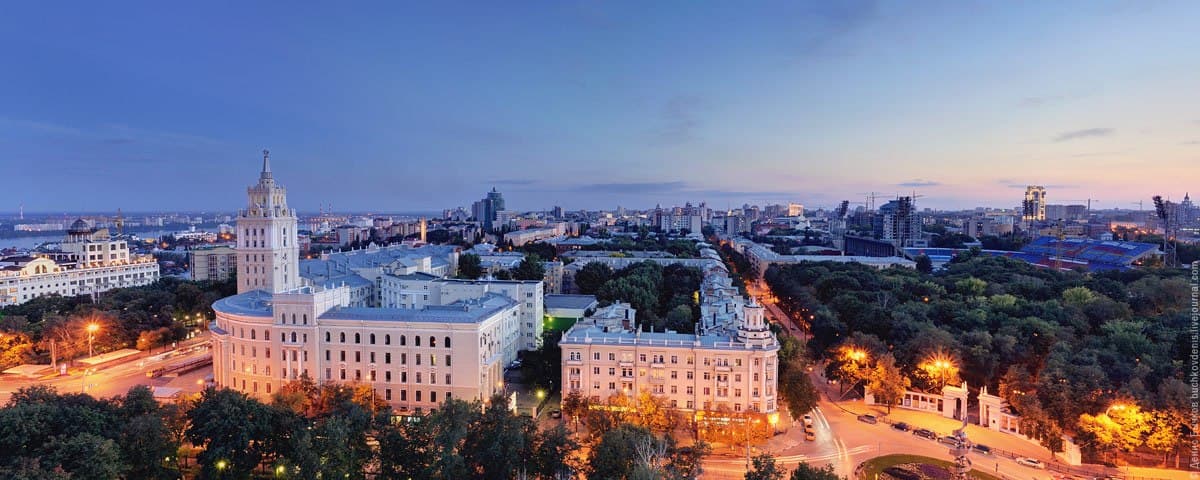 Bychkov Denis / CC BY-SA 3.0, via Wikimedia Commons
“Where imperial ambition launched a fleet and a kitten found its street.”
Not the postcards. The stories even locals don't know — whispered in your ear, right where they happened.
Peter the Great, while building Russia's first naval fleet here, once requested the presence of Bishop Mitrofan of Voronezh.
This factory made history not once, but twice, with groundbreaking aircraft.
In 1989, TASS, the Soviet news agency, reported an alleged UFO landing and encounters with extraterrestrial beings in a city park.
Discover every secret of Voronej
Every address, every reveal in full — in your ear, right where it happened.
You pick your stops. You walk. The voice reveals what the others miss.
No tours available yet. Check back soon — we're preparing them.
Voronezh, a bustling metropolis in southwestern Russia, lies alongside the Voronezh River, a mere 12 kilometers from its convergence with the Don River. This city holds a singular and pivotal position in the nation's unfolding story, where Tsar Peter the Great established the initial shipyard to construct a fleet for the Azov campaign. This strategic decision transformed Voronezh into a crucial industrial and economic center, briefly making it the largest city in South Russia.
Today, Voronezh stands as a lively cultural and industrial hub, weaving its ancient past with modern urban rhythms. With a population exceeding one million, it serves as the administrative heart of the Voronezh Oblast. The city's contours feature expansive avenues, verdant parks, and a distinctive architectural character, reflecting its journey from a 16th-century border fortress to a contemporary scientific and educational nexus. It is a city that beckons exploration, from its historical monuments to its animated arts scene.
## From Fortress to Fleet: The Birth of a Naval Power Voronezh was officially founded in 1586 by Tsar Feodor I as a fortress to safeguard Russia's southern borders against raids by Crimean and Nogai Tatars. The original wooden fortress, initially a rough four-sided shape, was rebuilt in 1594 after being burned down during a Cossack-Cherkas raid.
## Peter the Great's Vision and the Azov Flotilla The 17th century saw Voronezh gradually evolve into a substantial town. Its most transformative period began in the late 17th century when Peter the Great, recognizing the need for a naval fleet, chose Voronezh as the site for his ambitious shipbuilding program. Between 1696 and 1722, Peter visited Voronezh 13 times, spending over 500 days overseeing the construction of the Azov Flotilla—Russia's first-ever regular navy. This fleet included the 'Goto Predestinatsia,' Russia's first ship of the line, completed in 1698. This era solidified Voronezh's reputation as the 'Cradle of the Russian Fleet' and, for a time, made it the largest city and economic center of South Russia.
## Growth, Industry, and War In 1711, Voronezh became the seat of the Azov Governorate, later morphing into the Voronezh Governorate. The 19th century brought significant industrial development, with manufacturing industries like mills, tallow-melting, butter-making, and leather works thriving. The city's economic growth was further boosted by the construction of railway lines connecting it to Moscow in 1868 and Rostov-on-Don in 1871.
The 20th century presented new challenges. During World War II, Voronezh became a critical battleground, serving as a staging area for German attacks on Stalingrad and a key crossing point on the Don River. The city endured fierce fighting, with 92% of its buildings destroyed before its liberation on January 25, 1943. Remarkably, Voronezh was almost entirely rebuilt by 1950. Post-war, it continued its industrial expansion, establishing new factories and becoming known for its aerospace and electronics industries.
## Modern Voronezh In 2012, Voronezh officially surpassed a population of one million, becoming the 15th city in Russia to do so. Today, it stands as a significant center for business, industry, culture, and science in its region, continuing to blend its rich historical legacy with a modern, dynamic character.
Begin your exploration at Admiralteyskaya Square, a central gathering place and a symbol of Voronezh's naval origins. Here, you'll find a rostral column shaped like an anchor, signifying Russia's access to open waters. Docked nearby is the ship-museum 'Goto Predestinatsia,' a meticulously reconstructed replica of Peter the Great's first battleship, offering a unique glimpse into 18th-century maritime life.
For architectural marvels, visit the soaring Annunciation Cathedral, a 97-meter-tall Russian Byzantine-style church completed in 2009. It ranks as the third-largest Orthodox church in Russia and among the tallest globally. Another significant religious site is the Alekseyevo-Akatov Convent, one of the city's oldest spiritual centers, known for its peaceful atmosphere and beautiful bell tower.
Art enthusiasts should make their way to the Voronezh Regional Art Museum named after I.N. Kramskoy, housed in a baroque palace. It features a diverse collection, from ancient Egyptian artifacts to classic Russian paintings. For a unique and beloved local landmark, seek out the touching Monument to White Bim Black Ear, a statue dedicated to a loyal dog from a famous literary work, patiently waiting outside the Puppet Theater.
If you're traveling with children or simply enjoy marine life, the Voronezh Oceanarium is home to over 300 species of fish and other marine creatures, including sharks, lemurs, and crocodiles. For a leisurely stroll, the Voronezh Central Park of Culture and Leisure, also known as 'Dynamo,' offers a revitalized green oasis with landscaped paths and recreational areas.
Voronezh experiences a temperate continental climate with four distinct seasons. The best time for warm-weather activities is from mid-June to late August, when temperatures are generally warm, averaging around 20-28°C (68-82°F). July is typically the warmest month, with average highs of 26-28°C (79-82°F). August is often the driest month, making it ideal for outdoor exploration.
Winters are cold and snowy, with average January and February temperatures around -5°C (23°F). While cold, the city often features festive decorations during the winter, with the main square adorned with themes from classic stories.
The official currency in Voronezh, and throughout Russia, is the Russian Ruble (RUB). You'll find banknotes in denominations of 5, 10, 50, 100, 500, 1000, and 5000 rubles, and coins in kopeks and rubles. While some prices might be indicated in dollars, payments are exclusively in rubles. Foreign currency can be exchanged at authorized banks or official exchange offices; avoid street exchanges. It's advisable to carry your passport for currency exchange transactions.
Voronezh is a significant transportation hub. It has an international airport (Chertovitskoye, VOZ) with connections from Moscow and some international flights. The city offers excellent rail links, with many daily trains to and from Moscow (a journey of 6-10 hours). The main station, Voronezh 1, is within walking distance of the city center. Buses are a budget-friendly option, with regular services connecting Voronezh to Moscow and other regional cities via the M4 'Don' federal highway. Public transport within the city includes buses, marshrutkas (minibuses), and a small number of trolleybuses.