Église Notre-Dame
The grand Église Notre-Dame, a parish church for Vitré's wealthy merchants, holds a surprising detail often overlooked.
Full story unlocks in the tour
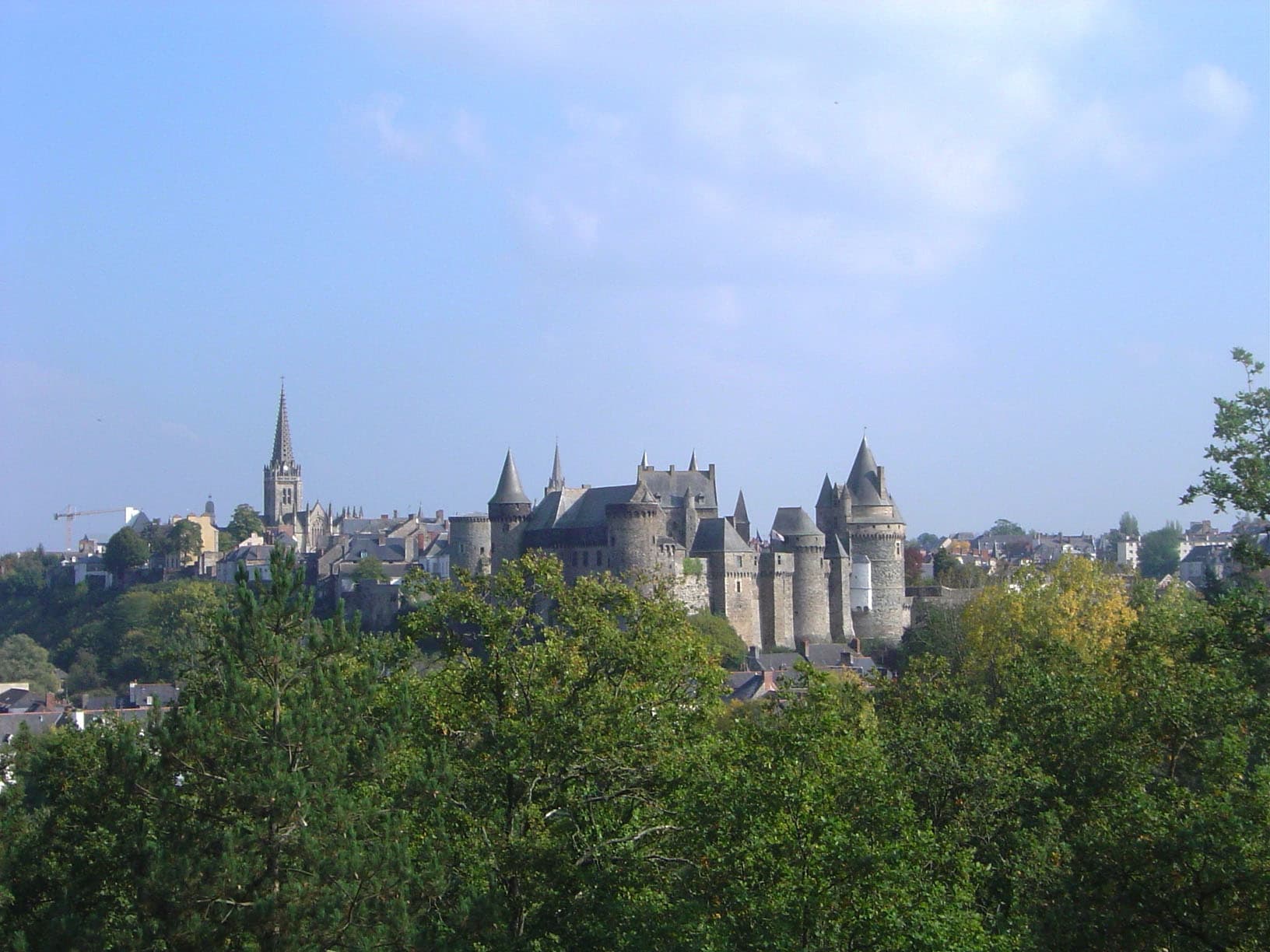 The original uploader was Pacoviande at French Wikipedia. Later versions were uploaded by Grondin at fr.wikipedia. / CC BY-SA 3.0, via Wikimedia Commons
“Walk through a medieval tableau where stone ramparts guard centuries of stories.”
Not the postcards. The stories even locals don't know — whispered in your ear, right where they happened.
The grand Église Notre-Dame, a parish church for Vitré's wealthy merchants, holds a surprising detail often overlooked.
This serene English garden, a verdant escape in the heart of Vitré, holds a secret of monumental proportions.
Vitré's imposing castle, a formidable medieval fortress, once played a crucial role beyond mere defense.
Discover every secret of Vitré
Every address, every reveal in full — in your ear, right where it happened.
You pick your stops. You walk. The voice reveals what the others miss.
No tours available yet. Check back soon — we're preparing them.
Vitré, a walled town in eastern Brittany, invites exploration through its ancient streets and enduring architecture. This commune in the Ille-et-Vilaine department offers a tangible connection to the past, where the rhythm of daily life unfolds against a backdrop of medieval grandeur. The town's formidable castle, a sentinel of stone, stands as a testament to its strategic importance in bygone eras.
Strolling through Vitré reveals a town where history is not merely preserved but lived. Timber-framed houses lean into narrow lanes, their upper stories almost touching, creating a sense of intimate enclosure. The air carries the scent of ancient stone and blossoming gardens, inviting visitors to slow their pace and absorb the atmosphere. Vitré provides a journey into a Brittany that feels both authentic and untouched by the swift currents of modernity.
## Medieval Origins and Fortifications Vitré's origins stretch back to the 11th century, when the Barony of Vitré was established. The construction of its formidable castle began in the 13th century, solidifying its role as a crucial defensive stronghold on the eastern border of Brittany. These robust fortifications were not merely decorative; they were vital in protecting the Duchy from incursions, particularly from the French kingdom. The castle's design, with its imposing curtain walls and numerous towers, speaks to a period of frequent conflict and the necessity of strong defenses.
## Economic Flourishing and Urban Development By the Middle Ages, Vitré had evolved into a significant economic center. Its strategic location fostered trade, and the town became particularly renowned for its textile industry, especially the production of canvas and linen. Wealthy merchants built elegant timber-framed houses, many of which still line the streets today, showcasing the prosperity of the era. The town's urban fabric grew organically around its defensive core, with churches like Église Notre-Dame serving as spiritual and social anchors for the burgeoning population.
## From Duchy to France With the integration of Brittany into France in 1532, Vitré's military significance gradually waned, though its economic importance persisted for a time. The castle transitioned from a purely defensive structure to a more residential and administrative role. Over subsequent centuries, Vitré adapted to changing political landscapes, retaining its distinctive character while embracing new developments. The town survived various conflicts and transformations, always maintaining its strong sense of identity, rooted deeply in its medieval foundations. Today, Vitré stands as a beautifully preserved example of a Breton walled town, offering a window into its enduring past.
Begin your exploration at the Château de Vitré, a grand medieval fortress that dominates the townscape. Its robust walls and towers invite you to imagine centuries of history within. Wander through the Old Town, where narrow, winding lanes are framed by timber-framed houses, their facades telling stories of bygone eras. The Église Notre-Dame, with its intricate details and impressive architecture, offers a moment of quiet contemplation. Seek out the former sacristy and tribune for the barons of Vitré. For a moment of tranquility, visit the Jardin du Parc, an English garden providing a verdant escape, home to a remarkable giant thuya. A walk along the Ramparts offers sweeping views of the town and surrounding countryside, providing perspective on Vitré's enduring defenses.
Vitré is particularly inviting during the spring and early autumn. The months of May, June, and September offer pleasant temperatures, fewer crowds, and the landscape is either in bloom or displaying the warm hues of fall. Summer, while popular, can be busier. Winter provides a quieter experience, though some attractions may have reduced hours.
Access Vitré easily by train; the town's station connects to major cities. Once there, the compact Old Town is best explored on foot, allowing you to appreciate its intricate details. Parking is available outside the walled center for those arriving by car. Local eateries offer traditional Breton cuisine, from galettes to fresh seafood. Accommodation options range from charming guesthouses within the historic core to modern hotels on the outskirts. English is spoken in tourist-oriented establishments, but a few French phrases will be appreciated.