Solomon Tower
The tower bears the name of an 11th-century Hungarian king, yet he was never actually imprisoned within its walls.
Full story unlocks in the tour
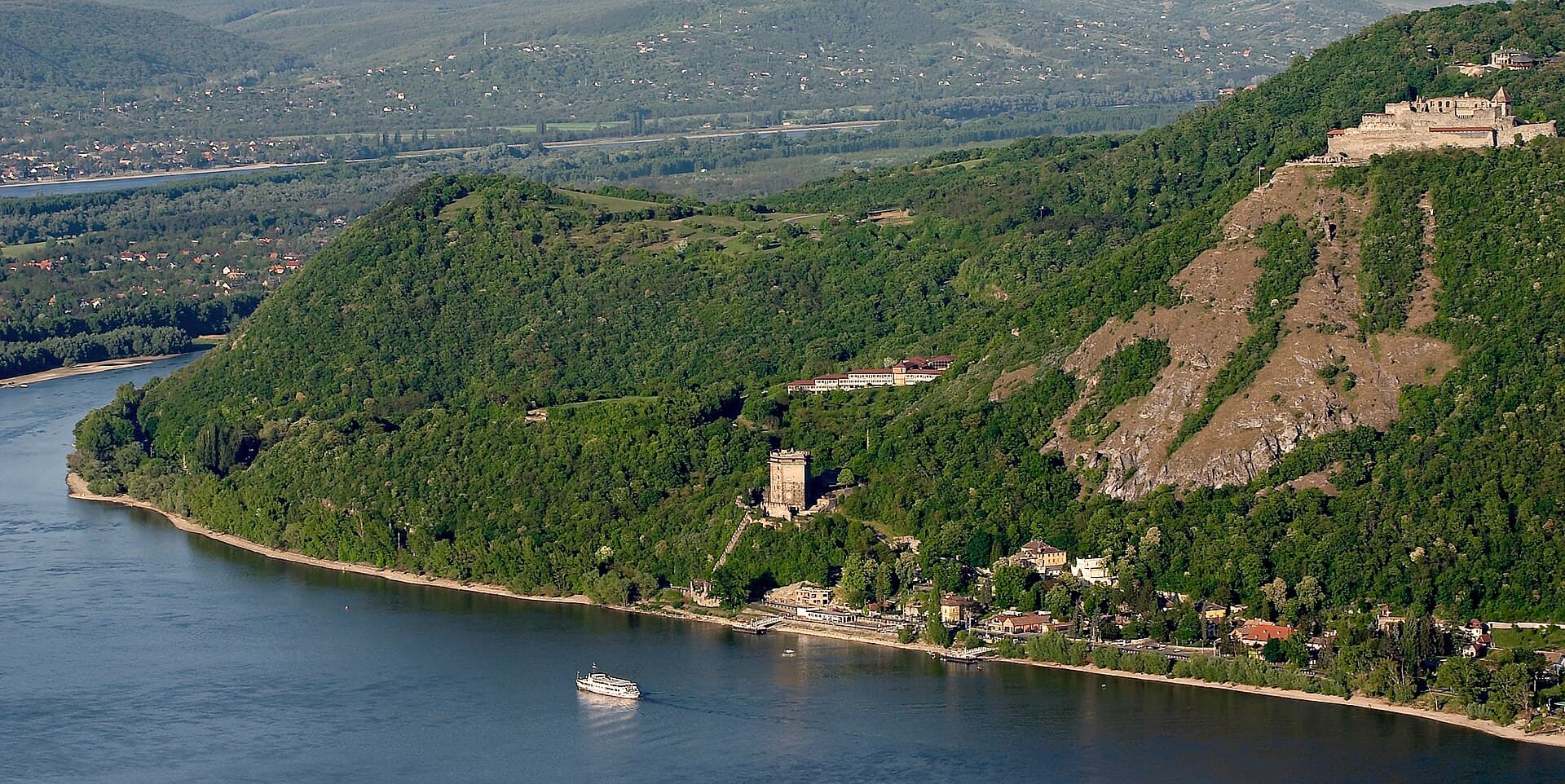 Szvitek Péter / CC BY 2.5 hu, via Wikimedia Commons
“Where the Danube bends, a thousand years of stories unfold.”
Not the postcards. The stories even locals don't know — whispered in your ear, right where they happened.
The tower bears the name of an 11th-century Hungarian king, yet he was never actually imprisoned within its walls.
The construction of this formidable hilltop fortress was largely funded by an unexpected source.
This Hungarian royal residence introduced a groundbreaking architectural style to Europe.
Discover every secret of Visegrád
Every address, every reveal in full — in your ear, right where it happened.
You pick your stops. You walk. The voice reveals what the others miss.
No tours available yet. Check back soon — we're preparing them.
Visegrád, a small town on the right bank of the Danube in Hungary, is a place where history and nature converge along the dramatic curve of the Danube Bend. Its name, of Slavic origin, translates to "upper castle" or "upper settlement," a fitting description for its most prominent features. Just an hour north of Budapest, Visegrád offers a compelling escape from the capital, inviting visitors to explore medieval structures, enjoy expansive river views, and immerse themselves in a rich historical narrative.
The town's compact size makes its historical landmarks largely accessible on foot, ideal for day-trippers. From the imposing Visegrád Citadel high on a hill to the remnants of the Royal Palace and the hexagonal Solomon Tower, the area is a testament to Hungary's past. Beyond its historical significance, Visegrád is embraced by forested hills, offering opportunities for hiking and outdoor activities, all set against the backdrop of the Danube's graceful meander.
## From Roman Outpost to Royal Seat Visegrád's strategic location along the Danube has drawn inhabitants for millennia. The area was first settled during the Roman Empire, when a castrum named Pontus Novatus was built on Sibrik Hill in the first half of the 4th century as part of the limes, the Roman frontier. This Roman military camp was abandoned in the early 5th century, but by the 10th and 11th centuries, a rebuilt fortification served as a regional center for the nascent Hungarian state. The name "Visegrád" first appears in documents from 1009, referring to this regional center.
## Rebuilding and Royal Grandeur The devastating Mongol invasion of 1242 led to the destruction of the existing fortification. In its aftermath, King Béla IV ordered the construction of new, stronger stone castles across Hungary. The current double fortress system in Visegrád, comprising the Upper Castle (Citadel) and the Lower Castle (including Solomon Tower), was built around 1250-1260, largely financed by Queen Maria Laskarina. In 1325, King Charles I of Hungary made Visegrád the royal seat, initiating the construction of the Royal Palace. This period saw Visegrád become a significant political hub, hosting the Visegrád Congress in 1335, a crucial meeting between the kings of Hungary, Bohemia, and Poland to establish trade routes and an alliance against Habsburg Austria.
## Renaissance Flourish and Ottoman Decline The Royal Palace was further expanded by King Louis I and King Sigismund, serving as an official royal residence until the early 15th century. Its peak of glory arrived under King Matthias Corvinus in the late 15th century, who had the palace complex extensively reconstructed in a late Gothic style with Italian Renaissance decorations—the first instance of this architectural style outside Italy. However, Visegrád's prominence waned after the Battle of Mohács in 1526 and the subsequent Ottoman conquest in 1544. The palace fell into ruins, eventually becoming completely buried by earth by the 18th century. Excavations to restore the palace began in 1934 and continue today. The citadel also suffered significant damage during the Ottoman occupation and was later blown up on the orders of Emperor Leopold I in 1702, remaining largely in ruins until restoration efforts began in the 1870s.
Visegrád offers a compelling journey through medieval Hungary, with its primary attractions providing expansive views and historical insights. The Visegrád Citadel, also known as the Upper Castle or Fellegvár, stands atop a 328-meter hill, offering sweeping vistas of the Danube Bend. Visitors can explore its ramparts, towers, and courtyards, with exhibitions showcasing medieval military history, weaponry, and a replica of the Hungarian Holy Crown. The citadel was also a place of safekeeping for the Hungarian royal insignia for centuries.
Below the Citadel lies the Solomon Tower (Salamon-torony), a hexagonal residential tower from the 13th century that was part of the lower fortress system. It houses exhibitions on Visegrád's history and reconstructed Gothic fountains from the Royal Palace. A short walk from the Solomon Tower are the ruins of the Royal Palace, a former summer residence for Hungarian kings, most notably King Matthias Corvinus. Ongoing excavations continue to reveal its grandeur, including reconstructed gardens and the Hercules Well.
Beyond the historical sites, Visegrád provides outdoor activities. The Danube Cycle Path runs along the river, connecting to nearby towns, and numerous hiking trails cater to various skill levels, offering more scenic views. For a different kind of thrill, the Visegrád Bobsled Track operates year-round, providing a fun descent down the hillside.
Visegrád is a rewarding destination throughout the year, with each season offering a distinct experience. For comfortable exploration and outdoor activities like hiking, spring (April to June) and early autumn (September to October) are ideal, with mild temperatures typically ranging from 15-22°C (59-72°F). Summer (June to early September) brings longer daylight hours and opportunities for activities along the Danube, though it can be warmer, with temperatures reaching 28-30°C (82-86°F), and crowds tend to be larger, especially on weekends. Winter is charming, particularly in the weeks leading up to Christmas, when the town hosts festive activities and a small Christmas market. However, temperatures can drop below freezing, making trails potentially slippery.
Visegrád is easily accessible from Budapest, making it a popular day trip. The most common way to reach Visegrád is by train from Budapest's Nyugati station to Nagymaros-Visegrád, which takes about 45 minutes. From Nagymaros, a short ferry ride crosses the Danube to Visegrád, with ferry schedules often timed to train arrivals. Alternatively, buses offer a direct route, or you can drive for a scenic journey along the Danube. Some Danube Bend cruises also include a stop in Visegrád.
Once in Visegrád, many of the historical sites are within walking distance of each other. Comfortable shoes are essential, especially if you plan to hike up to the Citadel. While some places may accept cards, it's advisable to carry some cash for smaller purchases or entrance fees. For a more immersive experience, consider exploring the marked hiking trails through the surrounding forests rather than sticking to main roads.