The Fortified Church tower
From the highest point in Viscri, you can survey the village, but a specific detail on the church's exterior hints at a forgotten past.
Full story unlocks in the tour
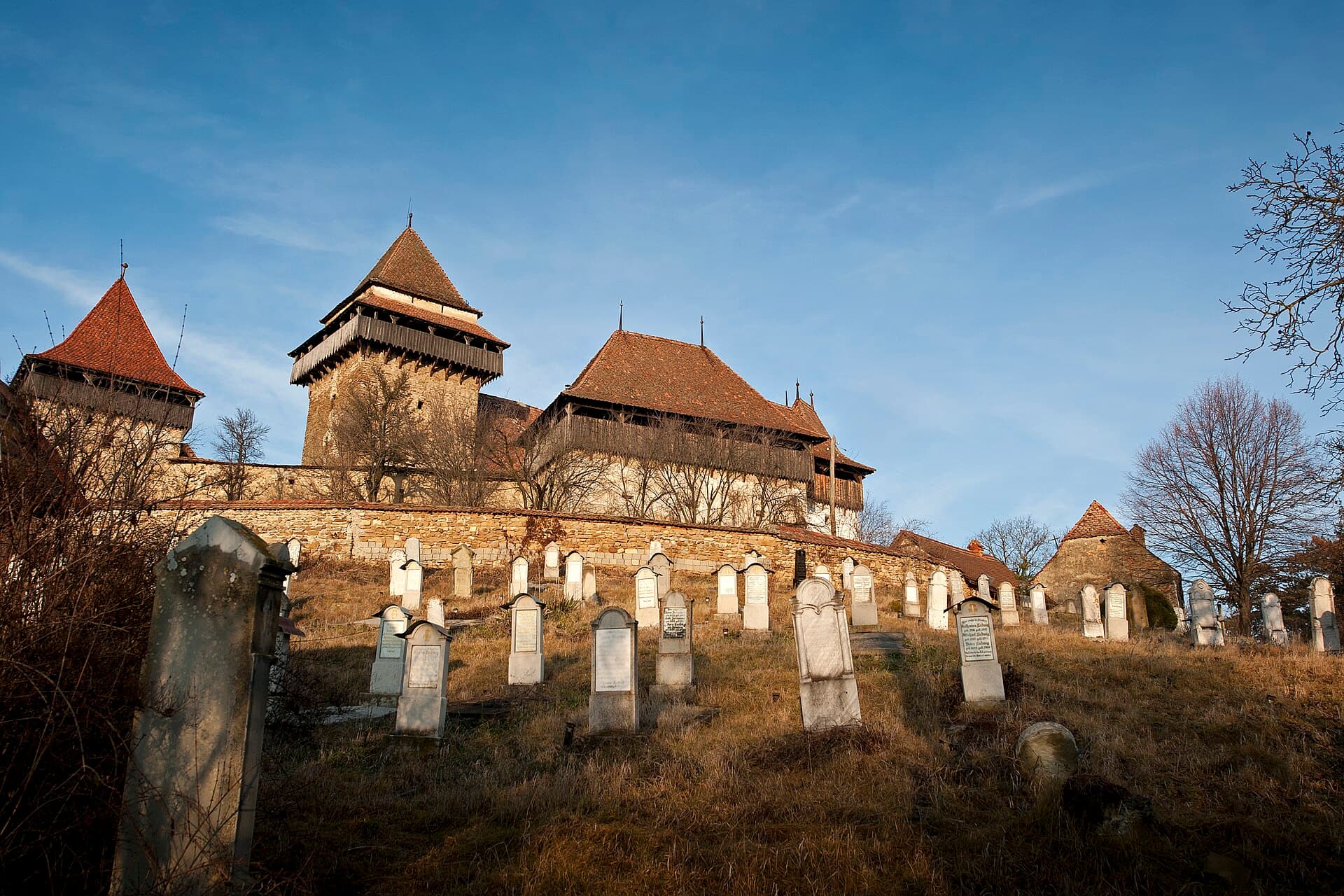 Diana Popescu, uploaded by Utilizator:Dv popescu at ro.wikipedia / CC BY-SA 3.0 ro, via Wikimedia Commons
“Where horse-drawn carts still outnumber cars, and time moves at the pace of a grazing cow.”
Not the postcards. The stories even locals don't know — whispered in your ear, right where they happened.
From the highest point in Viscri, you can survey the village, but a specific detail on the church's exterior hints at a forgotten past.
Among the traditional Saxon houses, one stands out for its royal connection, yet its true purpose extends beyond a simple retreat.
Wandering the unpaved lanes, you'll notice a particular rhythm to the village's daily life that speaks to centuries-old agricultural practices.
Discover every secret of Viscri
Every address, every reveal in full — in your ear, right where it happened.
You pick your stops. You walk. The voice reveals what the others miss.
No tours available yet. Check back soon — we're preparing them.
Viscri, a small village in the heart of Transylvania, Romania, offers a journey back in time. A UNESCO World Heritage site, it is celebrated for its remarkably preserved rural architecture and a way of life that has largely resisted modernization. The village's unpaved roads, traditional Saxon houses, and the iconic fortified church create a serene atmosphere that captivates visitors.
Life in Viscri unfolds at a deliberate pace, marked by horse-drawn carts and freely roaming farm animals. This commitment to maintaining age-old practices, from traditional farming to local crafts, has earned Viscri international recognition, drawing travelers seeking an authentic experience of rural Transylvania.
Viscri's charm lies in its harmonious blend of history, culture, and nature, where every corner seems to tell a story of resilience and community. It's a place where the past is not just remembered but actively lived, offering a unique glimpse into a sustainable rural model.
Viscri's origins trace back to the 12th century, when it was founded by Saxon settlers invited by the Hungarian crown to fortify the Transylvanian region. However, archaeological surveys indicate that a small Romanesque chapel, the "white church" (Weisskirch), which gives the village its German name, was initially built by Székely inhabitants around 1100 AD. The Saxons later took over this chapel in 1185.
Over the centuries, the church underwent significant transformations to become the fortified structure seen today. In the 13th century, the Saxons built a Romanesque hall church, integrating the earlier chapel. The threat of Ottoman expansion and raids in the 15th and 16th centuries prompted villagers to fortify their church, erecting two concentric defensive walls, some reaching 10 meters in height and 2 meters in thickness, creating a refuge for both residents and livestock during attacks.
The fortified church complex, a prime example of Transylvanian Saxon defensive architecture, includes defensive towers, walls with gun loops, and storage chambers for food supplies. The interior preserves medieval frescoes, wooden galleries, and a Baroque organ. The church and its surrounding village were designated a UNESCO World Heritage Site in 1999, recognizing their cultural and historical significance.
In the late 20th century, many Transylvanian Saxons emigrated to Germany, leaving behind numerous traditional homes. However, Viscri experienced a remarkable revival, partly due to the efforts of organizations like the Mihai Eminescu Trust and the patronage of King Charles III (then Prince Charles), who purchased and restored several traditional Saxon houses in the village starting in 1998. His involvement brought global attention to Viscri's preservation efforts and authentic cultural heritage, making it a model for sustainable rural development.
The main attraction in Viscri is its UNESCO World Heritage-listed Fortified Church. Originally built in the 12th century, this Lutheran church was fortified in the 15th century with thick stone walls, watchtowers, and a massive gate, serving as a refuge during invasions. Visitors can explore the church's interior, which features medieval frescoes and a Baroque organ, and climb to the highest tower for panoramic views of the village and surrounding landscape. A small museum within the church complex offers insights into the history and culture of the Saxon community.
Beyond the church, wander through Viscri's traditional Saxon houses, many of which are beautifully preserved and painted in pastel colors, particularly the distinctive Viscri-blue. These houses often feature wooden gates with intricate carvings and traditional furnishings. One notable example is King Charles III's guesthouse (Casa Prințului de Wales), a restored 18th-century Saxon home that visitors can tour or even book for an overnight stay.
Engage with local artisans by visiting workshops where traditional crafts are still practiced. You can witness blacksmiths shaping iron tools and horseshoes, potters at work, and women hand-knitting wool products like socks, slippers, and mittens using techniques passed down through generations. These handmade items are available for purchase in the village.
For a different perspective, consider a horse-drawn cart ride through the village and surrounding countryside, offering a serene way to experience the natural beauty and agricultural rhythms of Transylvania. You can even take trips to see shepherds at work or visit a traditional charcoal-making site.
The best time to visit Viscri is during the late spring (May-June) and early autumn (September-October). During these shoulder seasons, the weather is pleasant, and the village experiences fewer crowds, offering a more authentic and tranquil experience. May and September provide comfortable temperatures and sunny days, ideal for exploring the village and countryside. While summer (July-August) is also suitable for warm-weather activities, it is peak tourist season, which can lead to higher prices and more visitors.
Viscri is located in Brașov County, Transylvania, between Brașov and Sighișoara. The village is accessible by car via a side road off the main route between Bunești and Rupea, which is paved. While public transportation options are limited directly to Viscri, you can take a train to Rupea and then a taxi to the village. Some guesthouses offer pick-up services from Rupea if arranged in advance.
Accommodation in Viscri primarily consists of guesthouses in beautifully restored traditional Saxon houses, many of which are family-run and offer home-cooked meals featuring local ingredients. Booking in advance is highly recommended, especially during peak season, as capacity is limited. Internet access can be limited in some areas, so be prepared for potential connectivity issues. Many visitors find bicycles a good way to explore the village and its surroundings, with rentals often available at guesthouses.