Finca Agroecológica El Paraíso
This organic farm offers more than just a meal; it tells a story of perseverance against skepticism.
Full story unlocks in the tour
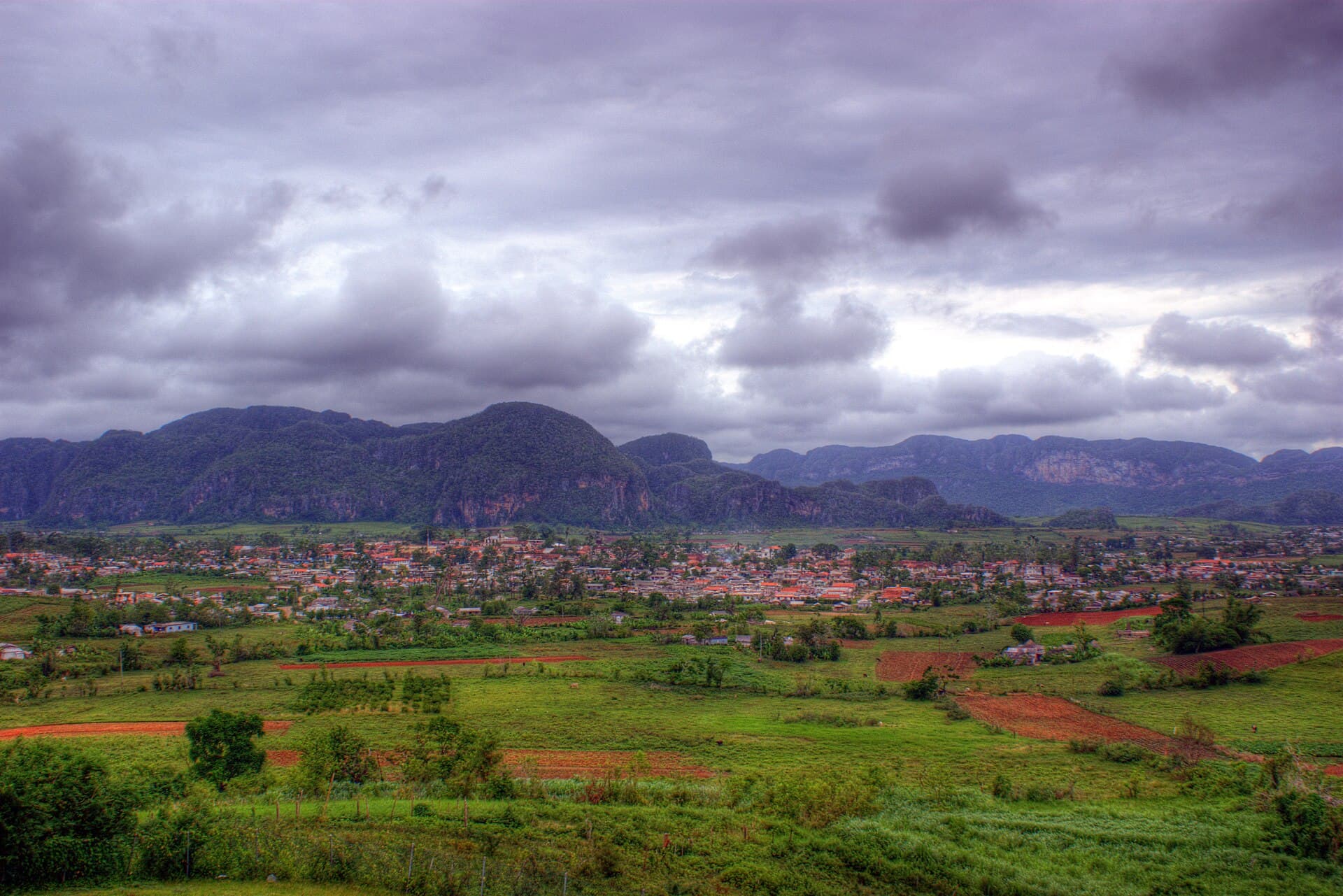 Martin Abegglen from Bern, Switzerland / CC BY-SA 2.0, via Wikimedia Commons
“Where ancient landscapes meet the rhythm of tobacco and tradition.”
Not the postcards. The stories even locals don't know — whispered in your ear, right where they happened.
This organic farm offers more than just a meal; it tells a story of perseverance against skepticism.
A monumental artwork painted directly onto a mogote cliff face depicts a surprising narrative.
The distinct mogotes of Viñales hold a geological secret that dates back millions of years.
Discover every secret of Viñales
Every address, every reveal in full — in your ear, right where it happened.
You pick your stops. You walk. The voice reveals what the others miss.
No tours available yet. Check back soon — we're preparing them.
Viñales, a town in western Cuba's Pinar del Río province, unfolds as an agricultural valley celebrated for its dramatic landscapes and enduring traditional way of life. The region is defined by its iconic mogotes, steep-sided, rounded limestone hills that ascend abruptly from the valley floor, forging a distinctive and ancient panorama. The Viñales Valley was designated a UNESCO World Heritage Site in 1999, recognized for its exceptional natural beauty, its persistent traditional agricultural practices—especially tobacco cultivation—and its vernacular architecture.
Life in Viñales moves at a more deliberate pace compared to Cuba's bustling cities. Here, the rhythm is set by farming cycles, the soft clip-clop of horses on colorful streets, and the bright chirping of birds. It is a place where the landscape itself feels like a journey into the past, offering a serene and authentic Cuban experience.
The history of Viñales extends to early indigenous communities who led a nomadic existence within the limestone depression of the valley. By the 17th and 18th centuries, ranching became the primary economic activity. However, the landscape began to transform with the arrival of planters in the late 17th century, leading to over three thousand tobacco plantations by 1840. The town of Viñales itself was officially established on January 1, 1879.
This fertile region, with its unique microclimate and rich red soils, proved ideal for growing premium tobacco, drawing numerous farmers, particularly immigrants from the Canary Islands who arrived in numbers in the early 19th century. These traditional agricultural techniques, largely unchanged for centuries, continue to define the valley's cultural landscape. The labor-intensive methods are believed to contribute to higher-quality tobacco compared to mechanical processes.
Beyond its agricultural significance, the Viñales Valley also holds a poignant history as a refuge for cimarrones, or runaway enslaved people. Archaeological sites in the region provide evidence of these maroon communities, who sought protection within the valley's numerous caves and rock formations. The cultural fabric of Viñales evolved from a blend of indigenous, African, and Spanish influences, giving rise to interwoven customs in religion, language, games, songs, and dances. In recognition of its unique blend of natural and cultural heritage, the Viñales Valley was inscribed as a UNESCO World Heritage Site in 1999.
The Viñales Valley unfolds a range of experiences, from natural wonders to cultural immersion. The iconic mogotes are a constant presence, best appreciated from viewpoints like the one at Hotel Los Jazmines, which provides wide views of the valley floor, tobacco fields, and royal palms. Exploring the valley can be done through various activities, including hiking, cycling, or horseback riding, often led by local guides.
A visit to a tobacco farm is a quintessential Viñales experience, offering insight into traditional cultivation, harvesting, and drying methods, and often including a cigar-rolling demonstration. The region is also home to extensive cave systems. The Cueva del Indio allows for a boat ride along an underground river, while the Gran Caverna de Santo Tomás is Cuba's largest cave system, offering guided tours. Another notable sight is the Mural de la Prehistoria, a massive contemporary artwork painted on a mogote depicting the evolution of life. For a unique dining experience, Finca Agroecológica El Paraíso provides farm-to-table meals with valley views.
Viñales experiences a tropical climate with consistently warm temperatures throughout the year. The dry season, from November to April, is generally considered the most pleasant time to visit, with clear skies and minimal rainfall, making it ideal for outdoor activities like hiking and exploring. Temperatures during these months range from comfortable lows of 19-22°C to daytime highs around 25-30°C. The wet season runs from May to October, with increased humidity and more frequent, though often short, tropical showers, peaking from June to September. While the valley is verdant and green during this period, some activities like cycling through muddy trails can be more challenging.
Viñales is approximately 180 kilometers west of Havana. Travel from Havana can be arranged via the Viazul bus service (around 3-4 hours) or shared taxi collectivos (2.5-3 hours). Private taxis are also an option, offering door-to-door service. Within Viñales, cycling is a popular way to explore the relatively flat valley floor, and bikes can be rented through casas particulares (private homestays). Horseback riding tours are also widely available for exploring the countryside.
Accommodation in Viñales largely consists of casas particulares, offering an authentic experience with local families. Many hosts can assist with arranging tours, transportation, and other activities. While the town is small and walkable, having arrangements for excursions into the valley is advisable.