Church of Santa Marinha
This unassuming church holds a connection to one of history's most enigmatic orders.
Full story unlocks in the tour
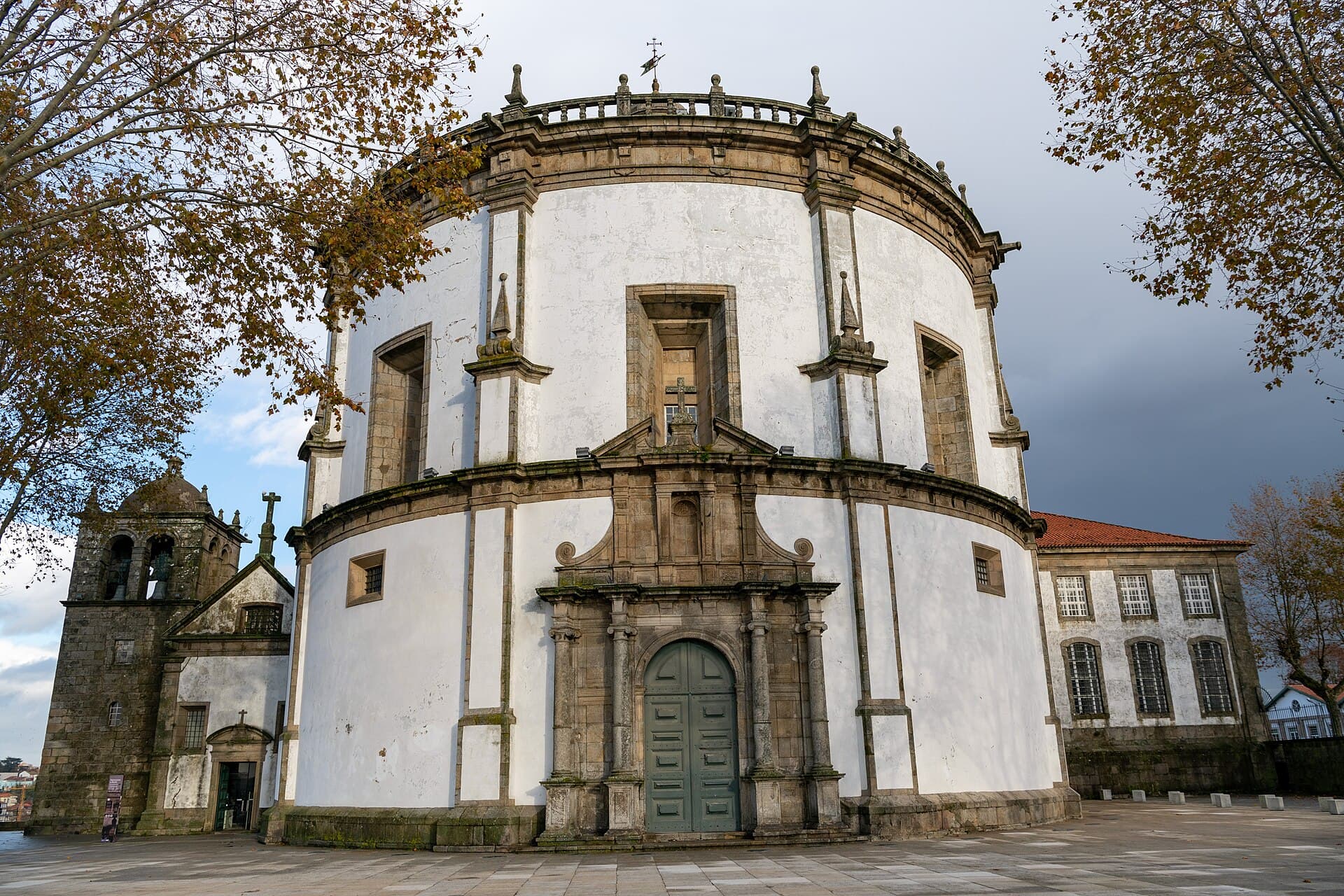 xiquinhosilva from Cacau / CC BY 2.0, via Wikimedia Commons
“Beyond the famed cellars, a city of unexpected coastal beauty and ancient secrets awaits.”
Not the postcards. The stories even locals don't know — whispered in your ear, right where they happened.
This unassuming church holds a connection to one of history's most enigmatic orders.
Beneath the modern streets, an ancient network reveals a remarkable feat of engineering.
The world's largest wine company has its origins in Gaia, and you can visit its original home.
Discover every secret of Vila Nova de Gaia
Every address, every reveal in full — in your ear, right where it happened.
You pick your stops. You walk. The voice reveals what the others miss.
No tours available yet. Check back soon — we're preparing them.
Vila Nova de Gaia, often simply called Gaia, is a city in northern Portugal that rests directly across the Douro River from Porto. Though frequently considered an extension of its more famous neighbor, Gaia is a distinct municipality with its own character, history, and a slower, more relaxed pace. It is globally recognized as the heartland of Port wine production, with its hillsides lined with numerous wine cellars where the celebrated fortified wine is aged and stored.
Connected to Porto by several bridges, most notably the iconic Dom Luís I Bridge, Gaia offers some of the most expansive panoramic views of Porto's historic Ribeira district, especially as the sun descends. Beyond the allure of Port wine, Gaia presents a diverse landscape, from its active riverside promenade to its extensive coastline featuring some of Portugal's longest beaches. Whether you are drawn by the promise of a Port tasting, a leisurely stroll along the Douro, or a quiet day by the Atlantic, Gaia presents a compelling destination that complements a visit to the Porto region.
The historical roots of Vila Nova de Gaia reach deep into antiquity, with evidence of Celtic and Roman settlements. An ancient settlement named Cale existed on this site, which, combined with the port on the opposite bank (Portus), is believed to have given Portugal its name: Portucale. Most of the population during the Roman occupation likely resided on the south bank of the river.
The official founding of the modern city dates back to 1255. King Afonso III granted the settlement a charter, establishing "Vila Nova" (New Town) near the old Gaia Castle. This was a strategic political move by the Crown to create a trading hub independent of the powerful Bishop of Porto, who controlled the lands and taxed trade on the northern bank. Gaia offered more favorable conditions and lower taxes for merchants and artisans, attracting entrepreneurial residents and stimulating its early economy, which relied on agriculture and river logistics.
A pivotal moment in Gaia's development came in the 17th century with the rise of Port wine. The city's climate and northern-facing slopes provided ideal conditions for storing goods, eventually making it the primary location for aging and storing Port wine. In 1756, the Marquis of Pombal solidified Gaia's destiny by granting it the exclusive right to age and store Port wine for export, transforming it into the country's "bank vault" for liquid gold and accelerating its economic growth. This legal requirement meant that grapes grown in the Douro Valley were transported downriver in traditional rabelo boats to the lodges of Gaia for maturation.
The construction of the Ponte de Dona Maria Pia (1877) and the iconic Ponte de Dom Luís I (1886) bridges significantly improved transportation and permanently linked the two banks of the Douro, fostering urbanization and creating a single metropolitan area with Porto. By the 20th century, urban development continued, with Gaia being elevated to city status in 1984. Today, Vila Nova de Gaia remains a vital economic hub, recognized worldwide for its Port wine cellars and as a city that seamlessly blends its enduring past with modern life.
Vila Nova de Gaia's most iconic attractions revolve around its riverside and the world of Port wine. A visit to the Port Wine Cellars is essential, with numerous historic lodges like Sandeman, Cálem, Taylor's, Graham's, and Ferreira offering tours and tastings. These cellars, many centuries old, are where Port wine is aged and stored.
The Dom Luís I Bridge is not only a vital connection to Porto but also an attraction in itself, offering pedestrian access on both its upper and lower decks with impressive views of the Douro River and both cities. For a different perspective, consider a Douro River cruise on a traditional rabelo boat, which historically transported wine barrels downriver. The Teleférico de Gaia cable car provides a scenic ride from the riverside up to the Jardim do Morro, offering expansive views.
At the top, Jardim do Morro is a popular park with exceptional panoramic views of Porto, particularly at sunset, and is a lively spot for relaxing. Nearby, the Monastery of Serra do Pilar, a UNESCO World Heritage site, is known for its unique circular church and offers another vantage point. Beyond the riverfront, Gaia offers 17 kilometers of coastline with numerous Blue Flag beaches, such as Miramar, Granja, and Madalena, providing opportunities for relaxation and water activities. The WOW Cultural District (World of Wine) offers a complex of museums dedicated to wine, chocolate, cork, and the history of Porto, along with various restaurants and bars.
Vila Nova de Gaia enjoys a Mediterranean climate with mild, wet winters and warm, dry summers, making it comfortable to visit year-round. The shoulder seasons of May-June and September are often considered ideal, offering a pleasant balance of good weather, moderate crowds, and full opening hours for attractions. During these months, average temperatures range from 17.4°C to 19.4°C, with less rainfall than in autumn or winter.
July and August are the warmest and sunniest months, with average temperatures around 20.5-20.7°C and minimal rainfall, making them perfect for enjoying the beaches and outdoor activities. However, these are also the busiest months. For those who prefer fewer visitors and a genuine off-season atmosphere, December and January are quieter, though wetter and cooler, with average temperatures around 10.4-11.5°C. Port lodges remain open year-round.
Vila Nova de Gaia is easily accessible from Porto, primarily by walking across the Dom Luís I Bridge on either its upper or lower deck. Public transport options include the metro (Jardim do Morro station on the upper deck) or buses on the lower deck. The Teleférico de Gaia cable car offers a convenient and scenic way to travel between the riverside and the upper part of the city.
Many of Gaia's attractions, especially the Port wine cellars and riverside areas, are within walking distance of each other. Wearing comfortable shoes is recommended for exploring the historic center's alleys and hilly terrain. While Porto is generally more centralized for nightlife and a wider array of restaurants, Gaia offers a quieter atmosphere and often more affordable accommodation options. It also presents excellent dining, including Michelin-starred restaurants and active food markets like Mercado Beira-Rio. If you plan to visit during high season, it is advisable to book Port cellar tours in advance.