Baba Vida Fortress
The fortress bears the name of a legendary princess, but her sisters' fates hold a surprising lesson.
Full story unlocks in the tour
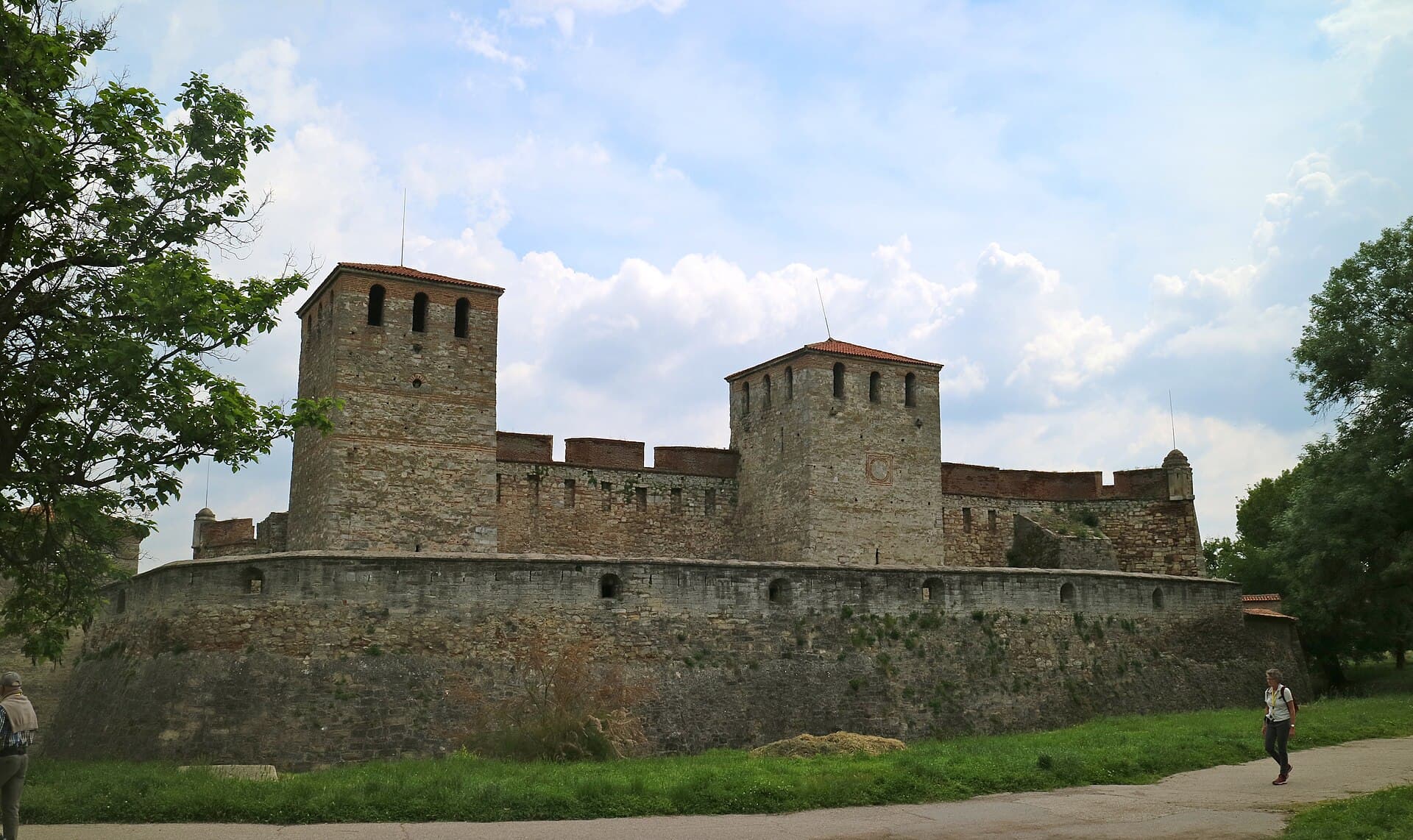 Erik Cleves Kristensen / CC BY 2.0, via Wikimedia Commons
“Where the Danube bends, stories unfold.”
Not the postcards. The stories even locals don't know — whispered in your ear, right where they happened.
The fortress bears the name of a legendary princess, but her sisters' fates hold a surprising lesson.
This grand synagogue, once a lively center of worship, now serves a different, unexpected purpose.
Look closely at the minaret of the Osman Pazvantoglu Mosque for a subtle, yet defiant, symbol.
Discover every secret of Vidin
Every address, every reveal in full — in your ear, right where it happened.
You pick your stops. You walk. The voice reveals what the others miss.
No tours available yet. Check back soon — we're preparing them.
Vidin, a city on the Danube River in Bulgaria's northwestern corner, offers a journey through millennia of human presence. From its origins as a Celtic settlement named Dunonia, meaning 'fortified place,' to its Roman incarnation as Bononia, and later as the medieval Bulgarian city of Bdin, Vidin has continuously evolved. Its strategic position on the Danube has made it a significant administrative, military, and trade center throughout the ages.
Today, Vidin is a city where ancient fortifications stand alongside tree-lined boulevards and riverside parks. It's a place that has witnessed empires rise and fall, leaving behind a layered architectural and cultural heritage. Despite facing economic challenges, Vidin is gaining recognition as a captivating destination, especially for those seeking an authentic glimpse into Bulgaria's past and its enduring connection to the Danube.
Vidin's story begins in the 3rd century BC with a Celtic settlement called Dunonia. The Romans later established a fort here, naming it Bononia, which became an important center within the province of Upper Moesia. This Roman influence laid the groundwork for the city's future as a fortified hub along the Danube Limes frontier system.
During the Middle Ages, Vidin, then known as Bdin, grew into a significant Bulgarian city and a bishop's seat. Between 971 and 976, it served as the center of future Bulgarian Emperor Samuil's territories. The iconic Baba Vida Fortress, Vidin's primary landmark, began construction in the 10th century on the ruins of the Roman watchtower and was substantially enlarged during the Second Bulgarian Empire, particularly under Tsar Ivan Stratsimir (1356–1396), who made it his capital. The fortress famously withstood an eight-month Byzantine siege led by Basil II.
Vidin fell to the Ottomans in 1396, becoming the last Bulgarian stronghold to do so. During this period, the Baba Vida Fortress was repurposed as an armory and prison. The city's importance resurfaced with Osman Pazvantoglu, a powerful Ottoman governor who declared independence from the Sultan in the late 18th and early 19th centuries, making Vidin his base. His mosque and library, constructed between 1798 and 1800, still stand in the Danube Park. Vidin was liberated from Ottoman rule in February 1878.
After Bulgaria's liberation, Vidin was included in the reestablished Bulgarian state. The city faced sieges during the Serbo-Bulgarian War in 1885 and the Second Balkan War in 1913, successfully defending itself. In the 20th century, Vidin experienced a significant flood in 1942 due to the rising Danube. Today, Vidin continues to navigate economic and demographic shifts, but its deep historical tapestry and strategic location on the Danube position it for renewed interest and development, particularly in tourism.
The Baba Vida Fortress is Vidin's most prominent landmark and the only entirely preserved medieval castle in Bulgaria. Explore its inner and outer walls, four towers, and the museum within, which showcases the fortress's history. The fortress also hosts a summer theater.
Stroll through the Danube River Park (Kraydunavski Park), a long alley perfect for walks, cycling, or enjoying riverside cafes. The park offers pleasant views of the Danube and the illuminated Baba Vida Fortress at night.
Discover the Vidin Synagogue, a grand Romanesque Revival building completed in 1894. After extensive renovation, it reopened in 2023 as the Jules Pascin Cultural Centre. Nearby, you'll find the Osman Pazvantoglu Mosque and Library, constructed around 1800. The mosque is notable for its unique minaret.
The Orthodox Cathedral of St. Dimitar is the second-largest church in Bulgaria and features rare frescoes depicting Bulgarian revolutionaries. You can also see remnants of Vidin's medieval fortified walls and gates, such as Stambol Kapiya and Top Kapiya, as you explore the city.
For a unique dining experience, consider Korabcheto (The Little Ship), a stationary restaurant floating on the Danube, known for its traditional Ribena Salamura, a spicy fish soup.
The best times to visit Vidin are during the spring (mid-May to mid-June) and autumn (mid-September to mid-October). During these periods, the weather is generally pleasant, with comfortable temperatures. While summer (July and August) offers warm to hot temperatures, it can also be intense. June typically sees the highest rainfall, while August is the driest month. Winter months are very cold and snowy.
Vidin is situated in the northwestern corner of Bulgaria, near the borders with Romania and Serbia. The city is approximately 200 km from Sofia. You can reach Vidin by bus or train from Sofia, with bus journeys taking around 3.5 to 4 hours. There are also bus connections from other Bulgarian cities and from neighboring countries. For more flexibility, driving to Vidin is recommended, as it allows for easier exploration of the surrounding area.
Within Vidin, the best way to explore is on foot, as many of the main sites are within walking distance of each other. The official currency is the Bulgarian Lev (BGN). English is spoken by many younger people, especially those in tourism. While Vidin is generally considered safe, it's always wise to take normal precautions.