Viborg Cathedral Crypt
Beneath the grand frescoes of Viborg Cathedral lies a secret chamber, holding a figure from a famous Danish fairy tale.
Full story unlocks in the tour
 Naveen Kadri / CC BY-SA 3.0, via Wikimedia Commons
“Where ancient sagas meet modern life amidst lakes and limestone.”
Not the postcards. The stories even locals don't know — whispered in your ear, right where they happened.
Beneath the grand frescoes of Viborg Cathedral lies a secret chamber, holding a figure from a famous Danish fairy tale.
Just outside Viborg, a subterranean world of immense proportions harbors a surprising ecosystem.
This unassuming grassy square next to Viborg Cathedral was once the stage for some of Denmark's most pivotal political dramas.
Discover every secret of Viborg
Every address, every reveal in full — in your ear, right where it happened.
You pick your stops. You walk. The voice reveals what the others miss.
No tours available yet. Check back soon — we're preparing them.
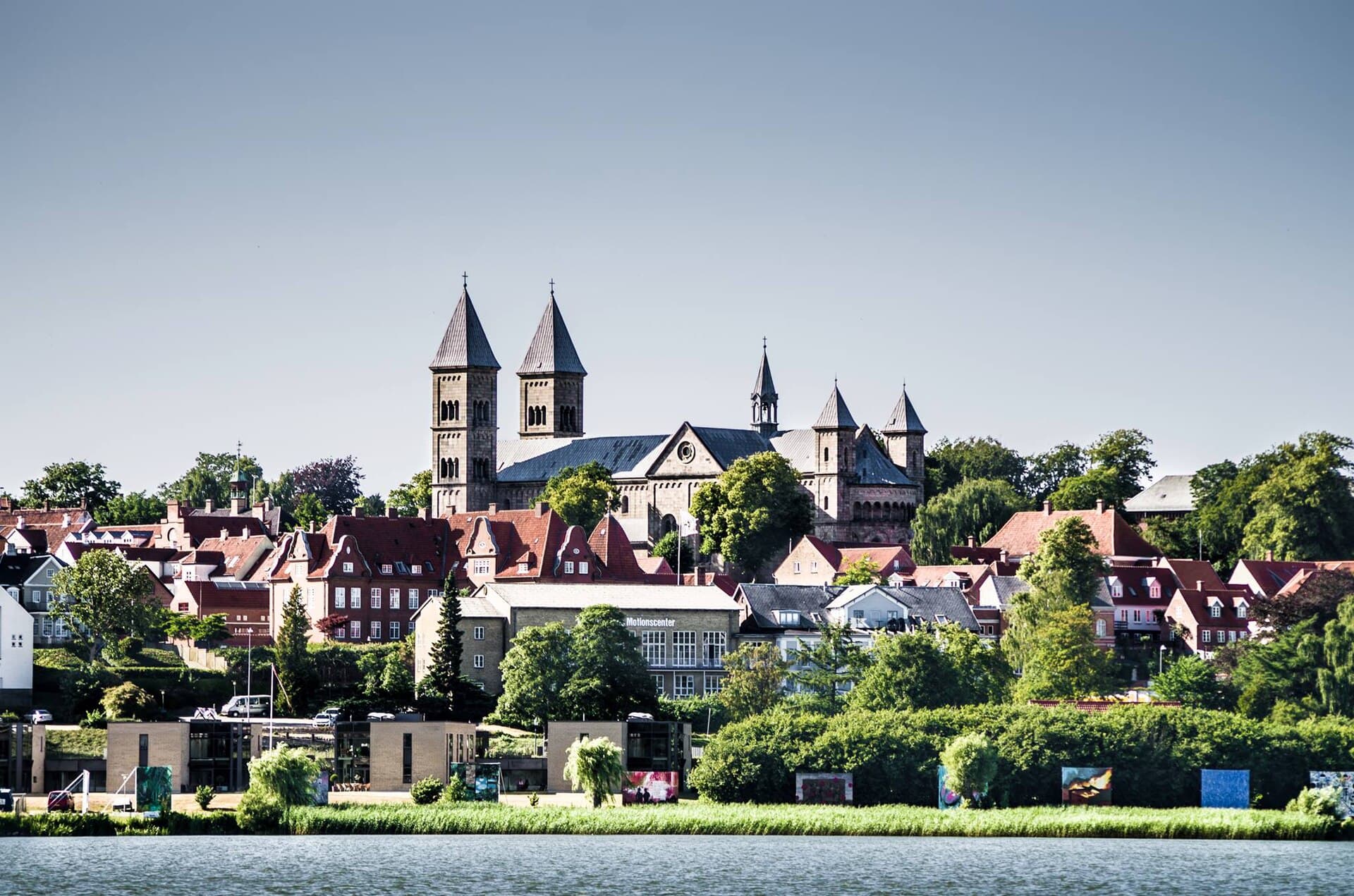
Viborg, a city in the heart of Denmark's Jutland peninsula, is a place where history resonates through winding lanes and tranquil lakes. Its name, derived from Old Norse words meaning "holy place" and "hill," hints at its ancient significance as a pagan worship site. Today, Viborg offers a blend of monumental heritage and natural beauty, with its twin-towered cathedral dominating the skyline and picturesque lakes inviting exploration.
For over a thousand years, Viborg has been a focal point of power, faith, and justice in Denmark. From Viking settlements dating back to the late 8th century, the city evolved into a crucial political and religious center during the Middle Ages. It was here that Danish kings were hailed and consecrated, and where the Lutheran Reformation in Denmark began. This profound past is still palpable, inviting visitors to walk the same paths where pivotal moments in Danish history unfolded.
## From Viking Assembly to Royal Seat Viborg's story begins in the late 8th century with Viking settlements, its central location on the Jutland peninsula granting it early strategic importance. The city's name, meaning "holy mountain" or "sacred hill," reflects its origins as a center for pagan worship and a gathering place for tribes to trade, settle disputes, and offer sacrifices. By the early 11th century, Viborg had already gained significant status; King Cnut the Great established a mint here around 1018, and in 1027, allegiance was sworn to King Harthacnut at the Viborg Landsting, the primary regional assembly of North Jutland.
## The Age of Cathedrals and Kings In 1060, Viborg became a bishop's see, solidifying its role as a spiritual center. The construction of Viborg Cathedral began around 1130 and took approximately 50 years to complete. Until the introduction of absolute monarchy in 1660, Viborg was the traditional site for the election and consecration of Danish kings, with at least 37 monarchs honored at Stænderpladsen. The city also played a crucial role in Danish law, giving the nation its first civil code, the Jutland Law, in 1241.
## Fires, Reformation, and Revival Viborg's prominence faced challenges over the centuries. The city was the starting point of the Lutheran Reformation in Denmark in 1526, a period that saw revolt and the destruction of many churches. Successive fires, including a major one in 1726 that left only the walls and crypt of the cathedral, also contributed to its decline as Denmark's political center shifted eastward. However, the city experienced a revival after 1866 with the reclamation of surrounding heathland, and it became the seat of the High Court for Jutland in 1919. Today, Viborg continues to be an important administrative, religious, and educational hub.
The majestic Viborg Cathedral stands as the city's primary landmark, its twin towers visible from afar. While much of the current structure dates from an 1876 rebuilding after a devastating fire, the original 12th-century crypt remains, offering a glimpse into the past. Inside, marvel at the 84 biblical frescoes painted by Joakim Skovgaard in the early 20th century. Adjacent to the cathedral, the Skovgaard Museum, housed in the 18th-century old town hall, showcases works by the Skovgaard family of artists, including Joakim.
Stroll through the Cathedral Quarter, the historical core of Viborg, where lively shopping streets like Sct. Mogens Gade and Sct. Mathias Gade begin. Explore Sct. Mogens Gade itself, a lane lined with 16th-century homes. For a moment of tranquility, visit the Latin Garden (Latinerhaven), Viborg's oldest garden, dating back to 1726.
Beyond the city center, the Viborg Lakes (Nørresø and Søndersø) offer opportunities for walking, biking, fishing, kayaking, and stand-up paddleboarding. Consider a boat tour on the Margrethe I for a unique perspective of the city from the water. A short drive away, the Mønsted Limestone Mines provide an extraordinary underground adventure through the world's largest limestone mine, with illuminated paths and underground lakes. For a journey further back in time, the recreated Hvolris Iron Age Village offers insights into ancient Scandinavian life.
Viborg enjoys a temperate climate with mild summers and crisp winters, making it a year-round destination. The optimal time for warm-weather activities and sightseeing is from late June to late August, when temperatures are comfortable, averaging between 19°C to 22°C (67°F to 71°F). May and June also offer pleasant weather with long daylight hours, ideal for outdoor exploration. While rain is a consistent factor throughout the year, the summer months can experience higher precipitation, so waterproof clothing is advisable. Winter brings a festive charm with Christmas markets, though temperatures hover around freezing.
Viborg is located in central Jutland and is accessible by train, with frequent regional services from Aarhus and occasional direct InterCity trains from Copenhagen. The closest airports are Aalborg (76.5 km), Billund (80.7 km), and Aarhus (77.8 km), all offering car rental or transfer options to Viborg. Once in Viborg, the best way to explore the town center is on foot due to its historic lanes. Public buses and taxis are also available.
Accommodation options range from guesthouses and B&Bs to hotels, with booking in advance highly recommended, especially during the peak summer and Christmas holiday seasons. The cost of living in Viborg is typical for Scandinavia, with a meal at an inexpensive restaurant costing around $23 and a monthly public transport pass approximately $70. Layered clothing is recommended year-round due to changeable weather, and comfortable flat shoes are essential for navigating the historic center's uneven surfaces.