Place du Grand Jardin
Vence's primary square hosts a lively market, yet a subtle detail in its design reveals a deeper connection to the town's lifeblood.
Full story unlocks in the tour
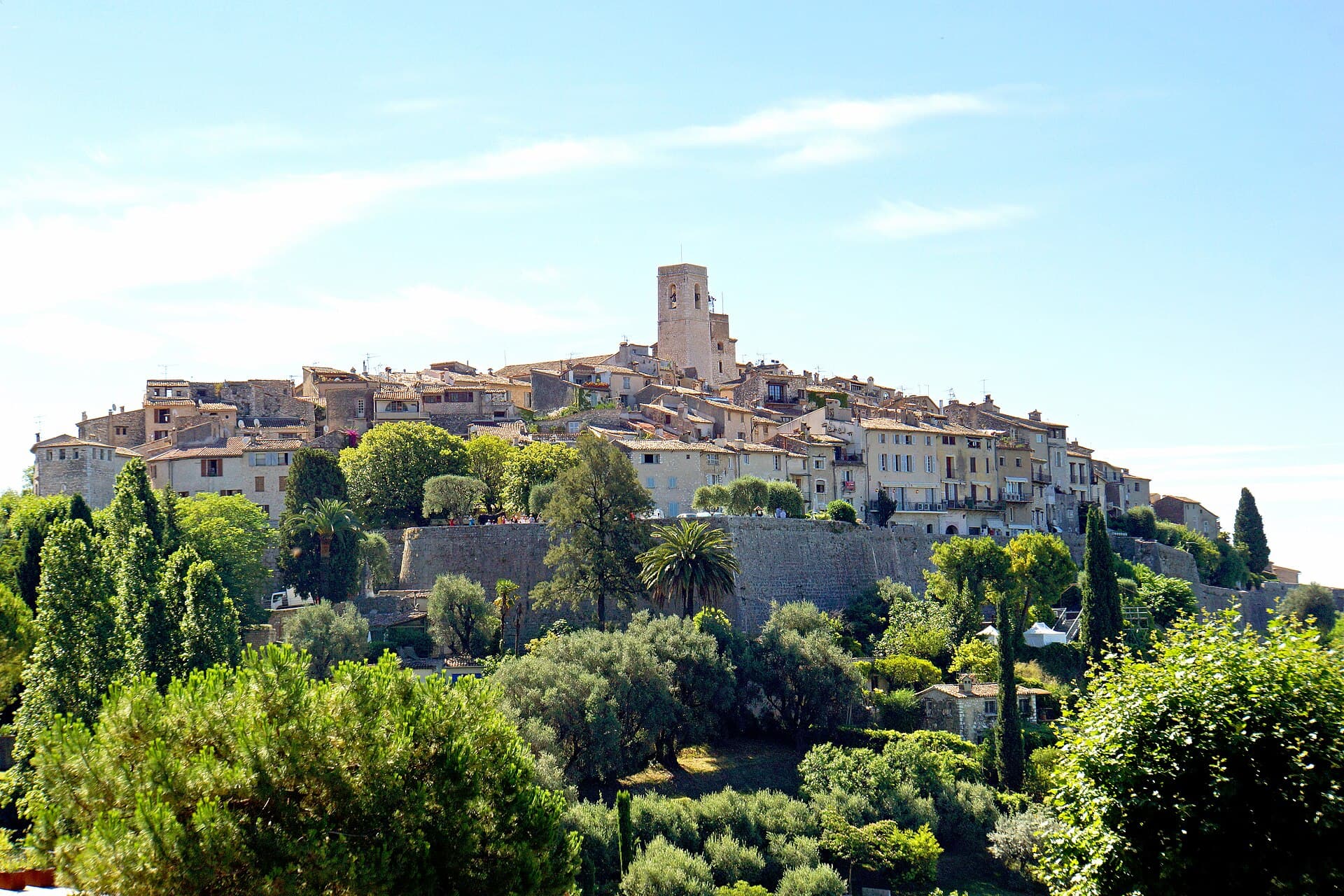 Dennis G. Jarvis / CC BY-SA 2.0, via Wikimedia Commons
“Where ancient stones share their stories and art finds its light.”
Not the postcards. The stories even locals don't know — whispered in your ear, right where they happened.
Vence's primary square hosts a lively market, yet a subtle detail in its design reveals a deeper connection to the town's lifeblood.
This modest cathedral holds a singular distinction among French churches, one that might surprise you.
As you enter the old town through this historic gate, you will encounter a magnificent ash tree with a royal legend attached to it.
Discover every secret of Vence
Every address, every reveal in full — in your ear, right where it happened.
You pick your stops. You walk. The voice reveals what the others miss.
No tours available yet. Check back soon — we're preparing them.
Vence, a fortified medieval town in the Alpes-Maritimes department of southeastern France, offers a serene escape from the bustling Côte d'Azur. Unlike its more glamorous coastal neighbors, Vence maintains an authentic, year-round community where history and art are woven into daily life. It rests on a limestone plateau, providing a peaceful environment between the Mediterranean Sea and the rugged peaks of the Alps. With a population of around 19,000, Vence retains an intimate, village-like atmosphere, yet provides all the necessities for residents and visitors alike.
Known as a "City of Art," Vence has long attracted painters, sculptors, and writers drawn to its unique light and landscapes. From world-famous chapels designed by renowned artists to medieval squares fed by Roman-era springs, the town invites leisurely exploration. Its preserved architectural style, open-air markets, and numerous festivals celebrate a profound heritage that has remained largely unchanged for centuries.
Vence's story stretches back thousands of years, making it one of the oldest towns along the Côte d'Azur. The territory was initially inhabited by Ligurian tribes who built fortifications known as oppida. In the 2nd century BC, after the Roman conquest, the settlement became known as Vintium. For over 400 years, Vintium was an important Roman town, strategically located on the Via Julia Augusta, a vital road connecting coastal towns with those in the hills. Evidence of its Roman past can still be seen today, including Roman funeral stones built into the exterior walls of the cathedral and two tall Roman granite columns, known as the "Marseillais Columns," believed to be a 3rd-century gift from Marseille.
Vence's transformation into a thriving medieval town was influenced by its strategic geography, access to water from the La Foux spring, and its early establishment as a religious center. As early as the 4th century, Vence became the seat of a bishopric, a status it held until the French Revolution. The Cathédrale Notre-Dame de la Nativité, built on the site of a Roman temple dedicated to Mars and Cybele, dates back to the 11th century, with elements from earlier Merovingian and Carolingian churches. The town's medieval heart is encircled by 13th-century ramparts, with five preserved gateways that provide access to the old town.
Throughout the centuries, Vence has attracted notable figures. The 12th-century troubadour Pierre Vidal called Vence "le doux repaire" (the sweet refuge), and in the 13th century, Dante Alighieri included Romeo de Villeneuve, Lord of Vence, in his Paradise. Later, artists like Henri Matisse and Marc Chagall found inspiration here. Matisse considered the Chapelle du Rosaire, which he designed entirely, to be his masterpiece. D.H. Lawrence also spent his final days in Vence.
Begin your exploration at the heart of the old town, a pedestrian-friendly area enclosed by medieval ramparts. Enter through the Porte du Peyra, one of five historic gateways, and you will immediately encounter the Fontaine du Peyra, a beautiful urn-shaped fountain from 1822. Nearby stands the ancient Grand Frêne, an ash tree nearly 500 years old.
The Cathédrale Notre-Dame de la Nativité, France's smallest cathedral, is a blend of Romanesque, Gothic, and Baroque styles. Inside, discover a 5th-century Gallo-Roman sarcophagus and a mosaic titled "Moses Saved from the Waters" created by Marc Chagall in 1979. A short walk from the town center, do not miss the Chapelle du Rosaire, often called the Matisse Chapel. Henri Matisse designed every aspect of this white chapel, from its blue and white tiled roof and stained-glass windows to the liturgical vestments, considering it his life's masterpiece.
Vence is also known for its numerous fountains, fed by the Foux spring, which has been in use since Roman times. Take a stroll through the winding alleys and discover the over twenty fountains scattered throughout the city. The Place du Grand Jardin hosts a lively Provençal market every Friday, offering local produce and handmade goods.
Vence is a destination that can be enjoyed year-round, with a Mediterranean climate characterized by warm, dry summers and mild winters. For hot-weather activities and enjoying the clearest skies, the best time to visit is from early July to late August, when average daily high temperatures are above 74°F (23°C). However, this is also peak tourist season. If you prefer a quieter experience with pleasant temperatures, consider visiting in spring or autumn. The Nuits du Sud music festival transforms the Place du Grand Jardin into an open-air concert venue every July.
Vence is easily accessible, located just a short drive off the A8 motorway from anywhere along the Côte d'Azur. While there is no direct train service, you can take a train to a coastal town like Nice and connect with a bus that will bring you into Vence. The town offers ample parking, including Marie-Antoinette, Grand Jardin, and Toreille lots. The Office de Tourisme, located at Villa Alexandrine – Place du Grand Jardin, is open most days and can provide visitor information. Within the old town, the streets are pedestrian-friendly. For accommodation, options range from hotels to luxury spa hotels like Château Saint-Martin.