Vellore Fort Moat
The fort's formidable defenses once included a natural, living barrier that would deter even the most determined invaders.
Full story unlocks in the tour
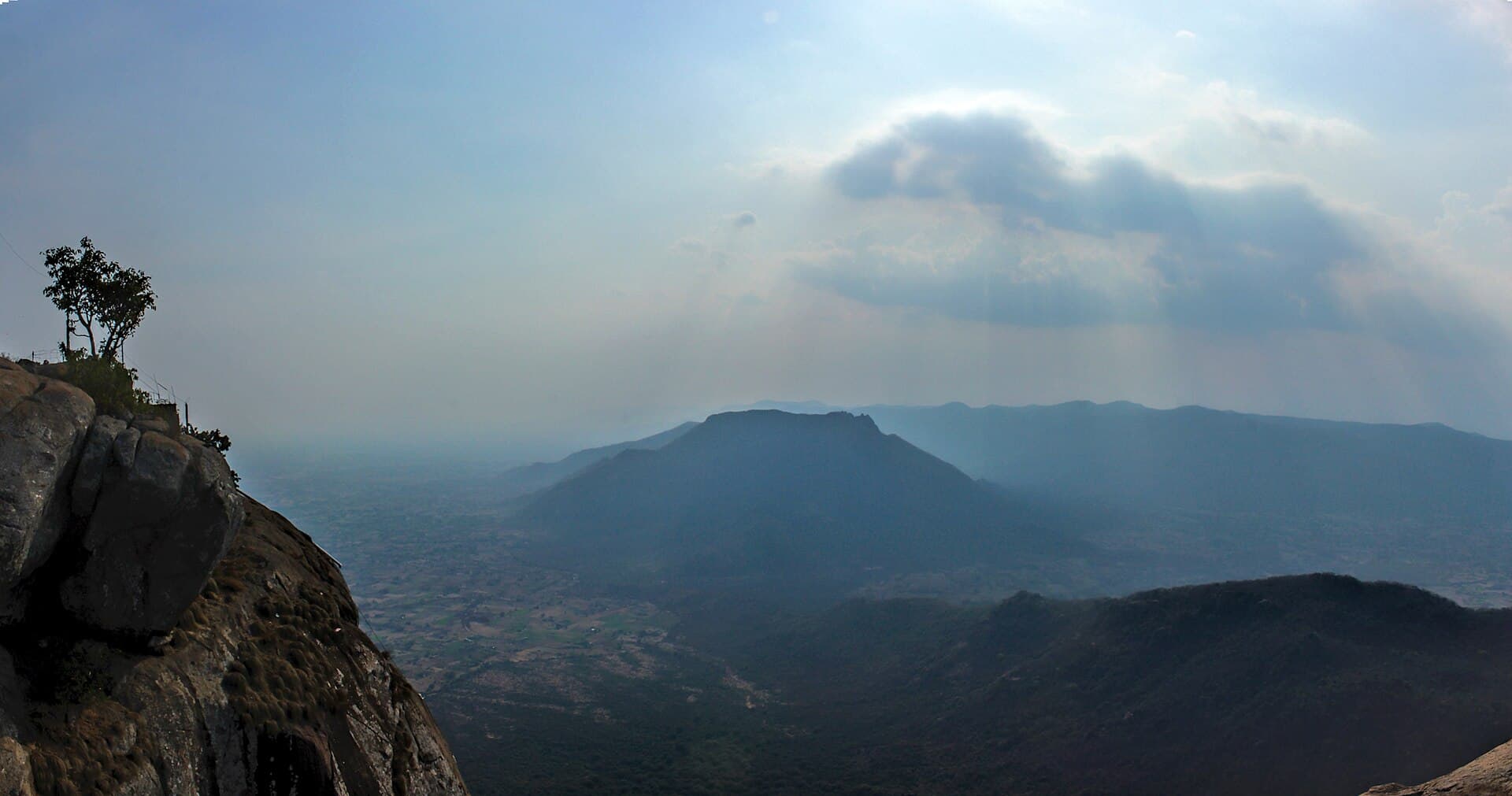 Karthik Easvur / CC BY-SA 4.0, via Wikimedia Commons
“Where ancient stones recount the sagas of empires and gold reflects profound devotion.”
Not the postcards. The stories even locals don't know — whispered in your ear, right where they happened.
The fort's formidable defenses once included a natural, living barrier that would deter even the most determined invaders.
Beyond its military might, this fort held a surprising collection of high-profile prisoners.
This shimmering temple isn't just visually striking; its construction involved an extraordinary amount of precious metal.
Discover every secret of Vellore
Every address, every reveal in full — in your ear, right where it happened.
You pick your stops. You walk. The voice reveals what the others miss.
No tours available yet. Check back soon — we're preparing them.
Vellore, a city in the Indian state of Tamil Nadu, offers a compelling blend of historical grandeur and spiritual serenity. Situated along the Palar River, approximately 135 km west of Chennai, Vellore has been a strategic location throughout centuries of South Indian history. Its name is believed to derive from the Tamil words 'Vel' (spear) and 'Ur' (place), translating to 'place of spears' or 'city of warriors,' reflecting its past as a significant battlefield.
The city is a major transit point for travelers and has emerged as a hub for medical tourism, largely due to the renowned Christian Medical College & Hospital. Beyond its medical prominence, Vellore is also known as the leather hub of India, with numerous tanneries contributing significantly to the country's leather exports. Vellore was also selected as part of the Smart Cities Mission, an urban renewal program by the Government of India.
Vellore's landscape is characterized by its location in the Eastern Ghats region and the Palar river basin, with a generally flat topography that slopes from west to east. The city experiences a tropical savanna climate, with temperatures ranging from 13°C to 39.4°C.
The early history of Vellore traces back to the 9th century CE, during the Chola period. Over the centuries, it was controlled by various powerful South Indian dynasties, including the Pallavas, Rashtrakutas, Sambuvaraya chieftains, and the Vijayanagara Empire. The city even served as the capital of the Aravidu Dynasty of the Vijayanagara Empire between 1606 and 1672.
The most prominent historical landmark, Vellore Fort, was constructed by the Vijayanagara kings. While the exact date of its construction is not definitively known due to a lack of historical records, estimates based on stone inscriptions suggest it was likely built between 1526 and 1595, possibly under the rule of Chinna Bommi Nayak. This formidable granite fort, covering approximately 133 acres, is considered a prime example of Tamil Nadu military architecture.
In the mid-17th century, ownership of the fort shifted hands multiple times. It was held by the Bijapur Sultanate before being captured by the Marathas after a four-and-a-half-month siege in 1676. The fort later came under the charge of Dost Ali, the Nawab of Carnatic, before passing to the British in 1760. Vellore played a significant role in the Carnatic Wars between the British and the French, and the Anglo-Mysore Wars, with decisive battles fought nearby at Ambur (1749), Arcot (1751), and Vandavasi (1760).
During British rule, Vellore Fort became the site of the Vellore Mutiny in 1806. This event, considered the first large-scale mutiny of Indian sepoys against the British, erupted due to new dress codes that offended the religious sentiments of both Hindu and Muslim soldiers. The mutiny resulted in the deaths of many British soldiers and officers before it was suppressed. The fort continued to be a significant military base for the British until India gained independence in 1947, after which Vellore became part of the Indian state of Madras, later renamed Tamil Nadu.
Vellore offers a range of attractions that highlight its historical and cultural significance. The centerpiece is Vellore Fort, a 16th-century granite marvel. Inside its robust walls, visitors can explore the exquisite Jalakandeswarar Temple, known for its intricate sculptures and carvings depicting Hindu mythology. The fort also houses St. John's Church, built by the British in 1846 in Gothic architectural style, and a mosque, reflecting the city's diverse heritage. The Archaeological Survey of India Museum, also within the fort, displays artifacts related to the fort's history and its rulers.
Beyond the fort, the Sripuram Golden Temple, dedicated to Goddess Lakshmi Narayani, is a significant spiritual destination. The entire temple structure is covered with over 1,500 kilograms of pure gold foil, creating a dazzling spectacle. Visitors walk along a 1.8-kilometer star-shaped path to reach the main shrine, a journey designed for introspection. For those seeking nature, Amirthi Zoological Park, located about 25 kilometers from Vellore, offers diverse flora and fauna and a small waterfall. Additionally, the Periyar Park within the city provides a green oasis for relaxation.
The most pleasant time to visit Vellore is during the winter months, from October to March. During this period, the weather is comfortable, with temperatures typically ranging from 20°C to 30°C, making it ideal for sightseeing and outdoor activities. The post-monsoon period in October also brings lush greenery and comfortable temperatures, marking the start of the peak tourist season. Summers, from April to June, can be very hot and humid, with temperatures potentially exceeding 40°C, making outdoor exploration less enjoyable. The monsoon season, from July to September, brings moderate to heavy rainfall, which may disrupt travel plans.
Vellore is well-connected by road and rail. The nearest major international airport is Chennai International Airport (MAA), approximately 135 km away, with Tirupati Airport (TIR) being closer at about 113 km. Katpadi Junction is the main railway station, with numerous daily trains connecting Vellore to major Indian cities. Government and private buses offer frequent services from various cities in Tamil Nadu and neighboring states.
Within Vellore, auto-rickshaws, buses, and cabs are readily available for local transport. For excursions to nearby attractions like Yelagiri Hills or Sripuram, arranging a private car or taxi is recommended for flexibility. While Tamil is the primary language, English is widely understood, especially in tourist areas. Vellore is generally considered safe for tourists, but it's always advisable to be aware of your surroundings and secure valuables, particularly in crowded areas or when traveling at night. Modest dress is recommended when visiting religious sites, especially the Golden Temple.