Västerås Castle
A Swedish king, known for his erratic behavior, found himself confined within the walls of Västerås Castle.
Full story unlocks in the tour
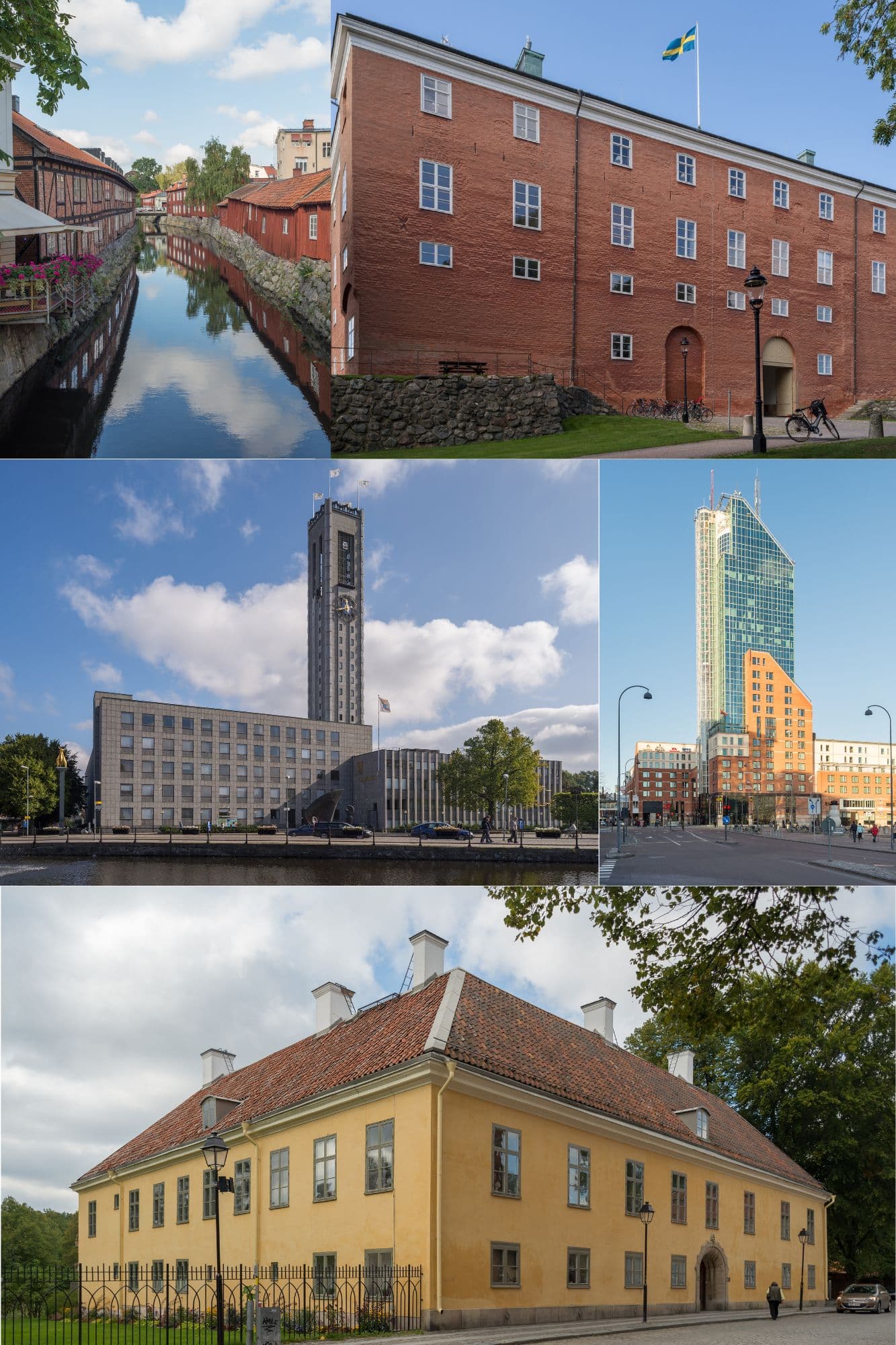 Listz3 / CC BY-SA 4.0, via Wikimedia Commons
“Where Viking sagas meet industrial innovation on Lake Mälaren's edge.”
Not the postcards. The stories even locals don't know — whispered in your ear, right where they happened.
A Swedish king, known for his erratic behavior, found himself confined within the walls of Västerås Castle.
Sweden's largest burial mound holds a secret about an ancient king, though his presence is only hinted at.
Amidst a city park, an unusual hotel offers a stay high among the branches.
Discover every secret of Västerås
Every address, every reveal in full — in your ear, right where it happened.
You pick your stops. You walk. The voice reveals what the others miss.
No tours available yet. Check back soon — we're preparing them.
Västerås, one of Sweden's most ancient cities, rests upon the scenic shores of Lake Mälaren, approximately 100 kilometers west of Stockholm. Its origins reach back to the Viking Age, around 990 AD, making it a place where deep history intertwines with contemporary life. The city's designation, derived from 'Västra Aros' meaning 'West River Mouth,' refers to its location where the Svartån River flows into Lake Mälaren.
Often called 'Gurkstaden' (the Cucumber City) due to its historical cucumber cultivation, Västerås today is a lively center known for its blend of historical landmarks, industrial legacy, and natural splendor. It is a city that offers a calmer, yet equally engaging, Swedish experience compared to its larger counterparts, providing a rich array of cultural and outdoor pursuits. From medieval architecture to contemporary art and lakeside recreation, Västerås invites exploration at a leisurely pace.
The area surrounding Västerås has been inhabited since the Nordic Viking Age, predating 1000 CE. By the early 11th century, it was already Sweden's second-largest city, and by the 12th century, it had become an episcopal see, solidifying its importance as a spiritual and administrative center. The city's strategic location at the confluence of the Svartån River and Lake Mälaren made it a vital trading post, particularly for exporting iron and copper from the Bergslagen mining region.
A pivotal moment in Swedish history occurred in Västerås in 1527, when King Gustav Vasa held a Riksdag (parliamentary assembly) that formally introduced the Reformation to Sweden, transitioning the nation from Catholicism to Lutheranism. This decision significantly curbed the power of the Catholic Church and allowed the crown to confiscate church territories.
In 1623, Johannes Rudbeckius founded Sweden's first gymnasium (secondary school), Rudbeckianska gymnasiet, in Västerås, which continues to operate today. The 18th and 19th centuries saw Västerås gain its 'Cucumber City' designation due to extensive cucumber cultivation, a variety well-suited for pickling.
The city's industrial identity took shape with the relocation of the electrical engineering company ASEA (now part of ABB Group) to Västerås in 1891. This move transformed Västerås into a major industrial center. In a more modern vein, Västerås is also the birthplace of the global clothing retailer H&M, with its first store, then named 'Hennes,' opening in the city center in 1947. Today, Västerås balances its historical depth with a forward-looking approach, exemplified by the transformation of its old steam power plant into the contemporary Steam Hotel.
Begin your exploration at Västerås Cathedral, a Gothic masterpiece consecrated in 1271 that holds the sarcophagus of King Erik XIV and has earned three stars in the Michelin Green Guide. Stroll through Kyrkbacken, the city's oldest preserved neighborhood, with its appealing narrow streets and traditional red wooden houses, offering a glimpse into 17th-century life. Just outside the city, discover Anundshög, Sweden's largest burial mound, surrounded by ancient rune stones and impressive stone ships, a significant Viking-era site.
For a dose of history and culture, visit Västerås Castle, a 13th-century fortress rebuilt by King Gustav Vasa, which now houses a museum. The Karlsgatan 2 cultural center combines the Västmanland County Museum and Västerås Art Museum, offering insights into regional history and contemporary Swedish art. Those who appreciate nature can enjoy Djäkneberget, a hilltop park with city and lake views, featuring over 500 engraved stones. The Vallby Open Air Museum provides a living history experience with historical buildings, animals, and plants from the Västmanland county. For a distinct experience, consider a stay at the Utter Inn, an underwater hotel in Lake Mälaren, or the treehouse Hotel Hackspett in Vasaparken, both creations of artist Mikael Genberg.
The best time to visit Västerås is during the late spring to early autumn months, from May to September, when the weather is generally mild and ideal for outdoor activities. Summer (June to August) offers the warmest temperatures, averaging 20°C to 25°C, with long daylight hours perfect for exploring Lake Mälaren and attending local festivals. Autumn (September to November) brings picturesque foliage, with temperatures around 10°C to 15°C in September, suitable for scenic walks. While winters are cold and snowy, they offer opportunities for winter sports and festive decorations.
Västerås is easily accessible, located about an hour's drive or train ride from Stockholm. The city center is compact and highly walkable, with many attractions within a 15-minute stroll. Public transportation, primarily buses, is cash-free; tickets can be purchased using contactless bank cards or via the VL app. If driving, be aware of fuel prices, which are approximately 19.50 SEK per liter for petrol and 18.00 SEK per liter for diesel.
Sweden is generally a cashless society, so credit and debit cards are widely accepted. While Västerås is considered a safe city, it is always wise to be aware of your surroundings. English is widely spoken, so language barriers are minimal. Do not forget to partake in 'fika,' a cherished Swedish tradition of taking a break for coffee and a snack.