Bridge Street
The main thoroughfare in Vail Village was designed with a subtle optical illusion.
Full story unlocks in the tour
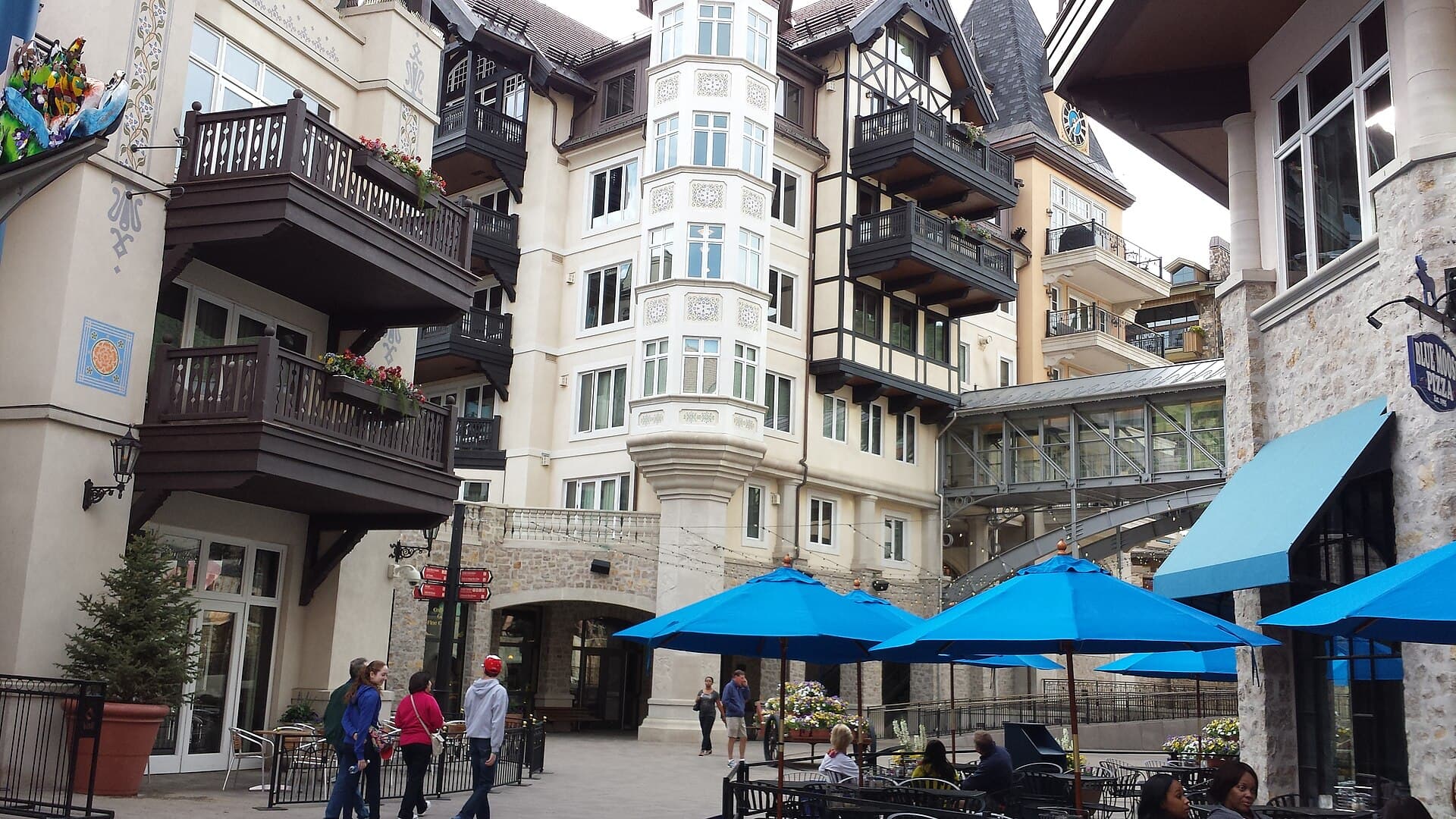 G0phy / CC0, via Wikimedia Commons
“Where alpine grandeur meets a meticulously crafted village, offering adventure in every season.”
Not the postcards. The stories even locals don't know — whispered in your ear, right where they happened.
The main thoroughfare in Vail Village was designed with a subtle optical illusion.
Before it was a world-renowned ski resort, Vail Mountain had a different name and a fiery past.
Some travelers report an ethereal encounter on a nearby road.
Discover every secret of Vail
Every address, every reveal in full — in your ear, right where it happened.
You pick your stops. You walk. The voice reveals what the others miss.
No tours available yet. Check back soon — we're preparing them.
Vail, Colorado, a home rule municipality in Eagle County, stands as a premier ski destination and a year-round alpine resort. The town, with an average elevation of 8,150 feet (2,480 meters) above sea level, is embraced by the expansive White River National Forest, with Vail Ski Resort operating on leased Forest Service land. In 2020, the town's population was 4,835. Vail's distinct European-inspired villages, linked by pedestrian-friendly thoroughfares and a free transit system, offer an experience that blends world-class amenities with the warmth of a small town.
Beyond its reputation for extensive skiable terrain—Vail Mountain includes 5,289 acres, encompassing its well-known Seven Back Bowls—the town has transformed into a four-season haven. Summers invite exploration through meadows bright with wildflowers, mountain biking, fly fishing, and outdoor festivals, while autumn paints the landscape with golden aspen leaves. Vail's dedication to open space is clear, with 30 percent of its land preserved, and it maintains one of the largest free transportation systems in the nation, aiming to ease traffic and pollution.
The story of Vail begins not with a resort, but with a military training ground during World War II. The U.S. Army's 10th Mountain Division, an elite group of ski troopers, trained at Camp Hale, located about 14 miles south of present-day Vail. It was during this time that Pete Seibert, a New England native and member of the 10th Mountain Division, bivouacked on Vail Mountain and recognized its potential as an ideal ski area.
After the war, Seibert returned to Colorado with the dream of establishing a ski resort. In 1957, he teamed up with local rancher and uranium prospector Earl Eaton, who had also identified the mountain's promise, particularly its vast, treeless back bowls. Together, they made a seven-hour trek up the mountain, solidifying Seibert's vision for a resort that could rival the grand alpine destinations of Europe. To discreetly acquire land, Seibert and his partners formed the 'Transmontane Rod and Gun Club,' eventually purchasing over 1,000 acres for the future village.
Vail Ski Resort officially opened its doors on December 15, 1962, with one gondola and two chairlifts, welcoming approximately 100 guests on its first day. The town of Vail was incorporated four years later in 1966. The resort quickly gained popularity, benefiting from the 1960s 'ski boom.' By the late 1960s, it was attracting thousands of visitors and was considered the most popular ski resort in Colorado by 1969. The valley and the pass were named after Charles Vail, the highway engineer who routed U.S. Highway 6 through the Eagle Valley in 1940.
Vail's international recognition grew significantly when President Gerald Ford, a homeowner in Vail, took office in 1974. The 1980s saw Vail evolve into a year-round destination, with the addition of golf courses, mountain biking trails, and gondola rides for sightseers. In the 1990s, Blue Sky Basin opened, expanding Vail Mountain's skiable terrain. Today, Vail continues to be a major force in the ski industry, known for its extensive terrain, meticulous grooming, and a wide array of year-round activities.
Vail offers a blend of outdoor adventure and village appeal. During winter, Vail Mountain draws visitors with 5,289 acres of skiable terrain, including the well-known Seven Back Bowls. Those not skiing can still experience the mountain via scenic gondola rides, which are often free after 3:30 PM. Other winter activities include snowmobiling, snowshoeing, ice skating, and snow tubing at Adventure Ridge.
In warmer months, the mountain becomes a playground for hikers and mountain bikers, with trails like Berry Picker and Booth Falls. The Betty Ford Alpine Gardens, the world's highest botanical gardens at 8,200 feet, offer a display of flora and a children's park. The Gerald R. Ford Amphitheater hosts summer concerts and events. For a relaxed experience, wander the car-free streets of Vail Village and Lionshead, which feature European-inspired architecture, diverse restaurants, and boutique shops. The Gore Creek Trail provides a scenic walk or bike ride along the creek.
Vail is a year-round destination, with distinct experiences in each season. Winter (December through March) marks peak ski season, offering consistent snowfall and ideal conditions for snow sports. December and January are festive, but see the largest crowds and highest prices. Spring (April to May) brings late-season skiing, milder weather, and fewer crowds, often with good deals on lodging. Summer (June through August) is popular for outdoor activities like hiking, mountain biking, and festivals, with pleasant temperatures. Fall (September to October) is celebrated for its golden aspen foliage, comfortable temperatures, and fewer crowds, making it ideal for scenic hikes.
Vail is approximately 100 miles west of Denver, accessible via I-70. The closest airport is Eagle County Regional Airport (EGE), about a 30-minute drive, while Denver International Airport (DEN) is about a two-hour drive. Once in Vail, a car is not necessary; the town offers one of the largest free transit systems in the nation, connecting its various villages and attractions. Vail Village and Lionshead are particularly walkable, with pedestrian-only streets. Road conditions on I-70 can change quickly, especially in winter, so checking COtrip.org before driving is advisable. Accommodations range from luxury hotels to condominiums across Vail Village, Lionshead, and Golden Peak, with better deals often found during the shoulder seasons of late spring and early fall.