The Duchy of Uzès
Uzès holds the title of the 'First Duchy of France,' a prestigious rank granted in 1565. Yet, the family's influence extends beyond mere nobility.
Full story unlocks in the tour
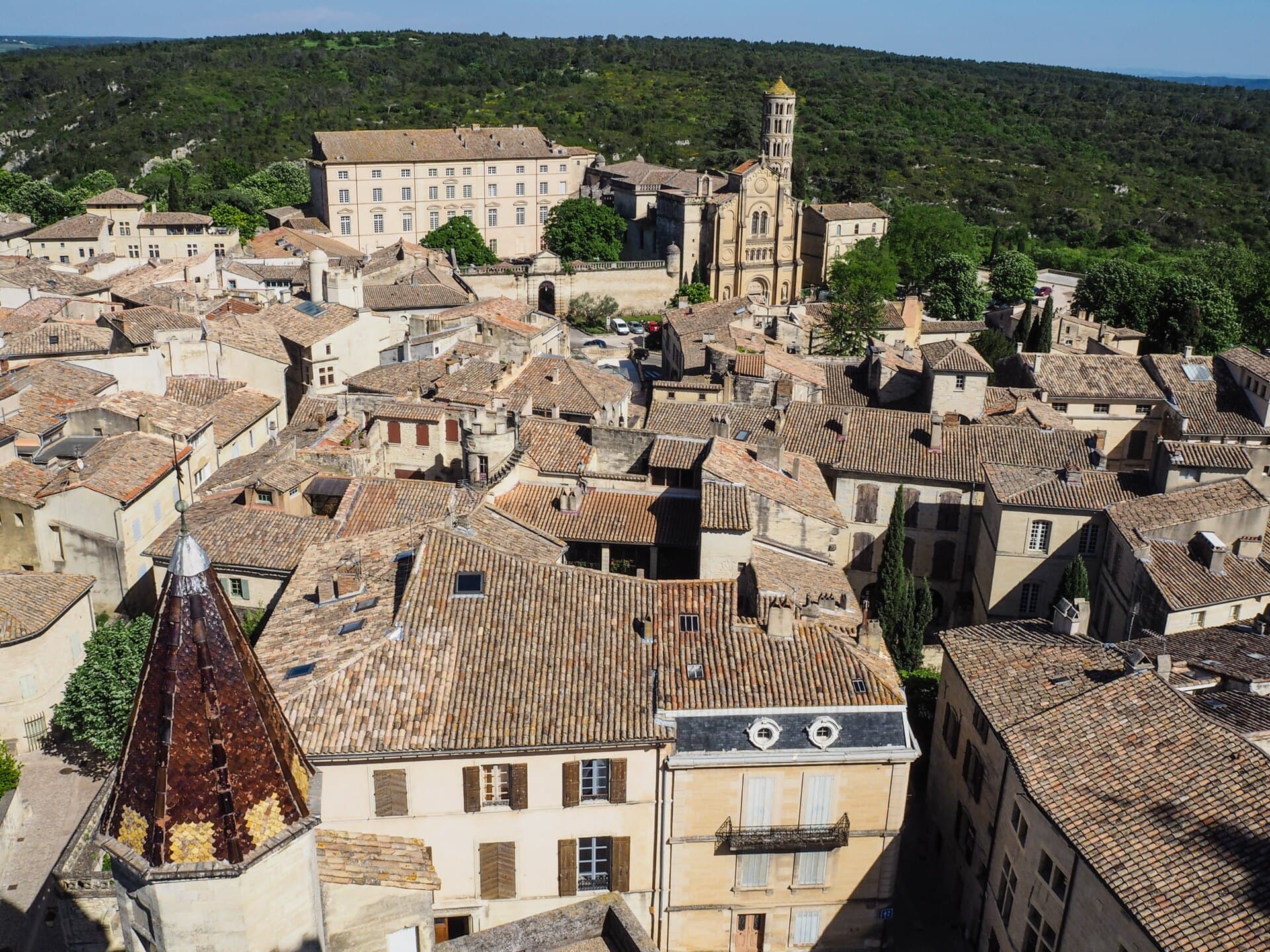 Mike Prince from Bangalore, India / CC BY 2.0, via Wikimedia Commons
“Where ancient stones whisper stories of dukes, Romans, and sweet secrets.”
Not the postcards. The stories even locals don't know — whispered in your ear, right where they happened.
Uzès holds the title of the 'First Duchy of France,' a prestigious rank granted in 1565. Yet, the family's influence extends beyond mere nobility.
This distinctive round bell tower, part of Uzès Cathedral, appears singular among French architecture. There's a particular reason for its unique silhouette.
A tranquil sanctuary within the town's core, the Medieval Garden feels like a journey through time. Its creation, however, is surprisingly recent.
Discover every secret of Uzès
Every address, every reveal in full — in your ear, right where it happened.
You pick your stops. You walk. The voice reveals what the others miss.
No tours available yet. Check back soon — we're preparing them.
Uzès, a captivating town in the Gard department of Occitanie, extends an invitation to journey through centuries of history, far from the hurried pace of larger Provençal cities. Its well-preserved medieval architecture, stone-paved passages, and graceful squares encourage visitors to linger and absorb the atmosphere. Often celebrated as a 'City of Art and History,' Uzès presents a distinct blend of Roman origins, medieval grandeur, and a quintessentially French way of life.
At its core lies the grand Place aux Herbes, a lively market square framed by limestone arches and shaded by plane trees, where the rhythm of local existence is most palpable. Beyond these squares, a labyrinth of narrow streets uncovers historic treasures, appealing boutiques, and welcoming eateries. Uzès offers an ideal starting point for exploring the wider region, including the iconic Pont du Gard, and provides a refreshing alternative for those seeking a more authentic encounter with Southern France.
## From Roman Springs to Ducal Power Uzès’s narrative begins long before its medieval character took hold. The earliest human settlements were discovered around the Eure spring, a vital water source that the Romans harnessed in the 1st century AD to supply the city of Nîmes via a 50-kilometer aqueduct, famously incorporating the Pont du Gard. This strategic importance laid the foundation for its subsequent growth.
By the 5th century, Uzès had transformed into an episcopal city, establishing a bishopric that would retain considerable influence until the French Revolution, at one point encompassing nearly 200 parishes. The town's medieval period witnessed the emergence of three competing authorities: the bishop, the local lord, and the King's representative, each with their own towers marking the skyline. The 11th and 12th centuries saw the construction of two castles, Bermond and Raynon, which eventually merged into the impressive Duchy of Uzès.
## Protestant Stronghold and Ducal Prestige The 16th century marked a significant transformation for Uzès, as it became a prominent Protestant city within the kingdom. This era was fraught with religious conflicts, leading to the destruction of many churches, including portions of the Saint-Théodorit Cathedral. However, the town also gained considerable prestige in 1565 when Antoine de Crussol was elevated to the dignity of duke by Charles IX, establishing Uzès as the 'First Duchy of France' and its duke as the first peer of the realm. The Crussol family continues to own and reside in the Duchy to this day, a testament to their enduring heritage.
## Industrial Flourishing and Modern Revival Beyond its religious and noble history, Uzès was a significant hub for textile, silk, and serge production, with mulberry trees still visible as a reminder of its silkworm industry. Later, the town became recognized for its pottery and, notably, its licorice factories, which are now associated with the well-known Haribo brand.
After a period of decline following World War II, Uzès underwent a remarkable restoration. In 1964, it was designated a 'protected area' by André Malraux, then Minister of Culture, a classification that spurred extensive preservation efforts. This initiative helped restore its historic center, paving streets and concealing electrical wires, transforming it into the beautifully preserved town observed today.
Begin your exploration at the Place aux Herbes, the town's central square. Its medieval arcades, shaded by plane trees, host lively markets twice a week and offer numerous cafés for observing local life. From here, wander through the pedestrianized, stone-paved streets, where every turn reveals historic architecture and appealing boutiques.
Three prominent towers define the town's skyline. Visit Le Duché (the Ducal Palace), a medieval castle that has been continuously owned by the same family for over a millennium. You can explore its apartments, ancient wine cellars, and ascend the Bermonde Tower for sweeping views.
Adjacent to the Duchy stands the Cathédrale Saint-Théodorit, notable for its singular Fenestrelle Tower. This 12th-century round bell tower, with its distinctive arched openings, represents a rare example of Lombard Romanesque architecture in France. While the Fenestrelle Tower itself is not accessible to the public, the cathedral's interior displays an impressive 17th-century organ case.
For a peaceful interlude, explore the Medieval Garden (Jardin Médiéval), a botanical garden displaying over 450 species of plants used in the Middle Ages. Here, you can also ascend the King's Tower for expansive views of Uzès and the surrounding countryside.
Just a short drive away, the magnificent Pont du Gard, a UNESCO World Heritage site, offers a remarkable example of Roman engineering. For a whimsical family excursion, the Haribo Candy Museum provides a sweet dive into the history of licorice production in the region.
The most pleasant times to visit Uzès are late spring (April to June) and early autumn (September to October). During these months, temperatures are agreeable, ranging from 57°F to 81°F (14°C to 27°C), making it ideal for outdoor activities and comfortable town exploration. July and August can be quite warm and draw larger crowds of tourists. The renowned Saturday market occurs year-round, but arriving early is advisable to avoid the busiest times.
Uzès is a very walkable town, particularly its historic center, which is largely pedestrianized. Comfortable shoes are essential for navigating the stone-paved streets. The town is encircled by a one-way ring road, with parking lots available, including an underground option. The Tourist Information Office, situated on Place Albert 1er, provides complimentary city maps with suggested walking routes.
Uzès is approximately 30 minutes north of Nîmes and 30 minutes west of Avignon, making it an easy day trip or a longer stay. Buses connect Uzès to Nîmes. For market days (Wednesdays and Saturdays), it is wise to arrive early, especially on Saturdays, for the widest selection and to secure parking. Many smaller market vendors prefer cash.