Salar de Uyuni
Imagine a place so flat and vast, it's used for something truly out of this world.
Full story unlocks in the tour
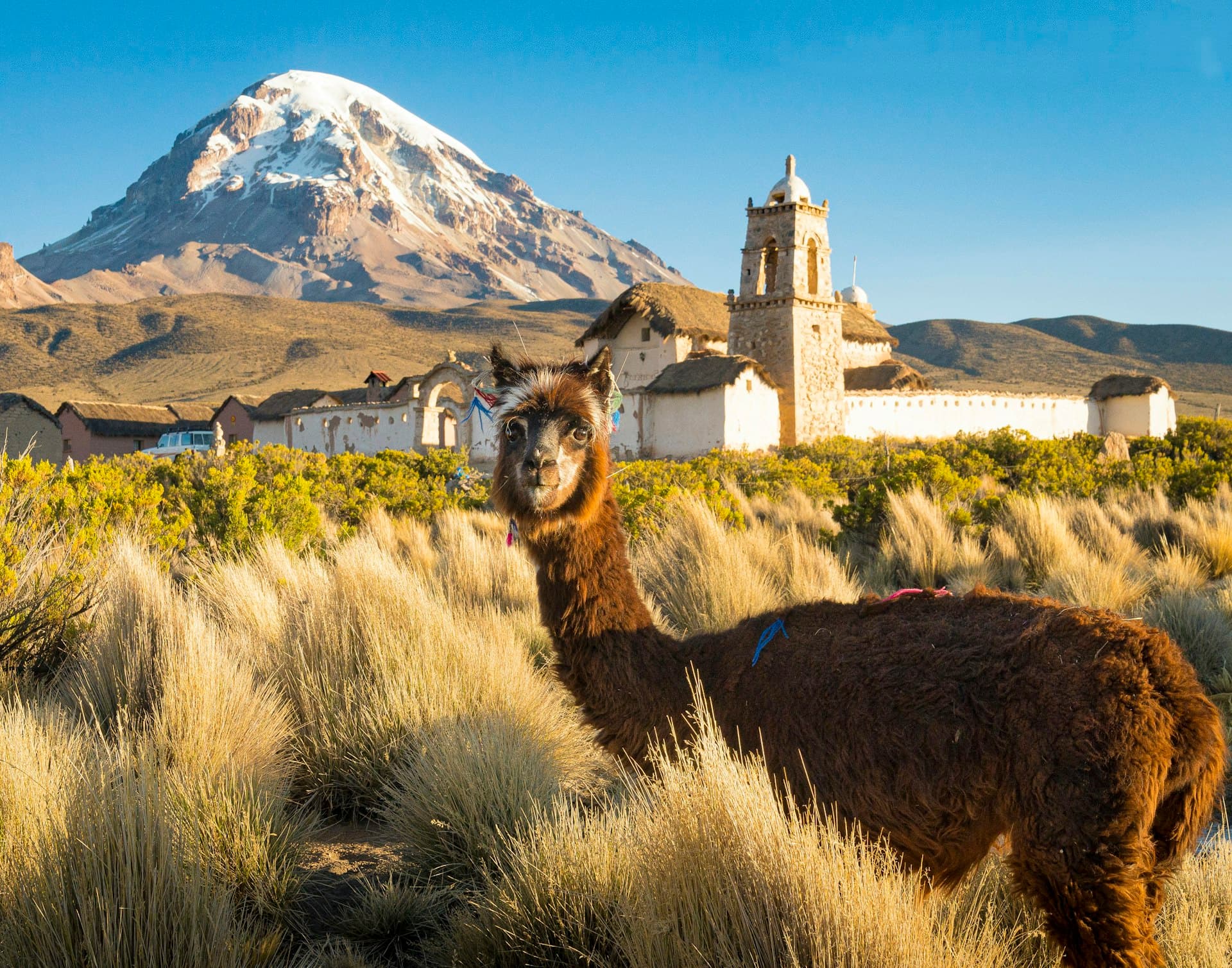 Photo: Alain Bonnardeaux / Unsplash
“Where the earth touches the sky, and reality bends.”
Not the postcards. The stories even locals don't know — whispered in your ear, right where they happened.
Imagine a place so flat and vast, it's used for something truly out of this world.
Just outside Uyuni, a collection of forgotten giants tells a tale of ambition and abandonment.
In the middle of the world's largest salt flat, an island rises, covered in life that defies its harsh surroundings.
Discover every secret of Uyuni
Every address, every reveal in full — in your ear, right where it happened.
You pick your stops. You walk. The voice reveals what the others miss.
No tours available yet. Check back soon — we're preparing them.
Uyuni, a remote settlement in southwestern Bolivia, serves as the primary entry point to the otherworldly Salar de Uyuni, the largest salt flat on Earth. This immense, gleaming white expanse, covering over 10,000 square kilometers (3,900 sq mi), is a landscape that often feels more akin to another planet than our own. Situated at an elevation of 3,656 meters (11,995 ft) near the crest of the Andes, the town itself is a modest center, existing almost entirely to facilitate exploration of the surrounding natural marvels.
The journey to Uyuni is an odyssey in itself, often involving long drives across the altiplano from neighboring regions or a flight into its high-altitude airport. Once here, travelers are immersed in a world where horizons stretch endlessly, the air is crisp, and the silence is profound. Beyond the iconic salt flats, the region offers a rich array of unique geological formations, high-altitude lagoons, and a surprising variety of adapted wildlife, making it a destination that captivates with its stark beauty and surreal experiences.
The story of the Salar de Uyuni stretches back tens of thousands of years, long before human footprints marked its surface. Between 30,000 and 42,000 years ago, this entire area was submerged under a colossal prehistoric body of water known as Lake Minchin. This ancient lake was significantly larger than any present-day lake in the region. Over millennia, Lake Minchin underwent transformations, eventually evolving into Paleo Lake Tauca between 26,100 and 13,000 years ago. This lake had an average depth of approximately 140 meters (460 ft).
As climatic conditions shifted and temperatures rose, the waters of Lake Tauca gradually evaporated, leaving behind two smaller lakes (Poopó and Uru Uru) and two vast salt deserts: the Salar de Coipasa and the much larger Salar de Uyuni. The desiccation process led to the accumulation of extensive evaporitic salt deposits, forming the immense salt flat we see today. Beneath the visible salt crust, layers of mud and brine extend up to 120 meters (394 feet) deep. The Salar is estimated to contain 10 billion tonnes of salt, with about 25,000 tons extracted annually.
In the late 19th century, Uyuni became a crucial transportation hub, particularly for Bolivia's developing mining industry. British engineers and Bolivian visionaries embarked on an ambitious railway project to connect the mineral-rich highlands with Pacific ports, primarily to transport silver, tin, and salt. However, economic struggles, political instability, and a decline in mining activity, exacerbated by Bolivia losing its access to the sea after the War of the Pacific, led to the eventual abandonment of much of this railway system. The locomotives, many imported from Britain, were left to rust on the outskirts of Uyuni, forming the now-famous Train Cemetery. These skeletal remains are a poignant reminder of a bygone industrial era and the transient nature of resources.
More recently, the Salar de Uyuni has gained global significance for its vast lithium reserves. It is part of the "lithium triangle" and holds a substantial portion of the world's known lithium resources, a critical component for batteries in modern electronics. This resource presents both economic opportunity and environmental challenges for the region.
The primary draw to Uyuni is the Salar de Uyuni, the world's largest salt flat, offering an unparalleled landscape that shifts dramatically with the seasons. In the dry season (May to November), the salt forms mesmerizing hexagonal patterns, creating an endless white expanse. During the wet season (December to April), a thin layer of rainwater transforms the flat into the world's largest natural mirror, perfectly reflecting the sky. This mirror effect is a photographer's dream, blurring the lines between earth and sky.
A visit to the Train Cemetery (Cementerio de Trenes) is typically the first stop on any Salar de Uyuni tour. Here, dozens of rusting steam locomotives and railcars, dating back to the late 19th century, lie scattered across a barren plain, remnants of Bolivia's ambitious but ultimately abandoned railway boom. It's a striking and photogenic site, offering a glimpse into industrial history.
Another key attraction within the salt flats is Isla Incahuasi, also known as "Cactus Island." This rocky outcrop, the remnant of an ancient volcano, is covered in towering giant cacti, some reaching up to 12 meters (39 feet) tall and hundreds of years old. A short hiking trail leads to the top, providing panoramic views of the surrounding salt flat. Many tours include lunch at the café-restaurant on the island.
Beyond the salt flats, multi-day tours often venture into the broader altiplano, revealing colorful lagoons, geysers, and unique rock formations. Keep an eye out for diverse fauna, including several species of flamingos, vicuñas, and viscachas, which have adapted to this challenging environment.
Uyuni offers distinct experiences depending on the season. The dry season, from May to November, is the most popular time to visit. During these months, the salt flats are completely dry, revealing the iconic hexagonal salt patterns and offering clear skies ideal for stargazing and capturing perspective-bending photos. Temperatures during the day typically range from 7-16°C (45-61°F), but can drop below freezing at night, especially in July and August. Access to all sites, including Isla Incahuasi, is generally guaranteed.
The wet season, from December to April, is when a thin layer of water transforms the Salar into the famous "mirror effect." This surreal reflection of the sky is a major draw for photographers. Daytime temperatures are slightly warmer, averaging 15-20°C (59-68°F). However, some areas, like Isla Incahuasi, may be inaccessible due to flooding, and driving conditions can be more challenging. For a balance, the shoulder seasons of April-May and October-November can offer a mix of both experiences with fewer tourists.
Uyuni is at a high altitude (3,700 meters / 12,139 feet), so acclimatization is crucial to prevent altitude sickness. Spend a few days in a higher-altitude city like La Paz before arriving in Uyuni, stay hydrated, avoid alcohol and caffeine, and take it easy. Coca tea is a local remedy that many find helpful.
For tours, it's highly recommended to book with a reputable operator in advance. While cheaper options exist, safety standards can vary significantly, with reported issues of poorly maintained vehicles and unqualified drivers. Ensure your tour includes experienced guides, reliable vehicles with seatbelts, and adequate equipment for cold weather. Multi-day tours typically include accommodation and meals.
The local currency is the Boliviano (Bs.), though US dollars are widely accepted in many establishments. It's advisable to carry cash, especially smaller denominations, as ATMs can be limited and not all places accept credit cards. There are no ATMs within the salt flats themselves. Joya Andina International Airport (UYU) serves Uyuni with domestic flights, primarily from La Paz and Cochabamba. Taxis are available from the airport to the town center, but it's often best to arrange transfers in advance.