Xinjiang International Grand Bazaar
The Grand Bazaar in Ürümqi is a lively hub, but its modern appearance might surprise those expecting a purely ancient Silk Road market.
Full story unlocks in the tour
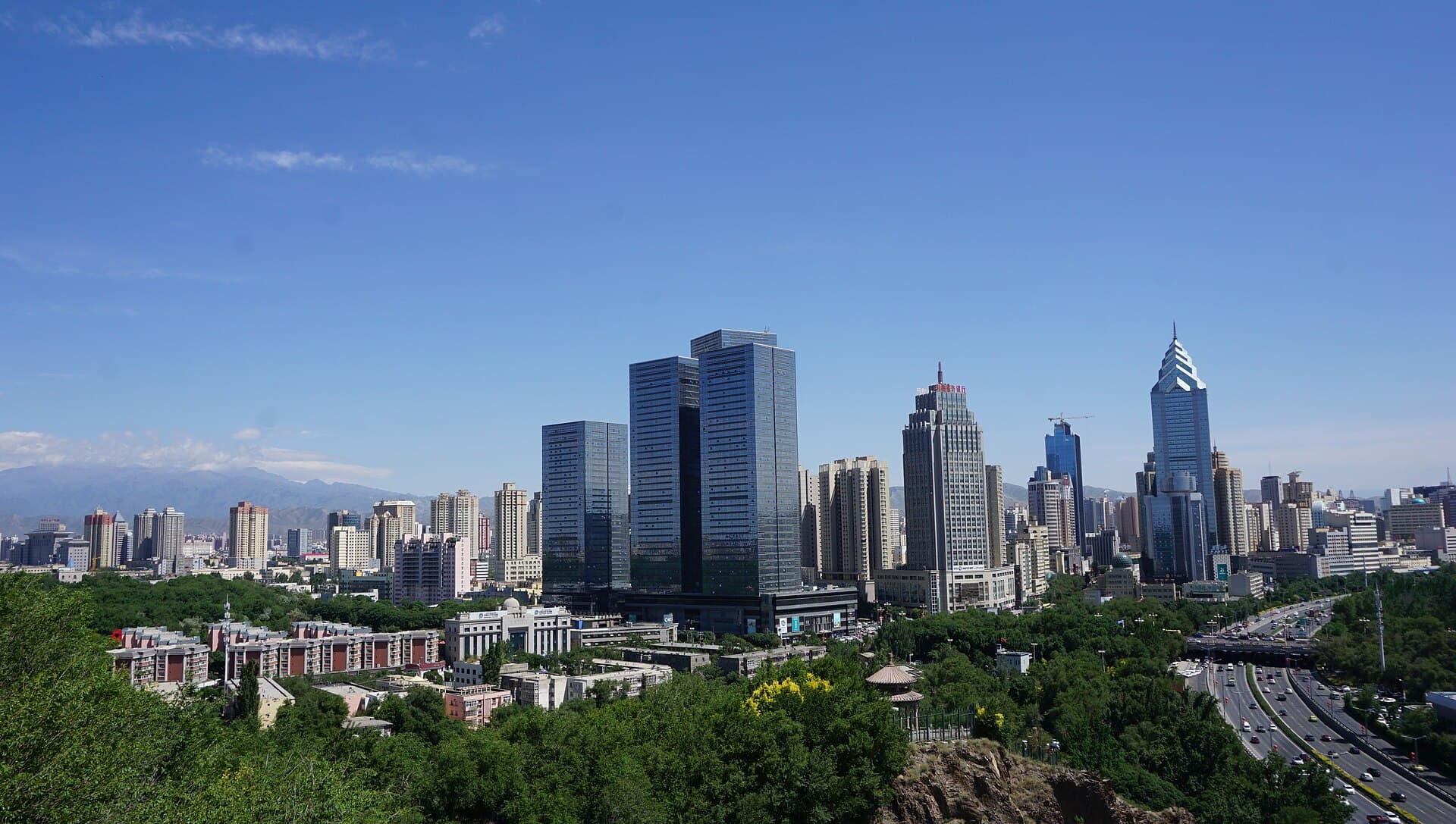 Albertaont / CC BY-SA 4.0, via Wikimedia Commons
“Where ancient Silk Road echoes meet modern ambition amidst a landscape of mountains and desert.”
Not the postcards. The stories even locals don't know — whispered in your ear, right where they happened.
The Grand Bazaar in Ürümqi is a lively hub, but its modern appearance might surprise those expecting a purely ancient Silk Road market.
Ürümqi is known for its extreme temperatures, but there's a specific reason why its hot summers are often described as surprisingly comfortable.
The name 'Ürümqi' has a poetic meaning, yet it might not immediately align with the city's current appearance.
Discover every secret of Ürümqi
Every address, every reveal in full — in your ear, right where it happened.
You pick your stops. You walk. The voice reveals what the others miss.
No tours available yet. Check back soon — we're preparing them.
Ürümqi, the capital of China's Xinjiang Uyghur Autonomous Region, stands as a lively crossroads where diverse cultures converge against a dramatic backdrop of mountains and vast desert basins. As the largest city in western China, it holds the distinction of being the most remote major city from any sea in the world, approximately 2,500 kilometers (1,600 miles) from the nearest coastline. This unique geographical position has shaped its continental climate, characterized by significant temperature variations between seasons and day and night.
More than just a geographical anomaly, Ürümqi is a bustling urban center that has experienced considerable economic growth since the 1990s, evolving into a crucial hub for transportation, culture, politics, and commerce in the region. It serves as a gateway to the broader Xinjiang region, a land historically traversed by the Silk Road. The city's identity is woven from the influences of its diverse ethnic groups, including Uyghur, Han, Kazakh, Hui, and Mongolian communities, each contributing to its unique blend of traditions, languages, and cuisines.
The area around Ürümqi has been inhabited for thousands of years, with early settlements evidenced by archaeological findings. Its documented history traces back to the Han Dynasty (206 BC – 220 AD), when a military post was established to safeguard trade caravans. During the Tang Dynasty (7th-8th centuries), a city named Luntai was founded, serving as a critical tax collection point on the northern branch of the Silk Road. After the Tang dynasty's withdrawal in the 750s, the region came under Uyghur control.
The area returned to Chinese rule during the Qing dynasty's campaigns against the Dzungars in the 18th century. In 1760, military colonies were established, followed by the founding of a Chinese city called Dihua in 1763. This city became an important Manchu garrison and a significant center for caravans traveling into the Ili River valley. The Qing government also established state farms and constructed a temple dedicated to Guandi, giving Ürümqi the nickname "Red Temple."
When Muslim rebellion erupted in Xinjiang in the 1860s, Ürümqi was captured by rebels in 1864, only to be recaptured by Qing forces in 1876. In 1884, when Xinjiang was established as a province, Dihua (Ürümqi) became its capital, growing rapidly into a major Central Asian trade center. Following the founding of the People's Republic of China, the city's name was officially changed back to Ürümqi on February 1, 1954. The name "Dihua," meaning "to enlighten and civilize," was deemed ethnically chauvinist by the ruling Communist Party. Since then, Ürümqi has been developed as a regional capital, cultural center, and a significant industrial base, fueled by mineral resources like the Karamay petroleum field discovered in 1955.
Begin your exploration at the Xinjiang International Grand Bazaar, a sprawling market in the Erdaoqiao business area. It is considered one of the largest bazaars globally, offering a lively blend of shopping, culture, and flavors. Here, you can find local crafts, spices, textiles, and traditional Uyghur music and dance performances.
For a deeper dive into the region's heritage, the Xinjiang Regional Museum presents an extensive collection of artifacts, including ancient mummies, textiles, and Buddhist scriptures, offering insights into the diverse history and ethnic groups of Xinjiang and the Silk Road.
Red Hill Park, also known as Hongshan Park, provides expansive views of the city and is considered a symbol of Ürümqi. Climb to the summit for a bird's-eye perspective, especially at sunset when the city lights begin to twinkle. The park also contains a pagoda and the Temple of the Great Buddha, both dating back to the late 18th century.
A short trip outside the city leads to Heavenly Lake of Tianshan (Tianchi Lake), an alpine lake framed by the Tian Shan mountains and lush forests. It is an ideal spot for hiking, boating, or simply taking in the dramatic natural scenery.
Consider a visit to the Ürümqi Cultural Center for a glimpse of modern architecture or wander through Xinjiang Folk Street for souvenirs and street food. For an authentic culinary experience, explore Hotan Street, known for its family-run eateries serving dishes like Samsa and Uyghur shaved ice yogurt.
The most pleasant time to visit Ürümqi is during the spring, summer, or early fall months, specifically from April to early October. During this period, the weather is generally mild and comfortable, ideal for outdoor activities and cultural exploration. Spring (April-May) brings green grasslands and apricot blossoms, with temperatures ranging from 5-24°C (40-75°F). Summer (June-August) is warm and dry, with average highs around 30°C (86°F), perfect for enjoying the city's natural landscapes and local festivals. Autumn (September-October) offers colorful foliage and a pleasant climate, with temperatures between 4-24°C (39-75°F). Winters are very cold, with temperatures often dropping significantly below freezing.
Ürümqi Diwopu International Airport (URC) is approximately 12 miles northwest of the city center, with airport buses and taxis available for transport. The city is also connected by train to major Chinese cities like Beijing and Xi'an. While foreigners can generally visit Ürümqi freely, be aware of increased security measures and potential restrictions for travel to more remote areas of Xinjiang. Hotels may require detailed passport scans upon check-in, and security scanners are common in public places.
Cash is still useful, as some smaller establishments may not accept credit cards, though WeChat Pay and Alipay are widely used. Bargaining is expected in bazaars and markets. The region's dry climate means staying hydrated and bringing moisturizer is advisable. Internet restrictions are in place, so a VPN may be necessary for accessing many Western apps.