The West Theatre
The striking black basalt of Umm Qais's West Theatre isn't just for aesthetics.
Full story unlocks in the tour
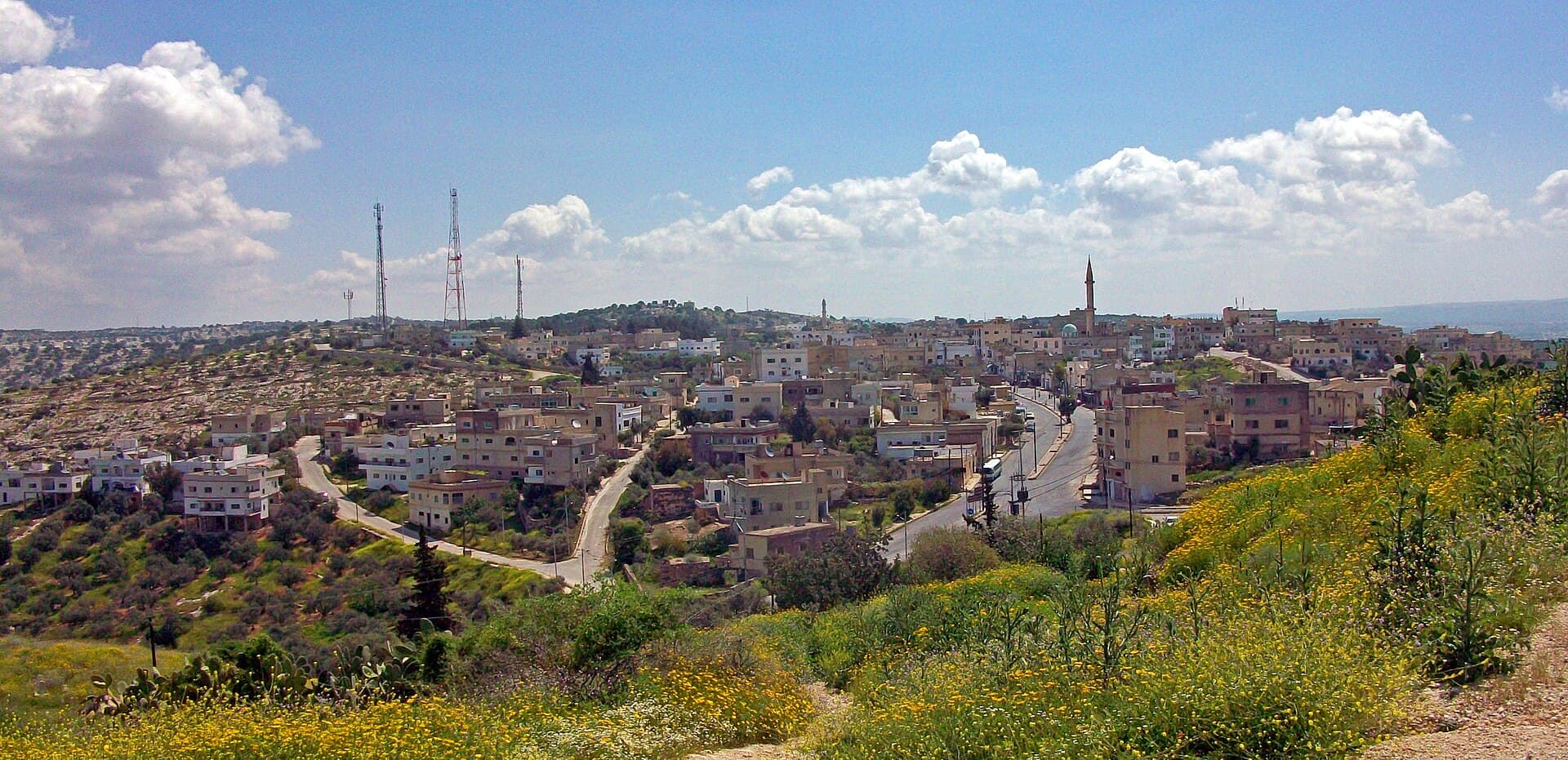 Daniel Case / CC BY-SA 3.0, via Wikimedia Commons
“Where ancient philosophy met expansive horizons.”
Not the postcards. The stories even locals don't know — whispered in your ear, right where they happened.
The striking black basalt of Umm Qais's West Theatre isn't just for aesthetics.
Umm Qais was once part of a powerful alliance of ten Greco-Roman cities, but its inclusion had a surprising, almost personal, origin.
Wandering through the Ottoman village, you might notice something unusual about the building materials.
Discover every secret of Umm Qais
Every address, every reveal in full — in your ear, right where it happened.
You pick your stops. You walk. The voice reveals what the others miss.
No tours available yet. Check back soon — we're preparing them.
Umm Qais, known in antiquity as Gadara, is an archaeological site in northern Jordan, situated on a hilltop with expansive views. It offers a unique blend of historical layers, from Hellenistic and Roman to Byzantine and Ottoman influences. The site overlooks the Jordan Valley, the Sea of Galilee (Lake Tiberias), the Golan Heights, and the Yarmouk River, providing a dramatic backdrop to its ancient ruins.
Once a prominent city of the Decapolis, a league of ten Greco-Roman cities, Gadara was a center for philosophers, poets, and writers. Today, visitors can explore well-preserved Roman ruins, including theaters, colonnaded streets, and bath complexes, alongside remnants of a later Ottoman village. The site invites a journey through millennia of history, offering insights into the diverse civilizations that shaped this region.
The history of Umm Qais, ancient Gadara, begins shortly after Alexander the Great's conquest of the region in 333 BC. Initially, it served as a frontier post for the Ptolemies, Alexander's successors, in their conflicts with the Seleucids. The Seleucids eventually captured the city in 218 BC. Around 83 BC, Gadara came under Jewish Hasmonean control.
The Roman general Pompey conquered the region in 63 BC, and Gadara was subsequently rebuilt and granted a degree of autonomy, becoming a leading city of the Decapolis. Under Roman rule, particularly after Trajan's annexation of the Nabatean kingdom in 106 AD, Gadara flourished as a cultural and intellectual center. It was home to notable philosophers and poets like Meleager and Theodorus. Most of the visible Roman architecture dates to the 2nd century AD.
Gadara continued to prosper into the Byzantine era, becoming the seat of a diocese as early as the 4th century. This period saw the construction of several churches, including a five-nave basilica and another magnificent basilica built on a market terrace. The city's advanced infrastructure included an aqueduct system that supplied water to its public fountains and baths, some of which were used until the end of Byzantine rule in the 7th century.
The Arab conquest in 636 AD marked the beginning of Gadara's decline. A devastating earthquake in 746 AD (or 749 CE) largely destroyed the city, leading to its eventual abandonment. For centuries, the site lay dormant, its name changing to Umm Qais, possibly derived from Arabic words meaning "frontier station" or "junction."
The ruins of Gadara were identified by the German traveler Ulrich Seetzen in 1806. In the 1890s, a small Ottoman village grew up on the Roman ruins, with inhabitants reusing ancient stones for their homes. Formal archaeological excavations by the Jordanian Department of Antiquities began in the 1930s, with major international efforts starting in 1974. Today, Umm Qais is a significant archaeological park, offering a window into its layered past.
Begin your exploration at the West Theatre, a striking 2nd-century AD Roman amphitheater constructed from black basalt, capable of seating up to 3,000 spectators. Its distinct dark stone contrasts with the lighter limestone often found in Roman structures. From here, you can walk along the Cardo Maximus, the ancient city's main colonnaded street, where you can still discern chariot wheel ruts in the pavement.
Visit the Basilica Terrace, which features the remains of Byzantine churches with intricate mosaic floors and offers expansive views of the surrounding landscape. Explore the Nymphaeum, a public fountain, and the remains of the Roman baths, fed by an ancient aqueduct system. The site also includes a Mausoleum and a royal cemetery.
Do not overlook the Ottoman village, where stone houses, some partially restored, offer a glimpse into a more recent past. The Umm Qais Museum, housed in a restored Ottoman-era house (originally the residence of an Ottoman ruler), displays artifacts excavated from Gadara, including Roman sculptures and Byzantine mosaics. Throughout the site, panoramic viewpoints offer views of the Sea of Galilee, the Golan Heights, and the Yarmouk River.
The ideal time to visit Umm Qais is during spring (March to May) and autumn (September to November). During these months, the weather is mild, with temperatures typically ranging from 15°C to 25°C (59°F to 77°F), making it comfortable for exploring the outdoor ruins. Spring is particularly beautiful, as the surrounding hills are covered in wildflowers and lush greenery. Autumn offers warm days, cool evenings, and golden countryside views. Summers can be very hot, especially at midday, while winters are cooler and may bring rain or fog that can obscure the panoramic views.
Umm Qais is located approximately 110 kilometers (68 miles) north of Amman. The easiest way to reach the site is by renting a car or hiring a private taxi, a journey that takes around two hours from Amman. Public minibuses are an option from Amman's North Bus Station to Irbid, from which you can take another bus or taxi to Umm Qais. Many tour operators offer full-day trips, often combining Umm Qais with nearby Jerash and Ajloun Castle.
The archaeological site is open daily from 8 AM to sunset. The entry fee is 3 JOD for adults, with free entry for children under 12 and Jordan Pass holders. Wear comfortable shoes, as the terrain is uneven, and bring water, sunscreen, and a hat, especially during warmer months. Guided tours are available on-site and are recommended for a deeper understanding of Gadara's history. The Umm Qais Resthouse, located within the site, offers traditional Jordanian meals with views of the Sea of Galilee.