Ganjeolgot Cape
Ulsan holds a unique distinction on the Korean Peninsula, drawing gatherings each New Year's Day.
Full story unlocks in the tour
 Choi2451 / CC BY-SA 4.0, via Wikimedia Commons
“Where the hum of industry meets the hush of the sea and the echoes of antiquity.”
Not the postcards. The stories even locals don't know — whispered in your ear, right where they happened.
Ulsan holds a unique distinction on the Korean Peninsula, drawing gatherings each New Year's Day.
Within Ulsan's industrial core, one facility operates on a scale so grand it functions as its own small city.
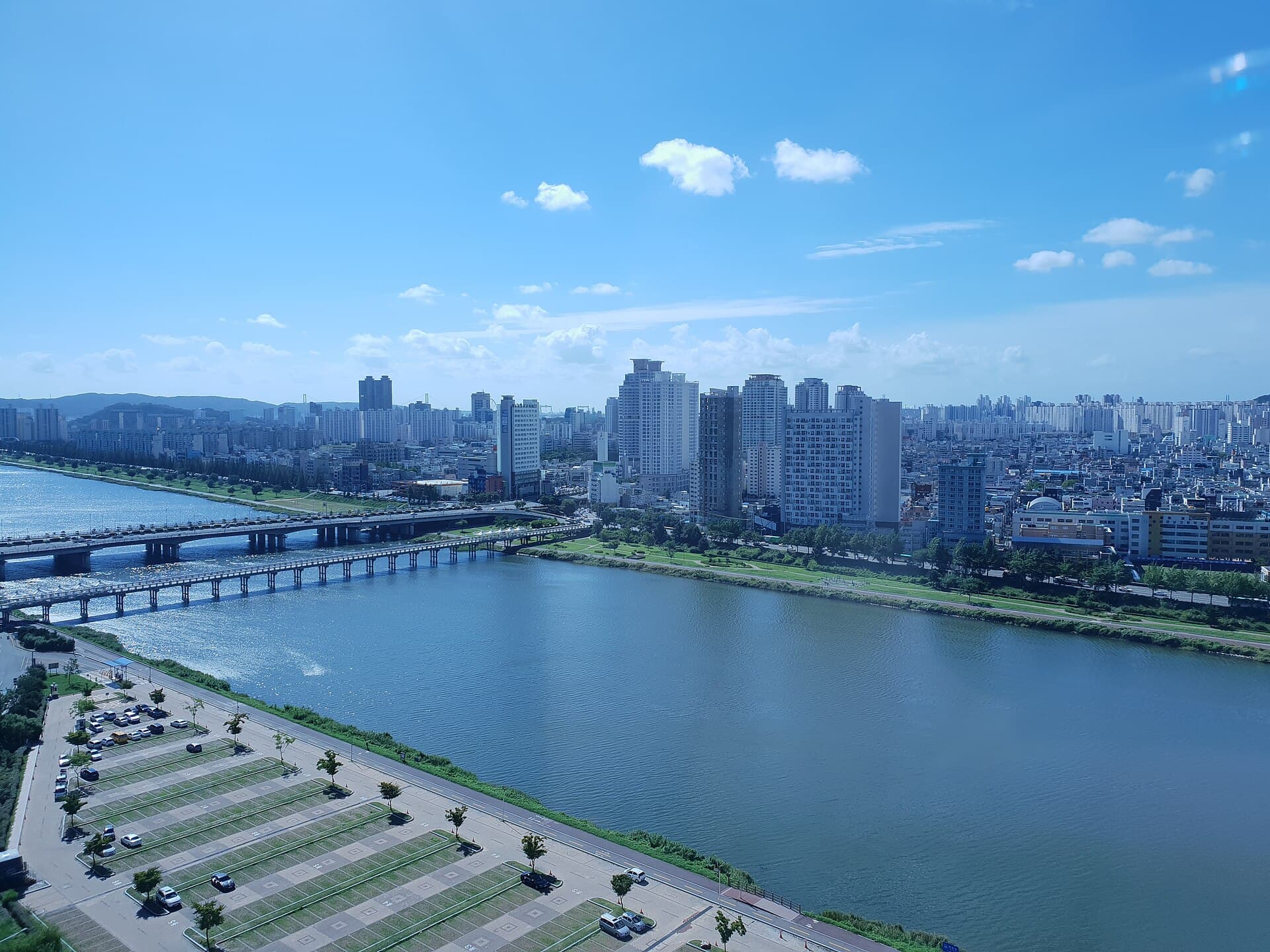
Once a heavily contaminated waterway, a significant river in Ulsan underwent a remarkable transformation.
Discover every secret of Ulsan
Every address, every reveal in full — in your ear, right where it happened.
You pick your stops. You walk. The voice reveals what the others miss.
No tours available yet. Check back soon — we're preparing them.
Ulsan, a metropolitan city on South Korea's southeastern coast, presents a compelling fusion of industrial strength and natural serenity. Often recognized as the nation's industrial engine, it is home to some of the world's largest manufacturing facilities, including the Hyundai Motor Company's automobile assembly plant and Hyundai Heavy Industries' shipyard. Yet, beyond its robust industrial landscape, Ulsan surprises visitors with its scenic coastline, verdant parks, and enduring cultural legacy.
Positioned at the eastern edge of the Taebaek Mountains, Ulsan faces the East Sea, offering a mild climate and picturesque ocean vistas. While the city propels the country's economy, its past reveals a profound connection to the sea, stretching back to prehistoric times when it served as a center for whaling activities and maritime commerce. Today, Ulsan invites exploration, from its lively downtown to the tranquil paths of its national gardens and coastal parks, promising a memorable journey where industry finds harmony with nature.
The story of Ulsan reaches back into deep antiquity, with evidence of human presence from the Paleolithic and Neolithic eras discovered at sites like Mugeo-dong Ok-hyeon. During the Jinhan confederacy, Ulsan was a significant hub for iron mining and production. Later, in the Unified Silla era (1st–7th centuries AD), it developed into a crucial port, facilitating maritime trade with China, Japan, and even Central Asian countries via the Silk Road.
During the Joseon period, Ulsan continued its role as an important port and defensive location, with records indicating shipbuilding activities as early as 1642. The city also played a part in the Imjin War, with a notable defense of Ulsan Castle against Japanese forces between 1597 and 1598. Before the 20th-century industrial expansion, Ulsan was primarily an agricultural and trading center, as well as a major fishing port known for whaling.
A radical transformation began in 1962 when Ulsan was designated as South Korea's first special industrial zone. This marked the genesis of its rapid industrialization, earning it the moniker 'Industrial Capital of the Republic of Korea'. The 1970s saw the establishment of the world's largest shipyard by Hyundai Heavy Industries and the Hyundai Motor Company automobile plant. By the late 20th century, Ulsan had become one of the country's most significant industrial centers, with a free-trade zone established in the early 21st century. Today, Ulsan continues to lead Korea's economic growth, focusing on automobile manufacturing, shipbuilding, and petrochemical industries.
Ulsan presents a varied array of attractions that intertwine its industrial identity with natural splendor and cultural insights. Begin at Taehwagang National Garden, an expansive eco-park featuring the magnificent Simni Bamboo Grove, perfect for unhurried walks or bicycle rides. For coastal views, Daewangam Park offers dramatic rocky cliffs, a century-old pine grove, and vistas of the East Sea, with a bridge connecting to Daewangam Rock. Legend recounts that a Silla queen is interred beneath the rock, safeguarding the country as a dragon.
Delve into Ulsan's unique maritime heritage at the Jangsaengpo Whale Culture Village and the Jangsaengpo Whale Museum, which explore the city's whaling past and whale conservation efforts. For sweeping views, ascend the Ulsandaegyo Observatory to see the Ulsandaegyo Bridge, industrial complexes, and the city skyline. Those who appreciate nature can also visit Ulsan Grand Park, one of the largest urban parks in South Korea, offering green spaces, a rose garden, and a small zoo. Additionally, Ganjeolgot Cape is a celebrated spot to witness the sunrise.
The most opportune times to visit Ulsan for pleasant weather and outdoor pursuits are during spring (March to May) and autumn (September to November). Spring offers mild temperatures, typically ranging from 15-22°C (59-72°F), and lower humidity. Autumn also provides agreeable conditions, with temperatures between 14-20°C (57-68°F). These seasons bypass the hot, humid summers with extended rain and occasional typhoons, as well as the cold, dry winters. October is often cited as the premier month, offering optimal weather.
Ulsan is well-connected and easy to navigate. For arrivals, Ulsan Airport (USN) handles domestic flights from Seoul (Gimpo) and Jeju Island. International travelers often fly into Busan's Gimhae International Airport (about 1.5 hours away by bus) or Incheon International Airport, with direct bus services to Ulsan. High-speed KTX trains serve Ulsan Station, located west of the city in Eonyang, with express buses connecting to downtown. Taehwagang Station in the city center serves regular trains.
Within Ulsan, an extensive public bus network forms the backbone of transportation, with plans for a future Light Rapid Transit system. Acquiring a transportation discount card can be economical for longer stays. Taxis are also readily available and relatively inexpensive. While some areas invite walking, attractions can be spread out, making public transport or taxis practical for covering distances. The local currency is the South Korean Won (₩), and electricity operates at 220V with type C or F plugs.