Sacred Monkey Forest Sanctuary
The long-tailed macaques in Ubud's Monkey Forest are more than just playful creatures.
Full story unlocks in the tour
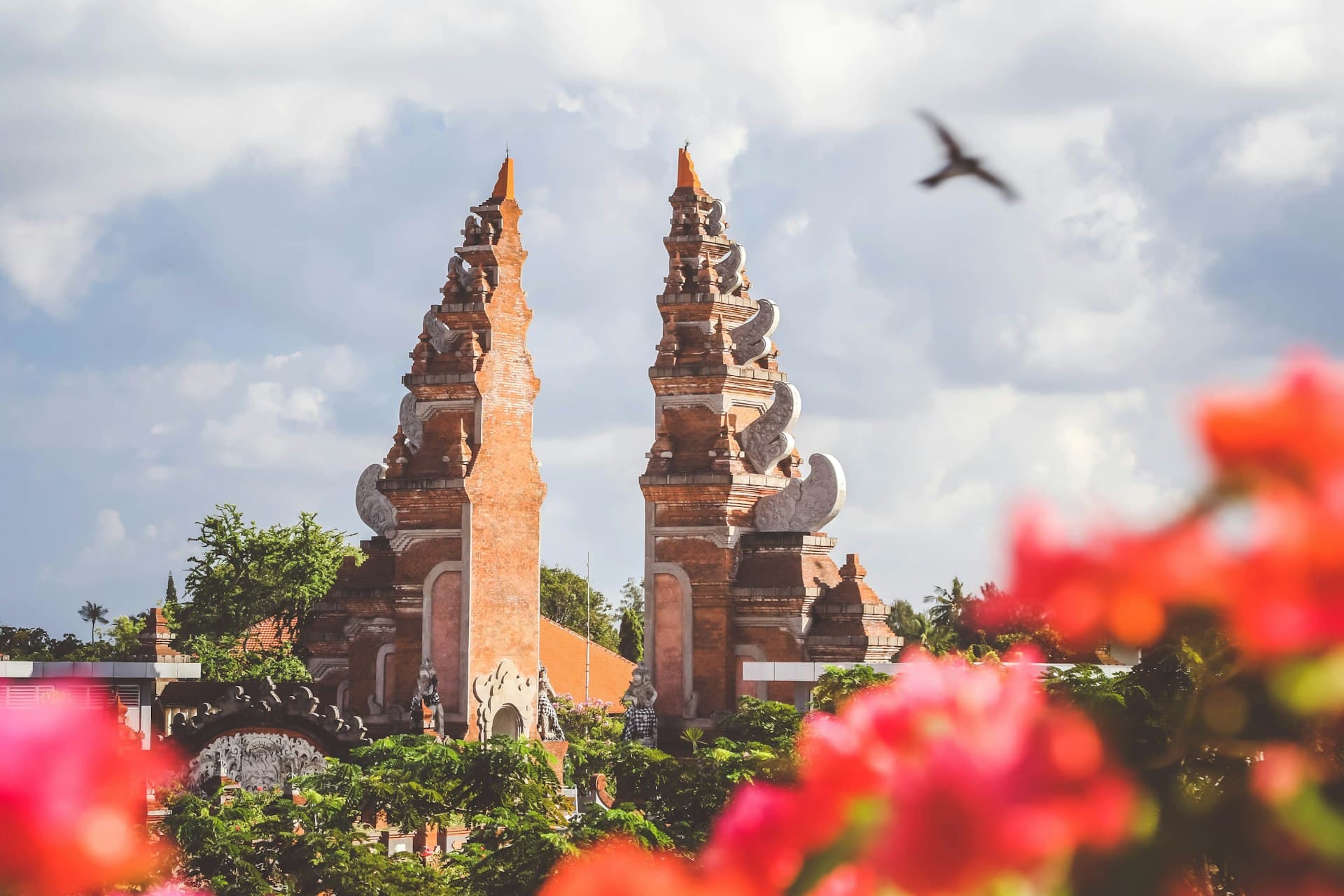 Photo: Jeremy Bishop / Unsplash
“Ubud: Where the emerald sweep of rice fields meets ancient rites and artistic expression.”
Not the postcards. The stories even locals don't know — whispered in your ear, right where they happened.
The long-tailed macaques in Ubud's Monkey Forest are more than just playful creatures.
The formidable giant face carved into the entrance of Goa Gajah conceals a protective purpose.
Engaging in negotiation at the Ubud Art Market transcends merely securing a favorable price.
Discover every secret of Ubud
Every address, every reveal in full — in your ear, right where it happened.
You pick your stops. You walk. The voice reveals what the others miss.
No tours available yet. Check back soon — we're preparing them.
Ubud, situated in the central highlands of Bali, is a town celebrated for its verdant landscapes, spiritual atmosphere, and artistic legacy. Surrounded by flourishing rice fields, swaying palms, and dense jungle, it offers a distinct contrast to Bali's coastal regions, providing a tranquil escape. Often referred to as Bali's cultural and artistic core, Ubud draws visitors seeking an immersion in traditional Balinese life, from its ancient sanctuaries and spiritual sites to its thriving art community and wellness retreats.
The town itself, while lively, maintains a more measured pace, inviting exploration of its numerous galleries, craft shops, and cafes. Beyond the immediate town center, the surrounding area unfolds with scenic rice terraces, flowing waterfalls, and traditional villages, positioning Ubud as a strategic starting point for broader island exploration. It is a place where the fragrance of incense frequently permeates the air, traditional ceremonies line the avenues, and opportunities for contemplation and restoration are plentiful.
The narrative of Ubud extends back to the eighth century, when a Javanese Hindu priest, Rsi Markandya, meditated at the convergence of two rivers in Campuhan, a location considered auspicious by Hindus. He established the Gunung Lebah Temple there, which remains a pilgrimage destination. The area was originally known for its medicinal herbs and plants, with the name Ubud deriving from the Balinese word "ubad," meaning medicine.
In 1343, the Javanese Majapahit kingdom conquered Bali, leading to a significant flourishing of Balinese culture. The lineage of Ubud's aristocratic families can be traced to this era. By the late 19th century, Ubud had become the seat of feudal lords who pledged allegiance to the king of Gianyar, a powerful southern state. These lords, particularly the Sukawati dynasty, were instrumental in nurturing the village's burgeoning arts scene, establishing Ubud as a cultural center.
The modern period of Ubud's artistic prominence truly began in the 1930s with the arrival of European artists like Walter Spies and Rudolf Bonnet. Encouraged by the royal family, these artists played a crucial role in promoting Balinese art and culture globally, further solidifying Ubud's reputation as an artistic center. While the island experienced a decline in tourism after terrorist bombings in 2002, Ubud has since seen substantial development and continues to attract millions of visitors annually, drawn to its unique blend of spiritual heritage, artistic expression, and natural splendor.
Ubud presents a wealth of cultural and natural sights. A visit to the Sacred Monkey Forest Sanctuary allows for an encounter with over 1,200 long-tailed macaques moving freely amidst ancient temples. The Ubud Royal Palace (Puri Saren Agung), once the residence of the royal family, displays traditional Balinese architecture and hosts traditional dance performances in the evenings. Nearby, the Pura Taman Saraswati water temple is dedicated to the goddess of knowledge and is notable for its lotus ponds.
Just beyond Ubud, the ancient Goa Gajah, or Elephant Cave, is an 11th-century archaeological site featuring a cave entrance carved with a dramatic, formidable face, and ancient bathing pools. For those seeking expansive views, the Tegallalang Rice Terraces offer wide emerald-green stepped paddies. The Campuhan Ridge Walk provides an accessible path through luxuriant greenery and undulating hills. The Ubud Art Market (Pasar Seni Ubud) is an animated open-air market where visitors can discover handcrafted items, apparel, and mementos, and engage in the local custom of negotiation.
The dry season, from April to October, is generally considered the most favorable time to visit Ubud, offering sunny and warm weather with reduced humidity. Temperatures during this period typically range from 25°C to 30°C (77°F to 86°F), making it ideal for outdoor activities like exploring rice terraces, cycling, and visiting temples. However, this is also the busiest tourist season, so attractions can be more populated and accommodation prices may be higher. The shoulder months of April to June and September to October offer a good balance of pleasant weather and fewer people. The wet season, from November to March, brings higher humidity and more frequent rain showers, but also lush green landscapes and a quieter, more affordable experience.
Ubud's town center is navigable on foot, allowing convenient access to many restaurants, cafes, and temples. For exploring areas beyond the immediate town, various transportation options are available. Renting a scooter or motorcycle is a popular choice for adventurous travelers, though it's crucial to ensure travel insurance covers such activities and to wear a helmet. Taxis are available, but ride-sharing apps like Grab and Gojek are often more convenient and offer fixed prices. However, some local taxi groups may have designated "no-go zones" for ride-sharing services. Engaging a private car and driver is recommended for exploring the surrounding region and day trips, offering flexibility and local insights. Public transportation is limited, but shuttle services can connect major tourist spots. When visiting temples, a sarong and sash are required for both men and women to cover legs and waist, and shoulders should also be covered. These are often available for rent or a small fee at temple entrances.