Turku Cathedral
The grand Turku Cathedral, a symbol of Finland, holds a secret within its bell tower that speaks to its fiery past.
Full story unlocks in the tour
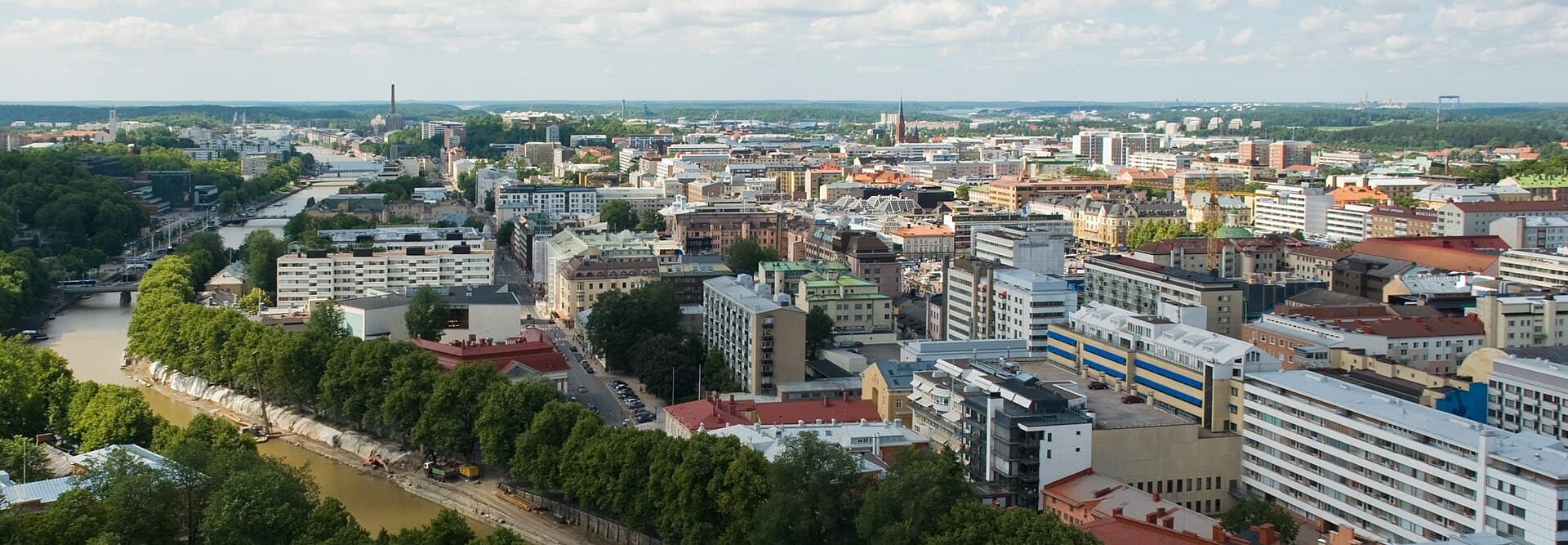 Markus Koljonen (Dilaudid) with thanks to Jontts and Turku Cathedral / CC BY-SA 3.0, via Wikimedia Commons
“Where centuries of stories flow with the Aura River.”
Not the postcards. The stories even locals don't know — whispered in your ear, right where they happened.
The grand Turku Cathedral, a symbol of Finland, holds a secret within its bell tower that speaks to its fiery past.
Beyond its formidable stone walls, Turku Castle once served a surprising, albeit unglamorous, purpose for the Finnish economy.
This charming 18th-century wooden house, now a museum, offers a glimpse into historical remedies, but its garden holds a clue to ancient healing practices.
Discover every secret of Turku
Every address, every reveal in full — in your ear, right where it happened.
You pick your stops. You walk. The voice reveals what the others miss.
No tours available yet. Check back soon — we're preparing them.
Turku, Finland's oldest city, is a captivating blend of medieval heritage and contemporary life. It rests on the southwestern coast at the mouth of the Aura River. Often called "the Paris of Finland" or the "Food Capital of Finland," Turku offers a singular urban experience with its riverside, historical sites, and a flourishing culinary scene. Its identity is deeply rooted in its past as Finland's first capital and a significant center under Swedish rule.
The city's compact size makes it ideal for exploration on foot, with many hotels, restaurants, and attractions within walking distance of the center. The Aura River is central to Turku's character, with riverboats moored along its banks and pleasant promenades for strolling. Beyond the city, Turku serves as a gateway to the expansive and beautiful Finnish Archipelago, a network of thousands of islands and islets.
Turku's origins trace back to the 13th century, with its founding year often cited as 1229 when Pope Gregory IX first mentioned the town of Aboa. During the Middle Ages, Turku was the most important city in Finland, then part of the Kingdom of Sweden, serving as a major center for trade, religion, and administration. The city's strategic location on the Aura River, flowing into the Archipelago Sea, facilitated its growth as a significant port and a member of the Hanseatic League.
Turku Cathedral, consecrated in 1300, became the seat of the Bishop of Turku, covering the eastern half of the Kingdom of Sweden (present-day Finland) until the 17th century. Turku Castle, a medieval fortress, was also established in the 13th century to defend the river mouth and harbor. In 1640, Finland's first university, Academia Aboensis, was founded in Turku.
Finland became an autonomous grand duchy of the Russian Empire in 1809, and Turku briefly served as its capital. However, in 1812, Emperor Alexander I moved the capital to Helsinki, believing Turku was too far from Russia and too aligned with Sweden. The shift was accelerated by the Great Fire of Turku in 1827, which destroyed a large portion of the city, including many government offices. German architect Carl Ludvig Engel, who designed Helsinki, then drew up a new city plan for Turku.
Despite losing its capital status, Turku remained Finland's largest city until the 1840s. The 20th century saw Turku referred to as "Finland's gateway to the West," maintaining strong connections with other Western European countries. Today, Turku is a lively cultural and economic center, a university town with a significant student population, and was named a European Capital of Culture in 2011. It is also officially bilingual, with both Finnish and Swedish spoken.
Begin your exploration along the Aura River, the city's defining feature, where you can stroll along promenades and observe riverboats. The river connects many of Turku's key attractions. Dominating the skyline is Turku Cathedral, Finland's national shrine and most important religious building, consecrated in 1300. While the interior is currently undergoing renovation until 2028, the exterior is still impressive.
At the mouth of the Aura River stands Turku Castle, a medieval fortress dating from the 13th century. It is Finland's largest surviving medieval building and houses a historical museum, offering insights into its past as a stronghold, a granary, and a prison. Allow at least three hours to explore the castle and its grounds.
For a singular historical perspective, visit Aboa Vetus & Ars Nova, a museum that combines medieval archaeology with contemporary art. Underground, Aboa Vetus allows you to walk through authentic medieval ruins, streets, and view artifacts discovered during excavations. Above ground, Ars Nova showcases modern art.
Step back in time at Luostarinmäki Handicrafts Museum, a collection of 19th-century residential buildings that survived the Great Fire of Turku. Another historical treasure is the Pharmacy Museum and Qwensel House, the oldest surviving wooden building in the city center, which combines an 18th-century bourgeois home with a 19th-century pharmacy. Finally, immerse yourself in the local culinary scene at Turku Market Hall, a historic indoor market built in 1896, offering fresh produce, local delicacies, and cafes.
The best time to visit Turku for warm-weather activities is from late June to mid-August, when temperatures are comfortable and daylight hours are long. July is the warmest month, with an average high of 21°C (70°F). This period is ideal for exploring the archipelago, with ferries running full schedules and opportunities for swimming and kayaking. Spring (March-May) and autumn (September-November) offer fewer crowds, pleasant temperatures, and lively natural scenery as the ice breaks or leaves change color. While winter (November-January) brings short daylight hours and freezing temperatures, the city still offers museums and a festive atmosphere around Christmas.
Turku is located in southwestern Finland and is easily accessible. From Helsinki, the easiest and most environmentally friendly way to reach Turku is by train, with direct connections taking less than two hours. Turku also has an international airport with flights from cities like Copenhagen and Stockholm, and ferry connections are available from Stockholm.
Within the city, many attractions are within walking distance. Public transportation is available, and renting a bike is a popular way to explore both the city and the nearby archipelago. If you plan to explore the islands extensively, renting a car is recommended. Turku is a bilingual municipality, with Finnish and Swedish as its official languages, and a significant portion of the population speaks other languages. Many museums offer guided tours in multiple languages.