San Vicente Cemetery
The resting place of two legendary American outlaws is marked by a modest sign, yet the circumstances of their demise remain a subject of lively discussion.
Full story unlocks in the tour
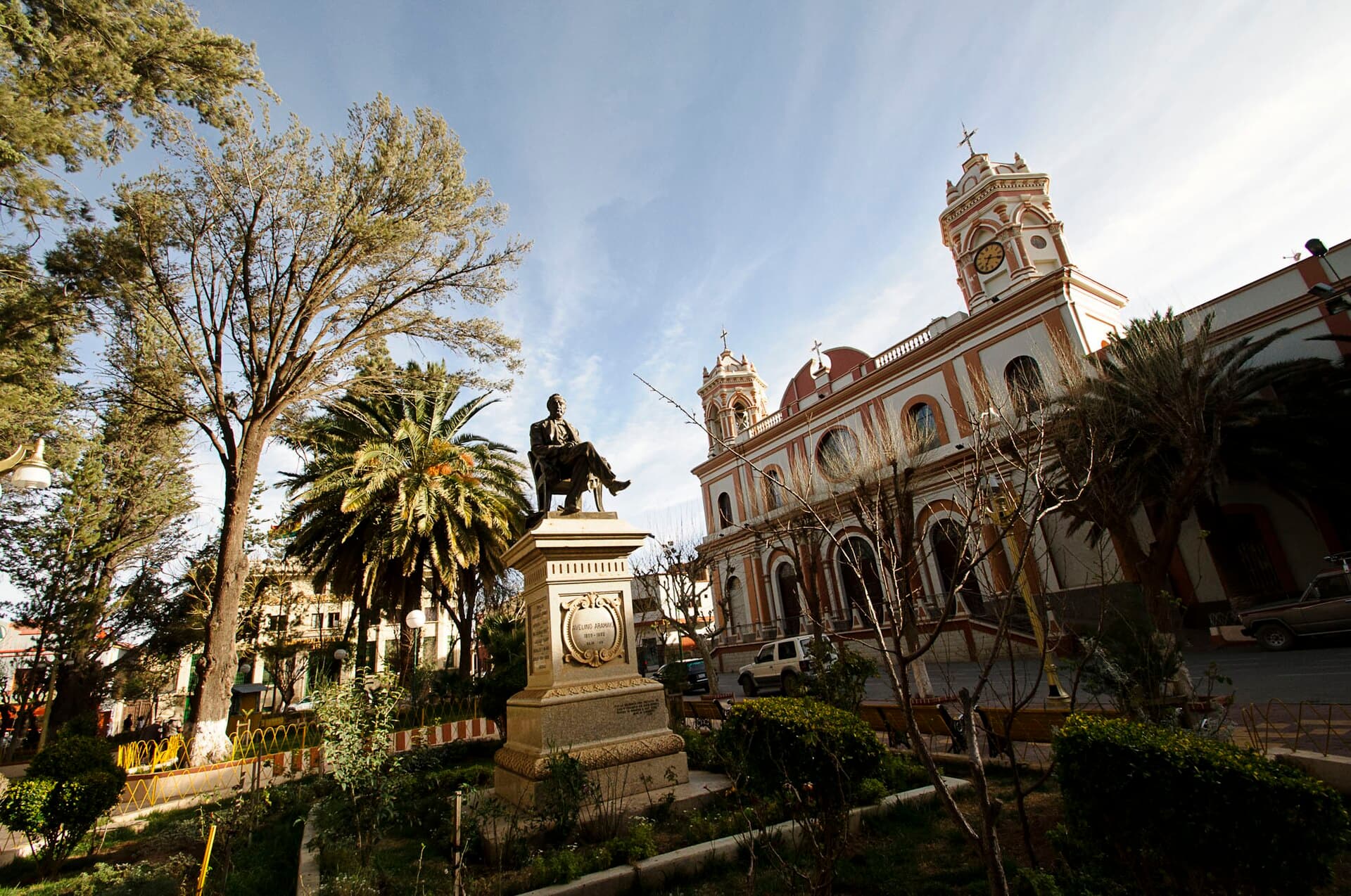 Viaje al corazón de Bolivia / CC BY 2.0, via Wikimedia Commons
“Where the high desert meets the lore of the American frontier.”
Not the postcards. The stories even locals don't know — whispered in your ear, right where they happened.
The resting place of two legendary American outlaws is marked by a modest sign, yet the circumstances of their demise remain a subject of lively discussion.
This canyon unveils a surprising geological spectacle, crafting a terrain that feels utterly alien.
Beneath the tranquil charm of the central square resides a significant chapter of Bolivian history, frequently overlooked by those passing through.
Discover every secret of Tupiza
Every address, every reveal in full — in your ear, right where it happened.
You pick your stops. You walk. The voice reveals what the others miss.
No tours available yet. Check back soon — we're preparing them.
Tupiza, a town in southern Bolivia's Potosí Department, unfolds a landscape often compared to the American frontier, with its dramatic red escarpments, deep ravines, and rock formations sculpted over millennia by the wind. Resting at an elevation of approximately 2,850 to 2,950 meters (9,350 to 9,678 feet), it serves as a portal to the iconic Salar de Uyuni and a crucial pause for travelers journeying from Argentina.
Beyond its striking scenery, Tupiza offers a more subdued, intimate Bolivian encounter compared to more frequented tourist destinations. The town itself, with a population around 25,000, maintains strong connections to its indigenous heritage, visible in local markets and enduring traditions. Travelers often find themselves lingering longer than anticipated, drawn by the unhurried rhythm, the vivid hues of the landscape, and the sense that the journey here is as much about the exploration as it is about the final destination.
Before the arrival of the Spanish, the Tupiza region was home to the Aymara Chichas people, whose communities were incorporated into the expansive Inca Empire in the 15th century. Tupiza was a significant point on the Inca road network, known as the Qhapaq Ñan, which facilitated imperial administration and commerce across the Andes.
In the 16th century, the Spanish arrived, initially attracted by the area's agreeable climate and agricultural promise, and later by the abundant mineral deposits in the Chichas mountain range. Tupiza was formally established on June 4, 1574, by decree of Spanish authorities. It swiftly evolved into a vital trading and mining hub, particularly in the 19th century, with considerable operations in silver, antimony, lead, and tin.
Tupiza played a central role in Bolivia's fight for independence. The Battle of Suipacha, the first significant victory for Argentine-patriot forces against Spanish royalists in Upper Peru, occurred near Tupiza in 1810. Later, in 1825, the decisive Battle of Tumusla, where General Antonio José de Sucre's troops vanquished the remaining Spanish forces, also transpired in the region, paving the way for Bolivia's declaration of independence.
The early 20th century brought a different kind of renown to Tupiza. American outlaws Butch Cassidy and the Sundance Kid are believed to have resided in the region while evading pursuit in the United States. They reportedly worked in local tin mines before robbing the Aramayo mine in 1908. Their fabled flight is thought to have concluded in a shootout with the Bolivian army in San Vicente, a mining town close to Tupiza.
This era also witnessed the construction of key railway lines. The state-owned FC Estado Atocha-Villazón line, connecting to the Argentine border, commenced operations in 1924 and became a through route to La Quiaca in Argentina in 1925. Today, the Ferroviaria Andina operates passenger services, with the train journey to Tupiza offering sweeping views of the Andean landscapes.
The primary allure of Tupiza lies in its striking natural surroundings, frequently explored through guided excursions. Horseback riding is a signature experience, providing access to ravines, canyons, and paths inaccessible by vehicles. Popular destinations include the monumental Puerta del Diablo, a colossal rock formation resembling a natural archway between mountains, and the Valle de los Machos, celebrated for its distinctive rock formations. The Cañón del Inca is another impressive canyon, ideal for walking.
For expansive views of Tupiza and its crimson mountains, an ascent up Cerro Corazón de Jesús is recommended, particularly around sunset when the rocks glow with a deep red. The town center offers a glimpse into local daily life with its tranquil plazas and markets, where one can discover local produce and traditional textiles. Tupiza also serves as a favored starting point for multi-day excursions to the Salar de Uyuni, offering a distinct perspective of the salt flats and surrounding terrain.
The most favorable period to visit Tupiza for outdoor pursuits is generally from May to October, which marks the dry season. During these months, the weather is cooler and drier, making walking and exploration more comfortable, and road conditions are typically more reliable. While temperatures remain relatively consistent throughout the year, ranging from 18°C to 23°C (64°F to 73°F) during the day, the rainy season from December to March can complicate excursions due to potential road difficulties.
Tupiza is situated at a considerable elevation, around 2,850 meters (9,350 feet), so it is wise to allow a day or two for acclimatization to prevent altitude sickness. The town is reachable by bus from major Bolivian cities such as Potosí, Sucre, and La Paz, and also by train from Uyuni or Oruro, offering a scenic journey through the highlands. If arriving from Argentina, one can cross the border at Villazón and take a bus or shared transport to Tupiza.
While the town center is easily walkable, exploring the surrounding canyons and rock formations often necessitates organized excursions, which can be arranged through local agencies or hotels. Horseback riding tours are especially sought after. For independent walkers, offline maps like Maps.me are advisable as paths may not always be clearly marked. ATMs are available, but be aware that some may have restrictions on non-chip cards or withdrawal amounts depending on the language selected.