The Center of the Universe
Step into a particular brick circle in downtown Tulsa, utter a sound, and experience an auditory phenomenon that confounds those outside its perimeter.
Full story unlocks in the tour
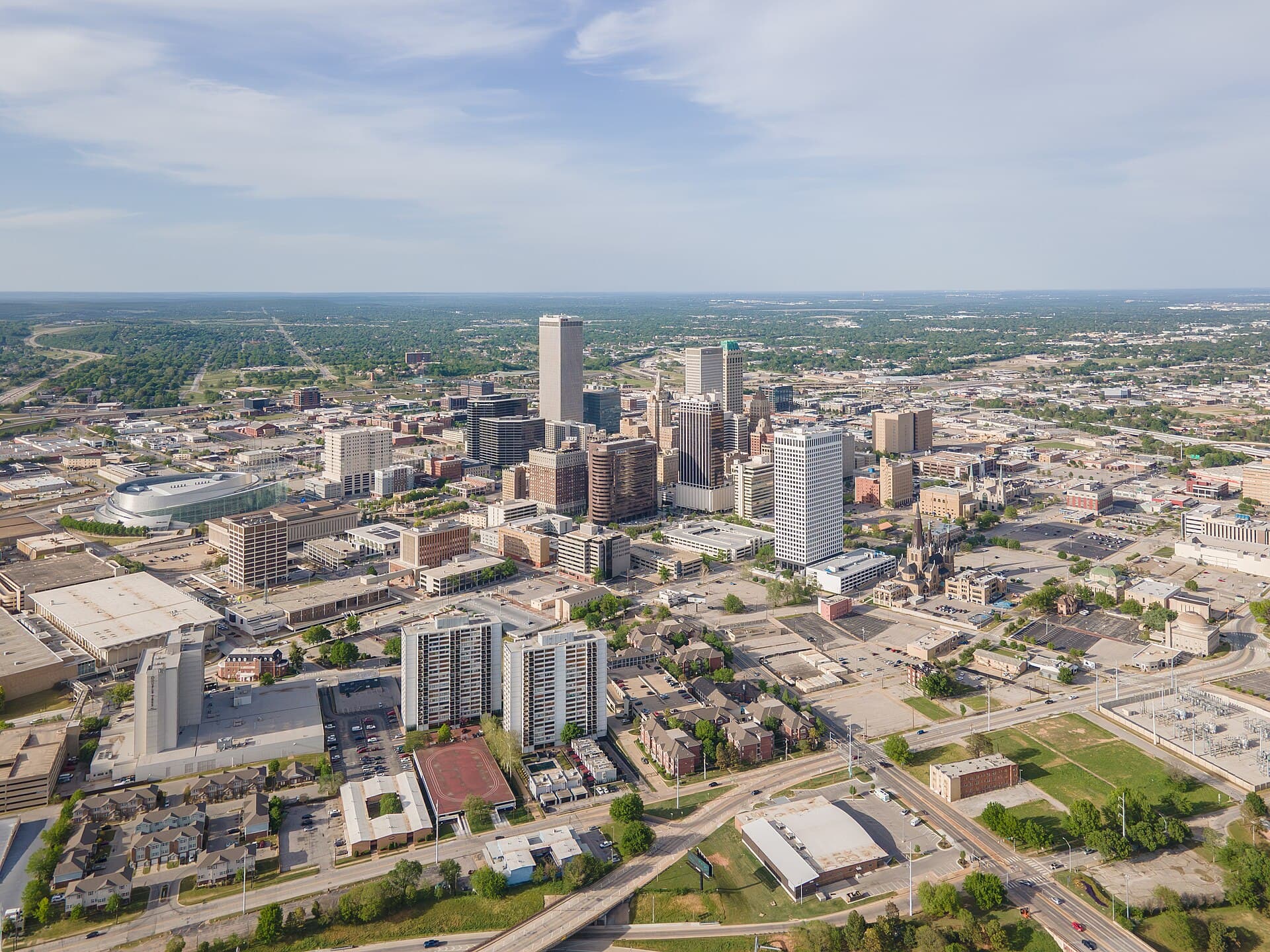 Nils Huenerfuerst / CC BY-SA 4.0, via Wikimedia Commons
“Where Art Deco graces the Mother Road, and resilience shapes the skyline.”
Not the postcards. The stories even locals don't know — whispered in your ear, right where they happened.
Step into a particular brick circle in downtown Tulsa, utter a sound, and experience an auditory phenomenon that confounds those outside its perimeter.
There is a house in Tulsa originally conceived as a restaurant and speakeasy, complete with concealed escape tunnels.
Beneath the contemporary streets of downtown Tulsa lies a network of tunnels, initially built for a very practical purpose, but swiftly adopted for more discreet uses.
Discover every secret of Tulsa
Every address, every reveal in full — in your ear, right where it happened.
You pick your stops. You walk. The voice reveals what the others miss.
No tours available yet. Check back soon — we're preparing them.
Tulsa, Oklahoma, the state's second-most populous city, rests along the Arkansas River in the western foothills of the Ozark Mountains. Often called "Green Country" for its verdant landscape, Tulsa offers a distinctive blend of historical depth, architectural marvels, and a lively cultural scene. From its origins as a settlement for the Lochapoka band of Creek Native Americans between 1828 and 1836, the city has evolved into a center of finance, aviation, telecommunications, and technology.
While its central and northern areas generally present a flat expanse, the Osage Hills extend into the northwestern part of the city, adding topographical variety. Tulsa is a city that consistently surprises, possessing a welcoming, small-town feeling despite its big-city attractions. It is a place where oil wealth sculpted a skyline of Art Deco masterpieces, and where the echoes of Route 66 still resonate along its historic thoroughfares.
## From Creek Settlement to Oil Capital Tulsa's story commences with the Lochapoka band of Creek Native Americans, who, after being displaced from their ancestral lands in Alabama, established a settlement called "Tulasi," meaning "old town," between 1828 and 1836. They rekindled their ceremonial fire under a grand burr oak tree, now recognized as the Creek Council Oak Tree, marking their new home. The arrival of the railroad in 1882 transformed Tulsa into a cattle-shipping point, drawing white settlers and leading to its formal incorporation in 1898.
The true surge, however, arrived with the discovery of oil. In 1901, oil was struck near Red Fork, a community across the Arkansas River. This discovery, followed by the immense Glenn Pool Oil Strike in 1905, brought an influx of wildcatters and investors, rapidly swelling Tulsa's population. By the time Oklahoma became a state in 1907, nearly 100 oil companies had established themselves around the Glenn Pool alone. For over six decades, Tulsa proudly held the designation "Oil Capital of the World," with its oil industry success fueling significant construction, particularly in the Art Deco style that defines much of its downtown.
Amidst this prosperity, Tulsa also became home to the Greenwood neighborhood, known as "Black Wall Street" in the early 20th century. This was one of the most flourishing Black communities in the United States. However, this period of growth was tragically interrupted by the 1921 Tulsa Race Massacre, an event of racial violence that devastated the Greenwood District. In the 1920s, Tulsa businessman Cyrus Avery championed the creation of U.S. Highway 66, earning the city the nickname the "Birthplace of Route 66" and further cementing its place in American history. Today, Tulsa continues to honor its past while diversifying its economy beyond oil, with leading sectors including finance, aviation, telecommunications, and technology.
Tulsa presents a compelling array of sights, blending its layered history with contemporary attractions. Begin your exploration in the Tulsa Arts District, where historic buildings now house art galleries, theaters, and restaurants. Do not miss the Philbrook Museum of Art, which features an extensive collection spanning centuries and continents, and the Gilcrease Museum, home to one of the world's largest collections of art and artifacts from the American West. Adjacent to the Philbrook is Woodward Park, recognized for its beautiful gardens and the Anne Hathaway Herb Garden.
For a journey into Tulsa's past, visit the Greenwood Cultural Center in the Greenwood Historic District, which provides context and exhibits about the Tulsa Race Massacre and the resilience of Black Wall Street. Explore Route 66 in Downtown Tulsa, where you will find classic diners, neon signs, and distinctive roadside attractions like the Route 66 Rising sculpture and the Blue Whale of Catoosa. The Golden Driller, a 75-foot-tall statue of an oil worker, stands as an iconic landmark at the Tulsa Expo Center.
For outdoor enjoyment, The Gathering Place is a riverfront park with diverse attractions, including playgrounds, trails, and a boathouse. The Arkansas River itself offers scenic views and recreational opportunities.
The most pleasant times to experience Tulsa are during the spring (April through May) and fall (mid-September through October). These seasons offer mild temperatures, lower humidity, and abundant sunshine, making them ideal for outdoor activities and exploring the city's attractions. Spring brings blooming redbuds, while fall showcases the city's trees in brilliant autumn colors. Summers in Tulsa are warm and humid, with average highs around 93°F in July, while winters are moderately chilly with occasional light snow.
Tulsa International Airport (TUL) serves as the primary airport for the city, offering connections for travelers. A rental car is advisable for navigating to and around Tulsa, as public transportation options may be limited for extensive exploration. The city's downtown area is walkable, with several distinct districts like the Tulsa Arts District, Blue Dome Entertainment District, and Cherry Street District offering unique experiences. Many hotels are available, and booking accommodations through sites like Booking.com or Hotels.com is recommended. Tulsa offers a remarkably affordable cost of living compared to many other U.S. metropolitan areas, which can translate to a more budget-friendly visit.