Tui Cathedral
The formidable Tui Cathedral, with its fortress-like appearance, holds a subtle carving that speaks to a forgotten community.
Full story unlocks in the tour
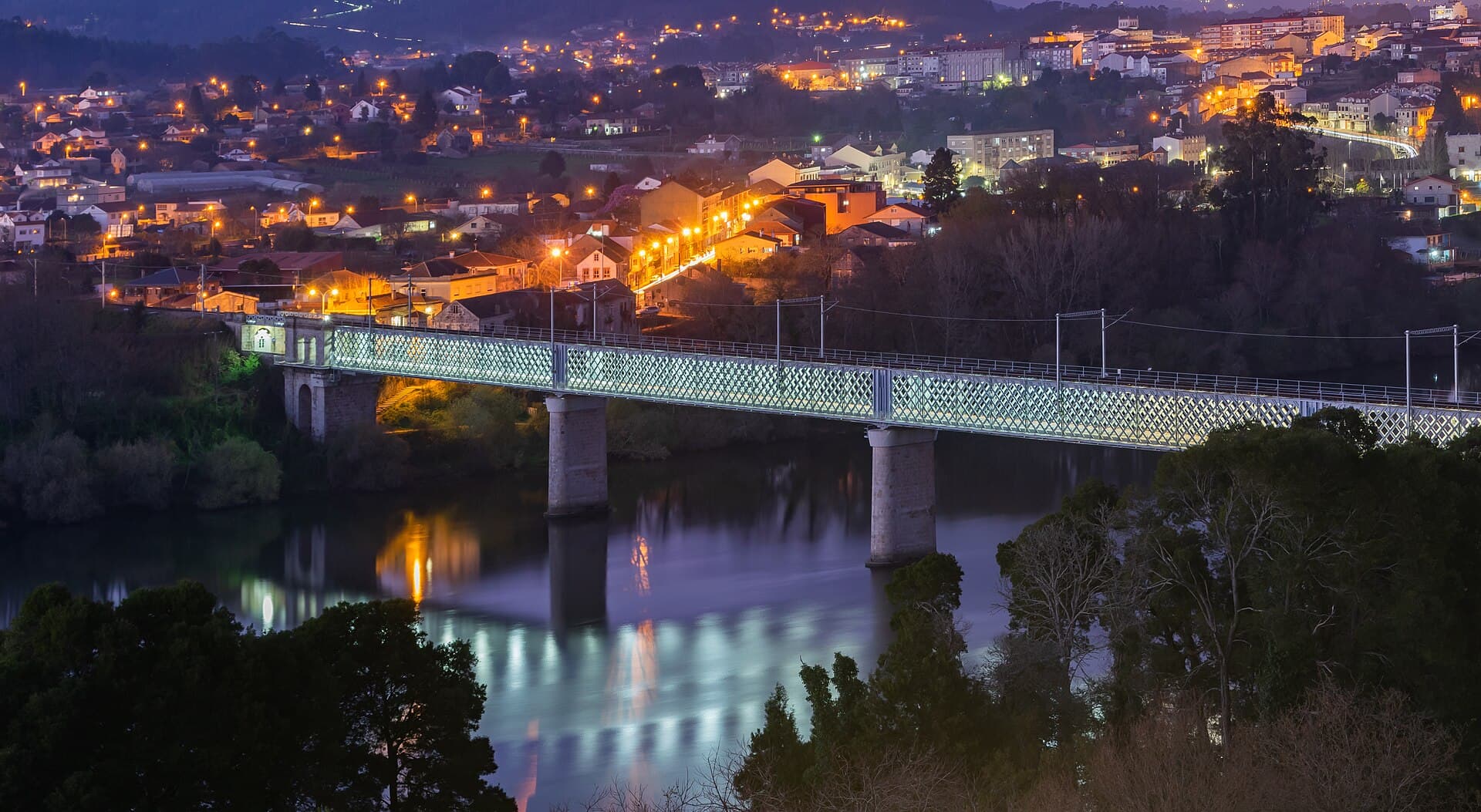 Krzysztof Golik / CC BY-SA 4.0, via Wikimedia Commons
“Where Galicia meets Portugal, a medieval story unfolds by the Miño River.”
Not the postcards. The stories even locals don't know — whispered in your ear, right where they happened.
The formidable Tui Cathedral, with its fortress-like appearance, holds a subtle carving that speaks to a forgotten community.
This iconic bridge connecting Spain and Portugal is often attributed to a famous French engineer, but its true designer is a local secret.
Along the tranquil riverside promenade, an unexpected feature reveals Tui's surprising athletic prowess.
Discover every secret of Tui
Every address, every reveal in full — in your ear, right where it happened.
You pick your stops. You walk. The voice reveals what the others miss.
No tours available yet. Check back soon — we're preparing them.
Tui, a historic town in Galicia, Spain, rests on the north bank of the Miño River, directly across from Valença, Portugal. Declared a Historic-Artistic Site, Tui's medieval center offers a journey through time with its narrow, winding streets and ancient fortifications. As a significant starting point on the Portuguese Way of the Camino de Santiago, Tui welcomes pilgrims and travelers alike, offering a blend of cultural heritage, natural beauty, and cross-border allure.
The town's strategic location on the border has shaped its identity, evident in the commanding presence of its cathedral and the two bridges that connect it to Portugal. Beyond its historical significance, Tui provides a serene escape with views of the Miño River valley and easy access to natural parks. It's a place where centuries of history are palpable, yet daily life unfolds with a relaxed Galician pace.
The history of Tui stretches back thousands of years, with evidence of human life in the area dating to the Lower Paleolithic period, around 20,000 BC, making them the oldest human sites found in Galicia. The fertile land near the Miño River proved ideal for early settlements, with Neolithic tools and megalithic monuments indicating continuous habitation. The town, originally known as Tude, was mentioned by ancient writers like Pliny the Elder and Ptolemy in the 1st century AD.
By the 6th century, Tui had become an important religious center and an episcopal see during the Suevic Kingdom. It even briefly served as the capital of a small kingdom in Galicia during the Visigothic period. However, Tui's history was marked by periods of abandonment due to conflicts, including battles against the Moors in the 8th century and Viking attacks in the 10th century.
The modern incarnation of Tui began to take shape from the 11th century, with significant development in the 12th century. King Fernando II ordered the construction of a new walled perimeter in 1170 on the cathedral's hill, creating a medieval city centered around the cathedral, its dwellings, and city walls. The Tui Cathedral itself, a monumental structure combining Romanesque and Gothic styles, began construction around 1120 and was consecrated in 1225. Its fortified appearance, with crenellated towers, reflects its dual role as a place of worship and a defensive stronghold during historical conflicts between Portugal and Castile.
Throughout the Middle Ages, Tui was a significant religious and administrative hub in Galicia, serving as the episcopal seat for southern Galicia. Its strategic border location meant it played a crucial role in various wars, yet its medieval core has largely been preserved. Today, Tui remains a testament to its long and complex past, with its historic center declared an Artistic Historic Site in 1967.
Begin your exploration at the Tui Cathedral (Catedral de Santa María de Tui), a commanding structure that blends Romanesque and Gothic architectural styles. Its fortified exterior, complete with battlements and towers, hints at its defensive past. Inside, admire the ornate altarpieces, sacred art, and the Gothic cloister, considered the oldest in Galicia. Ascend the tower for sweeping views of the Miño River and Valença, Portugal.
Wander through the narrow, winding streets of the Old Town (Casco Antiguo), where medieval architecture evokes centuries of history. Discover the Chapel of San Telmo, a unique example of Portuguese Baroque architecture in Galicia, built on the site where the patron saint of Tui died. Nearby, the Convento de las Clarisas offers a glimpse into a secluded order, known for its traditional cookies.
For a breath of fresh air, stroll along the Paseo Fluvial de Tui, a riverside promenade offering views of the Miño River and the fortress of Valença across the border. This path, with its wooden walkways and green spaces, is perfect for a leisurely walk or bike ride. The International Bridge is an impressive metal structure connecting Tui with Valença, Portugal, which you can cross on foot, by car, or by train.
The best time to visit Tui for pleasant weather and outdoor activities is from mid-June to mid-September, with July offering peak conditions. During these months, Tui experiences warm, dry days with average temperatures ranging from 25 to 30 degrees Celsius, and minimal rainfall. For those preferring milder temperatures and fewer crowds, May or October are excellent alternatives, with temperatures between 20 and 25 degrees Celsius. Spring and autumn are also recommended for comfortable weather and fewer tourists.
Tui is well-connected by road via the A-55 and AP-9 highways. The closest airports are Vigo (25 km away in Spain) and Porto (120 km away in Portugal). Frequent bus and train services connect Tui with Vigo, Pontevedra, and other towns in Galicia, as well as Valença in Portugal. As part of the Schengen Treaty, crossing the border into Portugal is usually straightforward.
When visiting, be prepared for walking on winding streets, especially in the Old Town, so comfortable shoes are recommended. Spain uses the Euro (EUR) as its currency. British citizens do not need a visa to enter Spain but require a valid passport. Hotels in Spain may request additional personal information upon arrival, such as your home address, phone number, and email.