Fort Frederick
Beyond its imposing walls and historical significance, Fort Frederick holds a surprising secret amidst its grounds.
Full story unlocks in the tour
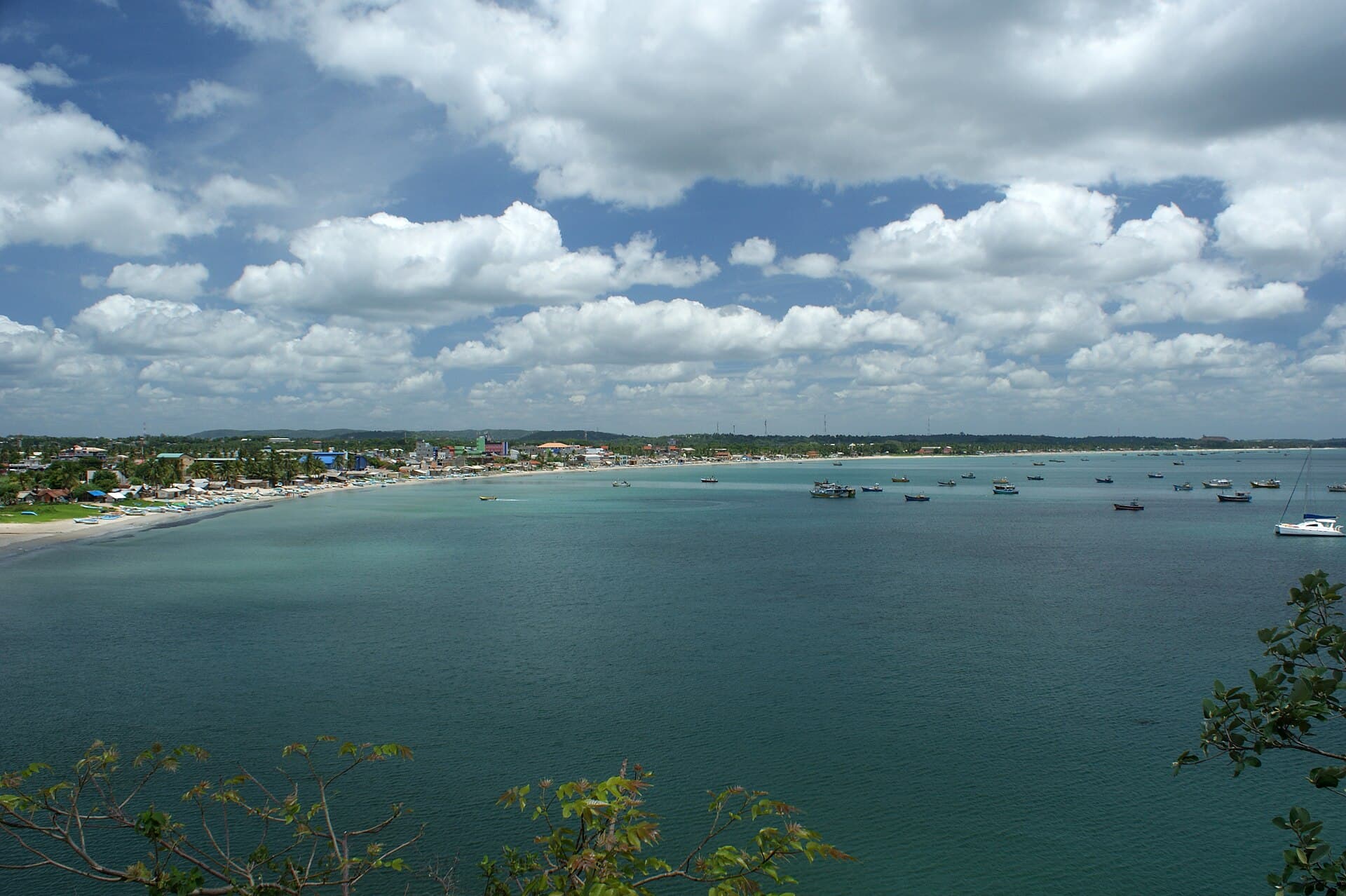 Kondephy / CC BY-SA 4.0, via Wikimedia Commons
“Where ancient history meets turquoise waters and thriving marine ecosystems.”
Not the postcards. The stories even locals don't know — whispered in your ear, right where they happened.
Beyond its imposing walls and historical significance, Fort Frederick holds a surprising secret amidst its grounds.
The Koneswaram Temple, situated on Swami Rock, is a sacred site with a dramatic past, but its true extent lies beyond what is visible today.
The seven square-shaped wells of Kanniya Hot Springs are known for their varying temperatures and supposed healing properties, but their origin is rooted in a dramatic legend.
Discover every secret of Trincomalee
Every address, every reveal in full — in your ear, right where it happened.
You pick your stops. You walk. The voice reveals what the others miss.
No tours available yet. Check back soon — we're preparing them.
Trincomalee, often called 'Trinco,' is a coastal city on Sri Lanka's northeastern coast, recognized for its deep-water harbor and expansive beaches. It offers a blend of serene sandy shores, a profound cultural heritage, and diverse marine ecosystems. Unlike the more heavily touristed southern coast, Trincomalee maintains a more authentic and unhurried atmosphere, inviting travelers to settle in and explore at a relaxed pace.
The city's strategic location has shaped its identity, drawing traders and colonial powers for centuries, each leaving their mark on its architecture and culture. Today, Trincomalee is a lively hub where Tamil, Sinhala, and Muslim communities coexist, and the sounds of church bells, temple chants, and calls to prayer often intermingle. Beyond the town center, the surrounding district unfolds into pristine beaches like Nilaveli and Uppuveli, lagoons, and ancient religious sites, making it an ideal base for exploration.
## A Harbor's Enduring Allure Trincomalee's recorded history spans over two and a half millennia, with early settlements linked to the ancient Koneswaram Temple. It was an important hub for Indo-Aryan immigrants and a major seaport in international trade with Southeast Asia.
In the 17th century, the Portuguese became the first Europeans to occupy the town. They constructed Fort Frederick in 1624, famously using stone debris from the revered Koneswaram Temple, which they largely razed. The port then became a contested prize, changing hands repeatedly among the Dutch, French, and British. The Dutch rebuilt Fort Frederick in 1665. The British eventually gained lasting possession in 1795, renaming the fortification Fort Frederick and significantly improving it to serve as a major naval base.
Trincomalee's strategic importance was further highlighted during World War II when it became a crucial British base after the Japanese occupation of Singapore. The town was bombed by the Japanese in 1942, and the harbor later served as headquarters for Admiral Lord Louis Mountbatten's South East Asia Command. Even after Sri Lanka gained independence in 1948, the British continued to hold the harbor until 1957. While its commercial importance has diminished, Trincomalee's historical layers, from ancient Hindu pilgrimage site to colonial stronghold and a key World War II naval base, offer a compelling narrative of resilience and strategic significance.
Explore Fort Frederick, a historic fort originally built by the Portuguese in the 17th century and later modified by the Dutch and British. Within its walls, you will find the revered Koneswaram Temple, a significant Hindu pilgrimage site dedicated to Lord Shiva, dramatically situated on Swami Rock with expansive ocean views.
Relax on the pristine shores of Uppuveli Beach or Nilaveli Beach, known for their white sands and clear waters, ideal for swimming and unwinding. Take a boat trip to Pigeon Island National Park, one of Sri Lanka's two marine national parks, to snorkel or dive among diverse coral reefs, sea turtles, and blacktip reef sharks.
Visit the Kanniya Hot Springs, a series of seven shallow wells with varying water temperatures, believed by locals to possess healing properties and linked to ancient legends. For a glimpse into the region's past, consider the Maritime and Naval History Museum, housed in a colonial building that once served as the Dutch Naval Commissioner's residence.
The best time to visit Trincomalee is during the dry season, from April to September. During these months, you can expect sunny skies, warm temperatures, and calm, clear seas, perfect for swimming, snorkeling, and diving. This period is also ideal for whale watching, with blue whales often spotted offshore. While October to March marks the northeast monsoon, bringing increased rainfall, it can offer a quieter experience with fewer crowds and potentially lower prices, though marine activities may be limited.
Trincomalee is well-connected by land, with buses available from major cities like Colombo, Dambulla, and Anuradhapura. The Trincomalee railway station also provides train access. To explore the city and its surroundings, renting a scooter is a popular option, offering flexibility for around 1,200 to 1,500 LKR per day. Tuk-tuks are also readily available for those who prefer not to drive.
Accommodation options range from budget-friendly guesthouses to luxury resorts, particularly around Uppuveli Beach, which serves as a popular base for travelers. While many places do not accept cards, it is advisable to carry sufficient cash, as ATMs may not be within easy walking distance in all areas. Remember to dress respectfully when visiting religious sites.