Trani Cathedral
The iconic Trani Cathedral appears to rise directly from the sea, but its unique foundation holds a secret that predates its Romanesque grandeur.
Full story unlocks in the tour
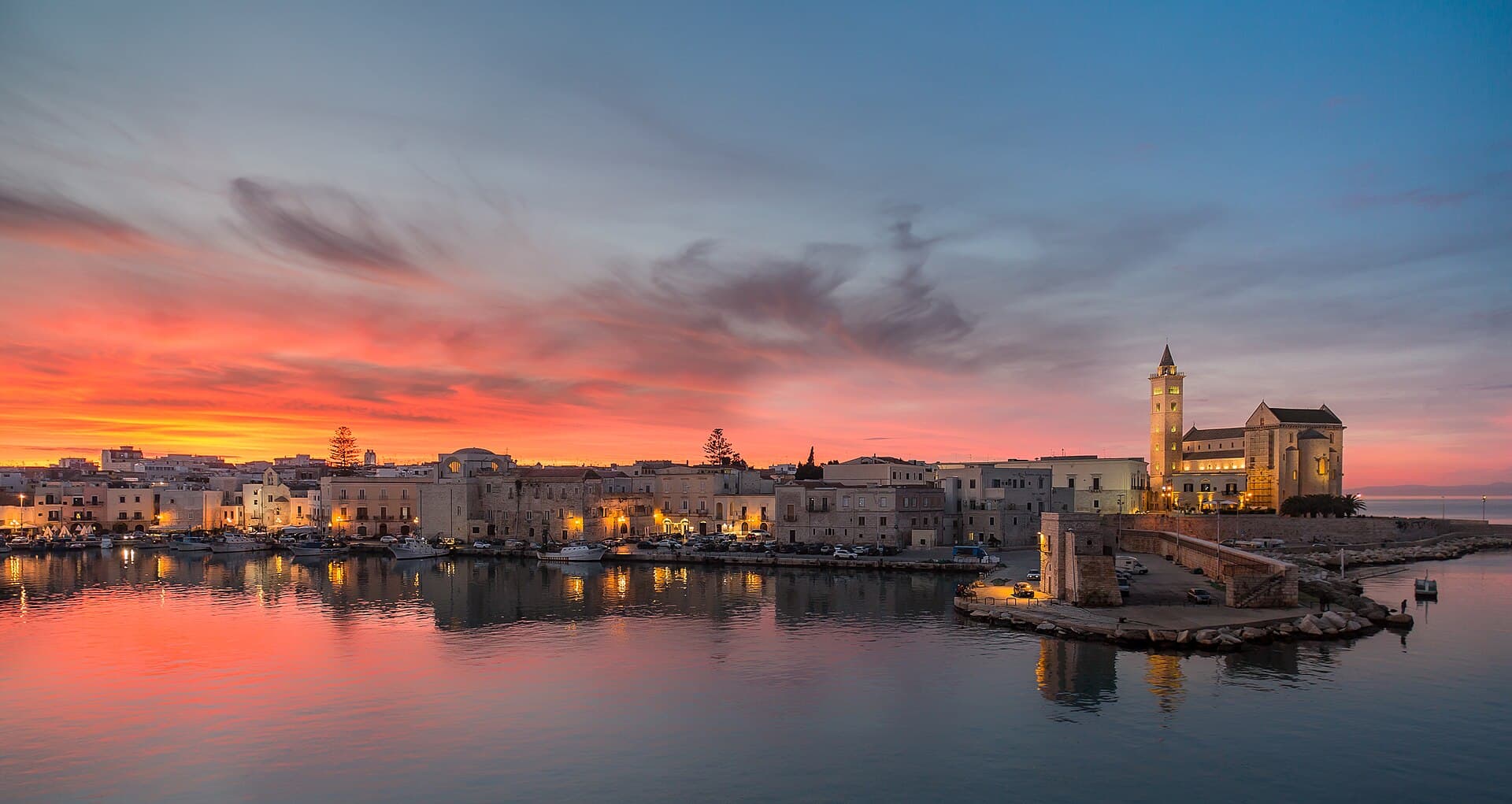 Sergio Santamaria / CC BY-SA 4.0, via Wikimedia Commons
“Where ancient stones meet the Adriatic's embrace.”
Not the postcards. The stories even locals don't know — whispered in your ear, right where they happened.
The iconic Trani Cathedral appears to rise directly from the sea, but its unique foundation holds a secret that predates its Romanesque grandeur.
Trani was once home to a thriving Jewish community with several synagogues, but one in particular has a fascinating story of transformation and return.
The luminous, pale stone that defines Trani's architecture isn't just beautiful; it's a testament to the city's enduring economic and geological heritage.
Discover every secret of Trani
Every address, every reveal in full — in your ear, right where it happened.
You pick your stops. You walk. The voice reveals what the others miss.
No tours available yet. Check back soon — we're preparing them.
Trani, a city often described as the "Pearl of the Adriatic," is a captivating coastal town in Italy's Puglia region. Its historic center, with polished limestone streets and elegant facades, invites slow exploration. The town's identity is deeply intertwined with the sea, evident in its picturesque fishing port and the dramatic setting of its Romanesque cathedral.
This appealing city, one of the three capital towns of the province of Barletta-Andria-Trani, offers a blend of authentic Italian life, remarkable architecture, and exceptional food. From its medieval streets to its lively harbor, Trani provides a serene escape without the overwhelming crowds of more famous destinations.
## Ancient Origins and Maritime Power Trani's origins trace back to the 3rd century, appearing as "Turenum" in the ancient Tabula Peutingeriana. According to myth, it was founded by Tirenus, son of the Greek hero Diomedes. The city evolved into a fortified stronghold, influenced by Lombard and Byzantine cultures. By the 9th century, Trani had established itself as an urban settlement.
## The Golden Age of Trade and Law The 11th century marked Trani's most flourishing period. Its port, strategically located for the Crusades, became the most important on the Adriatic Sea. In 1063, Trani issued the "Ordinamenta et consuetudo maris," recognized as the oldest surviving maritime law code of the Latin West. This era also saw a significant Jewish community thrive, playing central roles as physicians, notaries, translators, and merchants. At its peak, Trani was home to 200 Jewish families and four large synagogues.
## Frederick II and Subsequent Decline The city reached its zenith of wealth and prosperity in the early 13th century under Emperor Frederick II, who ordered the construction of a massive castle by the sea. However, under Angevin rule towards the end of the 13th century, the position of the Jewish community deteriorated, leading to persecution and forced conversions. Many synagogues were converted into churches. Trani experienced a gradual decline after this period, though it saw some economic progress in the 19th century.
## Modern Resurgence In the early 20th century, the Swabian Castle was used as a state prison until 1974. Extensive restorations in the 1950s rebuilt the cathedral's bell tower, which had been dismantled to prevent its collapse. Today, Trani has restored many of its historic buildings and embraces its past, with the Scolanova Synagogue rededicated for Jewish worship in 2005.
The Trani Cathedral (Cattedrale di San Nicola Pellegrino) is the city's most iconic landmark, a masterpiece of Apulian Romanesque architecture that appears to rise from the sea. Its pale limestone exterior glows in the sunlight, and visitors can explore the upper basilica, the crypts, and climb the bell tower for panoramic views.
Adjacent to the cathedral is the Castello Svevo (Swabian Castle), an imposing 13th-century fortress built by Emperor Frederick II. It offers a glimpse into Trani's defensive past and now houses a museum.
Wander through the historic center and the old Jewish Quarter (Giudecca), a labyrinth of narrow alleys with well-preserved medieval buildings. Here, you'll find the Scolanova Synagogue, a testament to Trani's multicultural history.
For a leisurely stroll, the Villa Comunale is a seaside public garden with shady paths, fountains, and views of the Adriatic. It also features an aquarium and historical Roman columns.
The Port of Trani remains a working fishing port, where colorful boats bob in the water and the harbor-front is lined with seafood restaurants.
The best times to visit Trani are from April to June and September to October. During these months, the weather is pleasantly mild, ideal for sightseeing and outdoor dining, and the city is less crowded than in the peak summer season.
July and August are the hottest months, with average daily high temperatures above 80°F (27°C), making them suitable for beach activities, though the city will be busier. Rainfall is minimal during the summer, with July being the driest month. The cooler season runs from late November to late March.
Trani is easily accessible by train from Bari, with the journey taking approximately 30 minutes. Parking is available near the harbor and just outside the old town for those arriving by car.
Trani's cuisine is heavily focused on fresh seafood, with daily catches arriving at the harbor. Expect dishes like crudo di mare (raw seafood platters), grilled octopus, and mussels prepared in various ways. Riso, patate e cozze (baked rice layered with potatoes and mussels) is a regional specialty. The town also offers a range of dining experiences, from Michelin-starred restaurants to casual eateries.
Many restaurants cater to discerning locals, ensuring high standards and reasonable prices. For a quick and delicious bite, try a panino con polipo (octopus sandwich), a popular street food.