Toyama Glass Art Museum
This architectural marvel, conceived by a celebrated architect, holds a secret that transforms it from a mere museum into a dynamic, evolving art installation.
Full story unlocks in the tour
 くろふね / CC BY 4.0, via Wikimedia Commons
“Where alpine grandeur meets the calm expanse of the sea, and enduring traditions find fresh expression.”
Not the postcards. The stories even locals don't know — whispered in your ear, right where they happened.
This architectural marvel, conceived by a celebrated architect, holds a secret that transforms it from a mere museum into a dynamic, evolving art installation.
Often recognized as among the world's most beautiful Starbucks locations, the café here offers far more than just coffee.
This reconstructed castle holds a subtle indicator of its former magnificence that many visitors overlook.
Discover every secret of Toyama
Every address, every reveal in full — in your ear, right where it happened.
You pick your stops. You walk. The voice reveals what the others miss.
No tours available yet. Check back soon — we're preparing them.
Toyama, the capital of Toyama Prefecture, is a city where the dramatic summits of the Northern Japan Alps converge with the tranquil expanse of Toyama Bay. This singular geography frames a destination rich in natural splendor, cultural legacy, and a forward-looking approach to art and industry. Often bypassed by travelers moving swiftly between Tokyo and Kyoto, Toyama offers a gentler rhythm, inviting visitors to uncover its intricate crafts, innovative architecture, and a profound connection to its environment.
The city serves as a gateway to some of Japan's most spectacular natural landscapes, including the Tateyama Kurobe Alpine Route, and is known for its pure waters, which nourish over 300 rivers and sustain a flourishing ecosystem. Beyond its natural allure, Toyama has cultivated a progressive arts scene, particularly in glass art, and upholds a culinary tradition celebrated for its fresh seafood and regional delicacies.
Toyama's character is shaped by a harmonious blend of old and new, where ancient practices like woodcarving and traditional medicine coexist with contemporary design and urban planning. This dynamic interplay makes Toyama an engaging destination for those seeking a deeper understanding of regional Japanese culture and a refreshing departure from more crowded tourist paths.
The land now recognized as Toyama possesses a history stretching back approximately 40,000 years, with evidence of early human presence and tools from the Late Pleistocene period. During the Jomon Period (10,000–300 BCE), distinctive villages flourished, sustained by abundant land and sea resources. The Yayoi Period (300 BCE to 300 CE) saw the advent of rice cultivation and the emergence of defensive structures as power began to coalesce around village leaders.
By the Kofun Period (250–538 CE), Toyama came under the influence of the Yamato royal authority, leading to the construction of grand burial mounds in the Yamato style. The region was later part of Etchū Province, which was eventually renamed Niikawa Prefecture before being re-established as Toyama Prefecture in 1883. This separation from Ishikawa Prefecture was largely driven by Toyama's ambition to prioritize flood control and river renovation efforts.
During the Edo period (1603-1868), Toyama prospered as part of the Kaga Domain under the Maeda clan. A significant economic surge resulted from a proactive industrial promotion policy focused on Chinese medicine and washi (Japanese paper). This era saw Toyama achieve nationwide recognition as the "province of medicine," a reputation that began with the "Edo Castle stomachache incident" where a Toyama-made stomach medicine, Hangontan, proved remarkably effective.
The city of Toyama was formally established on April 1, 1889, as one of Japan's inaugural 30 cities. The early 20th century witnessed substantial urban development, including extensive flood control projects on the Jinzu River between 1901 and 1920, which involved widening the river and excavating the Fugan Canal to Toyama Bay. Despite being extensively bombed and 99.5% destroyed during World War II, Toyama underwent a remarkable postwar rebuilding, transforming into a leading city on the Sea of Japan coast by the late 1960s with broader, more organized road systems.
In recent decades, Toyama has continued its evolution, embracing a vision of a "Compact City." It has also fostered a strong connection to glass art, a tradition that traces back to the late 20th century with the production of glassware medicine bottles. The opening of the Toyama Glass Art Museum in 2015, designed by Kengo Kuma, solidified its identity as a "Glass Art City."
Begin your exploration at the Toyama Glass Art Museum, an architectural triumph by Kengo Kuma. The building itself is a work of art, with its distinctive blend of wood and glass creating an interior bathed in light. Within, you will find a diverse collection of contemporary glass art, including the impressive Glass Art Garden by Dale Chihuly on the sixth floor.
A brief tram ride from the station, Toyama Castle Park offers a glimpse into the city's past. While the current castle keep is a 1954 reconstruction, the park preserves original stone walls and moats. The Toyama Municipal Folk Museum within the castle recounts its 400-year narrative, and the park is a favored location for cherry blossom viewing in spring. Be sure to observe the Chitose Gate, the only remaining Edo-period structure.
For a tranquil interlude, visit Fugan Canal Kansui Park, a sprawling green space featuring the Tenmon Bridge and a well-known Starbucks café often cited as one of the world's most attractive, offering serene views of the canal and mountains. Boat cruises along the Fugan Canal are also available.
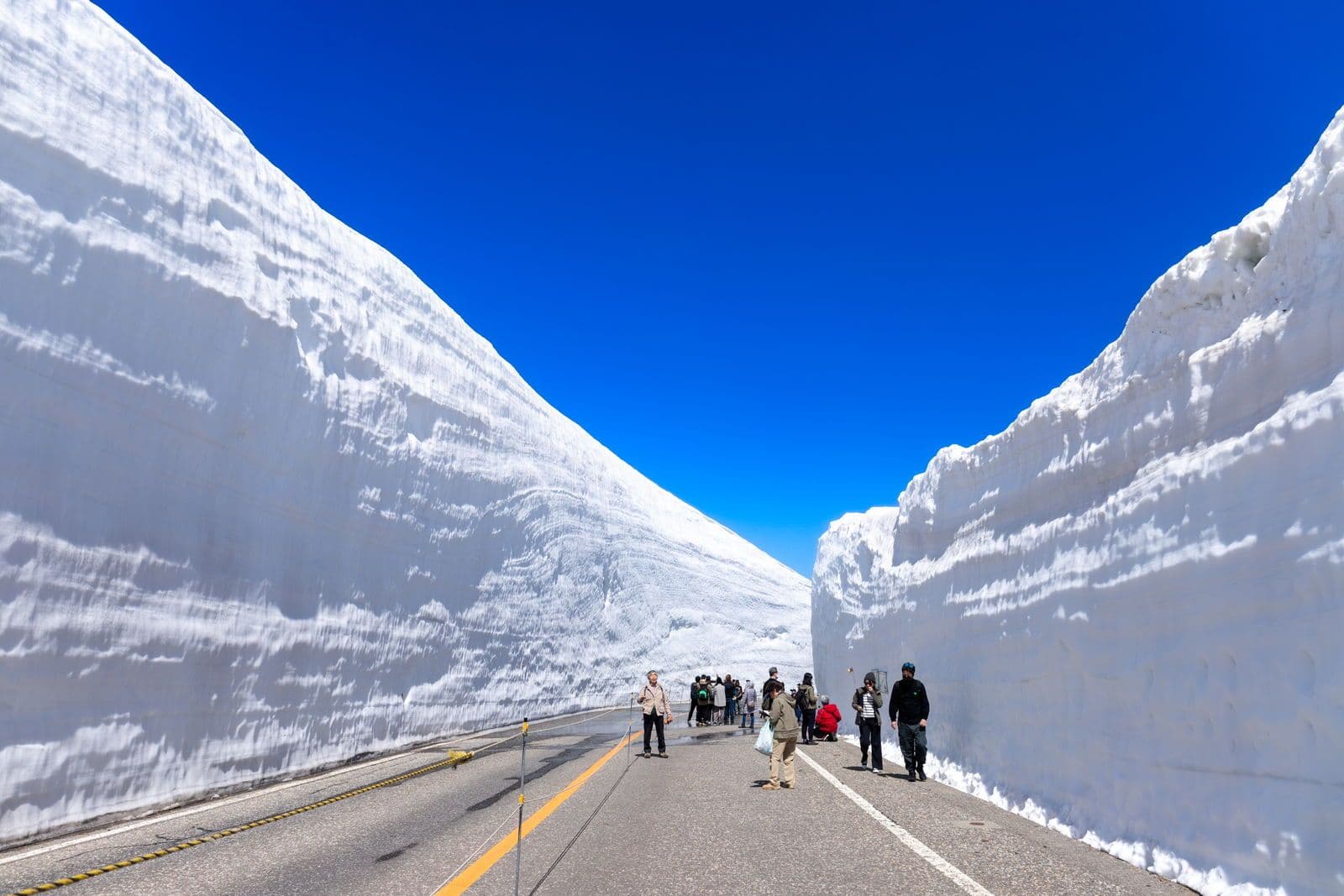
Beyond the city center, consider a journey to the Tateyama Kurobe Alpine Route, a spectacular mountain sightseeing path accessible by various modes of transport, famed for its towering snow walls in spring.
Another significant cultural experience awaits in the Historic Villages of Gokayama, a UNESCO World Heritage site recognized for its traditional gassho-zukuri (thatched-roof) farmhouses, providing a window into rural Japanese life.
The most favorable times to visit Toyama are during spring (April to May) and autumn (October to November). Spring brings pleasant, mild weather, blooming cherry blossoms along riverbanks, bright tulips, and the opening of the celebrated Snow Wall Walk on the Tateyama Kurobe Alpine Route.
Autumn offers crisp air and striking foliage, with mountains and valleys painted in warm reds, oranges, and golds. This season also marks the beginning of the seafood harvest. While summer (July to September) is suitable for hiking and festivals, it can be warm and humid. Winter (December to February) presents snow-covered landscapes and fewer crowds, ideal for those who enjoy winter sports.
Toyama is readily accessible, with the Hokuriku Shinkansen connecting it directly to Tokyo in approximately two hours. From Osaka, Nagoya, or Kyoto, the journey typically involves a transfer to the Hokuriku Shinkansen at Tsuruga Station. Toyama Airport also provides flights from Tokyo and Sapporo, with a 30-minute bus connection to Toyama Station.
Within Toyama City, navigating is convenient thanks to an extensive network of trams and city buses, all departing from or passing through Toyama Station. The flat fare for trams is 240 yen for adults, and major IC cards like Suica are accepted. Rental bicycles are also available at numerous stations. For exploring beyond the city, local JR lines and the Ainokaze Toyama Railway connect to other major cities and attractions.
Tourist information centers at Toyama Station offer assistance in multiple languages, including English and Chinese. Free Wi-Fi is available at Toyama Station and information centers. Coin lockers are also available at the station for luggage storage.
For dining, be aware that vegetarian, vegan, and halal options may be limited compared to larger Japanese cities, as many local dishes use fish-based broth. It is advisable to communicate dietary needs in Japanese.