Place Plumereau
This square, alive with half-timbered houses and inviting terraces, holds a surprisingly humble origin.
Full story unlocks in the tour
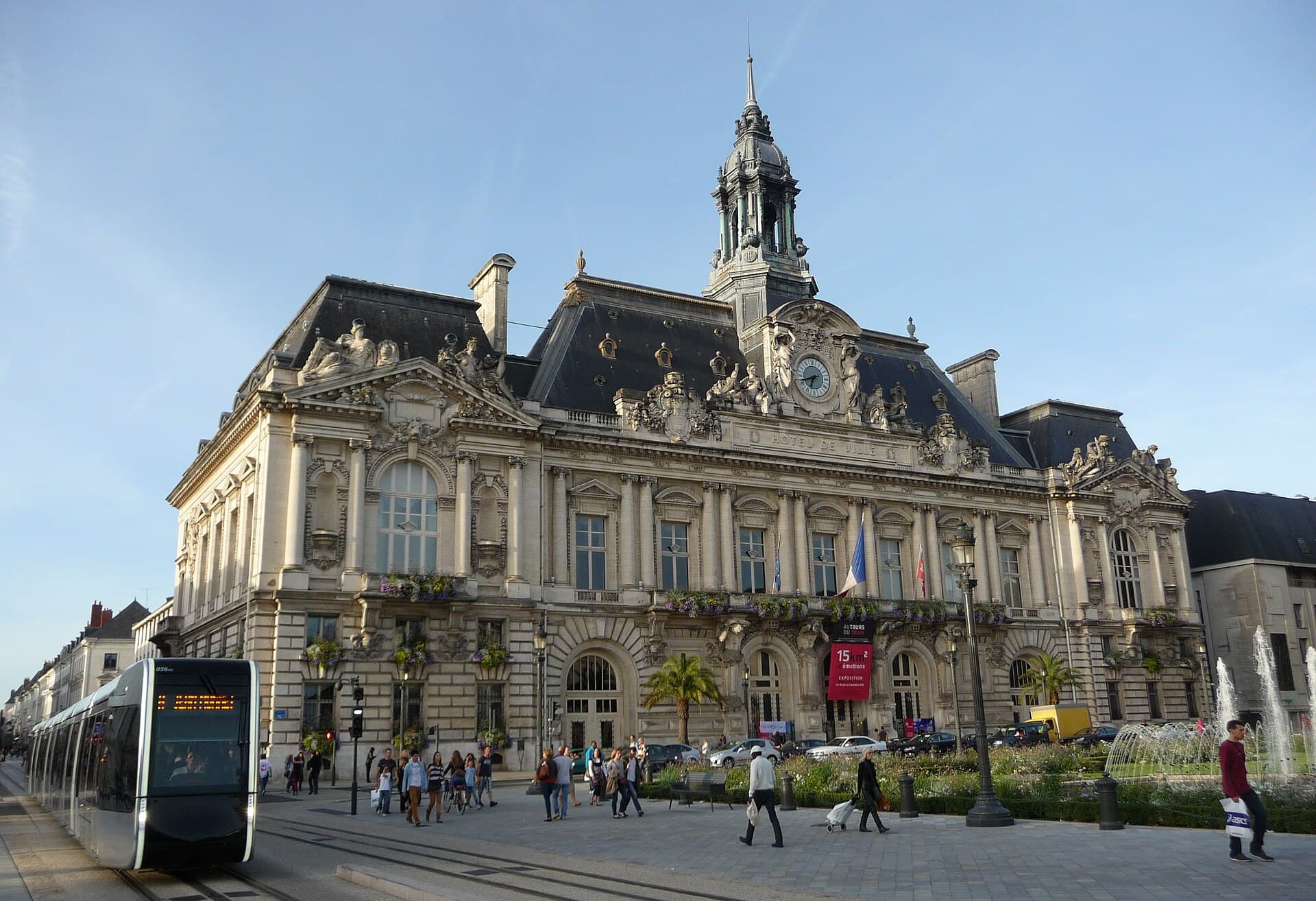 Jules78120 / CC BY-SA 3.0, via Wikimedia Commons
“Where history's grand narratives meet quiet riverside charm.”
Not the postcards. The stories even locals don't know — whispered in your ear, right where they happened.
This square, alive with half-timbered houses and inviting terraces, holds a surprisingly humble origin.
Beyond its Gothic facade and centuries-old stained glass, a curious detail within the cathedral connects it to a tragic royal fate.
The tranquil flow of the Loire River through Tours conceals a dramatic moment when it became a desperate line of defense during World War II.
Discover every secret of Tours
Every address, every reveal in full — in your ear, right where it happened.
You pick your stops. You walk. The voice reveals what the others miss.
No tours available yet. Check back soon — we're preparing them.
Tours, a city in west-central France, serves as the capital of the Indre-et-Loire department and a primary gateway to the Loire Valley and its historic châteaux. Situated on the right bank of the Loire River, France's longest river, Tours offers a blend of historical depth and modern energy. Often called 'Le Jardin de la France' (The Garden of France) due to its many parks, the city is also known as 'Le Petit Paris' (Little Paris). Its historic center, a UNESCO World Heritage site, features ancient streets and old houses, particularly in the section south of the Loire.
The city's architectural landscape presents a striking contrast, from the centuries-spanning styles of the Cathedral of Saint-Gatien to the contemporary design of the Vinci Conference Centre. Beyond its visual appeal, Tours is recognized as a 'Cité Internationale de la Gastronomie,' celebrating its culinary heritage and local specialties like rillettes and Touraine wines. With a significant student population, Tours maintains a lively atmosphere, particularly in its historic squares.
The history of Tours stretches back to pre-Roman times, when the Gallic people known as the Turones settled the area. The Romans later established a settlement across the Loire River, naming it Caesarodunum, or 'Caesar's Hill.' The city's name evolved in the 4th century to Civitas Turonum, eventually becoming Tours. It was during this period that the Tours Amphitheatre, one of the largest in the Roman Empire, was constructed.
Tours played a pivotal role in the spread of Christianity in Gaul. In the mid-3rd century, Gatien founded the bishopric, and Saint Martin of Tours, who became bishop in 371, established monasteries and significantly advanced Christianity throughout the region. The monastery of Saint Martin garnered strong support from the Frankish king Clovis I, increasing the saint's, the abbey's, and the city's influence. In 732, the Battle of Tours, where Charles Martel defeated Moorish invaders, marked a crucial turning point in halting the advance of Islam into Western Europe.
During the Middle Ages, Tours prospered, developing as two distinct centers: the 'Cité' (administrative center with the cathedral and castle) and the 'Châteauneuf' (commercial city around the Abbey of Saint Martin). These two parts were connected in the 14th century. Tours became the capital of the county of Touraine, a territory often disputed between the counts of Blois and Anjou. Its importance peaked in the 15th and 16th centuries when Louis XI moved his residence to the Château de Plessis-lèz-Tours, making Tours the de facto capital of France for nearly a century. Louis XI also established a thriving silk industry in 1470, which contributed significantly to the city's wealth for over a century.
The city endured destruction during the French Wars of Religion in the late 16th century and again during World War II. In June 1940, Tours briefly served as the temporary seat of the French government before its move to Bordeaux. German incendiary bombs caused a devastating fire that destroyed a portion of the city center. Since the 1960s, Tours has undergone rapid expansion and development, accompanied by significant historical preservation efforts, particularly in its old town. The city's commitment to preserving its heritage led to its historical center being listed as a UNESCO World Heritage Site.
Begin your exploration in Vieux-Tours, the old section of the city, where ancient streets wind among old houses. The heart of this district is Place Plumereau, a lively square lined with 15th-century half-timbered and stone-gabled houses, now home to many cafés and restaurants. It's an ideal spot for an aperitif and observing the world.
Dominating the eastern side of the old town is the Cathédrale Saint-Gatien, a Gothic masterpiece showcasing four centuries of French religious architecture, with a choir dating to the 13th century and a facade built between 1426 and 1547. Do not overlook the tranquil Cloître de la Psalette, a listed historic monument adjacent to the cathedral, featuring transitional Gothic and Renaissance architecture and a remarkable spiral staircase. Nearby, the Musée des Beaux-Arts, housed in the former 17th–18th-century archiepiscopal palace, presents a collection of paintings, ceramics, and furnishings.
For a deeper dive into religious history, visit the Basilique Saint-Martin, founded in 437, which holds the tomb of Saint Martin of Tours. While much of the original basilica was destroyed, the 11th-century Tour Charlemagne still stands. The Château de Tours, an 11th-century structure that has served various purposes, now hosts contemporary art and photography exhibitions. Consider a stroll along the banks of the Loire River, which offers scenic promenades and pathways. Tours also serves as an excellent base for exploring the châteaux of the Loire Valley, such as Chenonceau and Villandry.
The best time to visit Tours for warm-weather activities is from mid-June to mid-September. During these months, the weather is generally warm and sunny, with average daily high temperatures above 72°F (22°C), peaking around 78°F (26°C) in July. This period offers a lively atmosphere with extended hours for services and evening events. May, June, and September also provide an ideal balance of pleasant weather, manageable crowds, and full access to attractions. The shoulder seasons of April and October offer good value and fewer tourists, though the weather can be less predictable. While July and August are peak season with guaranteed good weather, major châteaux can be very crowded.
Tours is easily accessible, located just 270 kilometers from Paris. High-speed TGV trains connect Paris' Gare Montparnasse to Tours in approximately 1 hour and 10 minutes. The city also has an international airport just outside its limits and is connected by major highways (A10, A85, A28). While navigating the city by car can be challenging, underground parking is available, such as near the railway station, providing good access to the city center.
The city center is highly walkable, with many attractions concentrated around the old town. Public transportation is available, and Tours is also well-equipped for cycling, with dedicated lanes and rental companies. The Tours Val de Loire Tourist Office offers guided tours and a 'Tours City Pass' that provides access to museums and surrounding castles. For shopping, explore modern centers like Galeries Lafayette or the interesting boutiques around Rue du Commerce and Rue Colbert in the old quarter.