Chekhov Monument
Anton Chekhov, the renowned Russian writer, once visited Tomsk and departed with a rather unimpressed opinion.
Full story unlocks in the tour
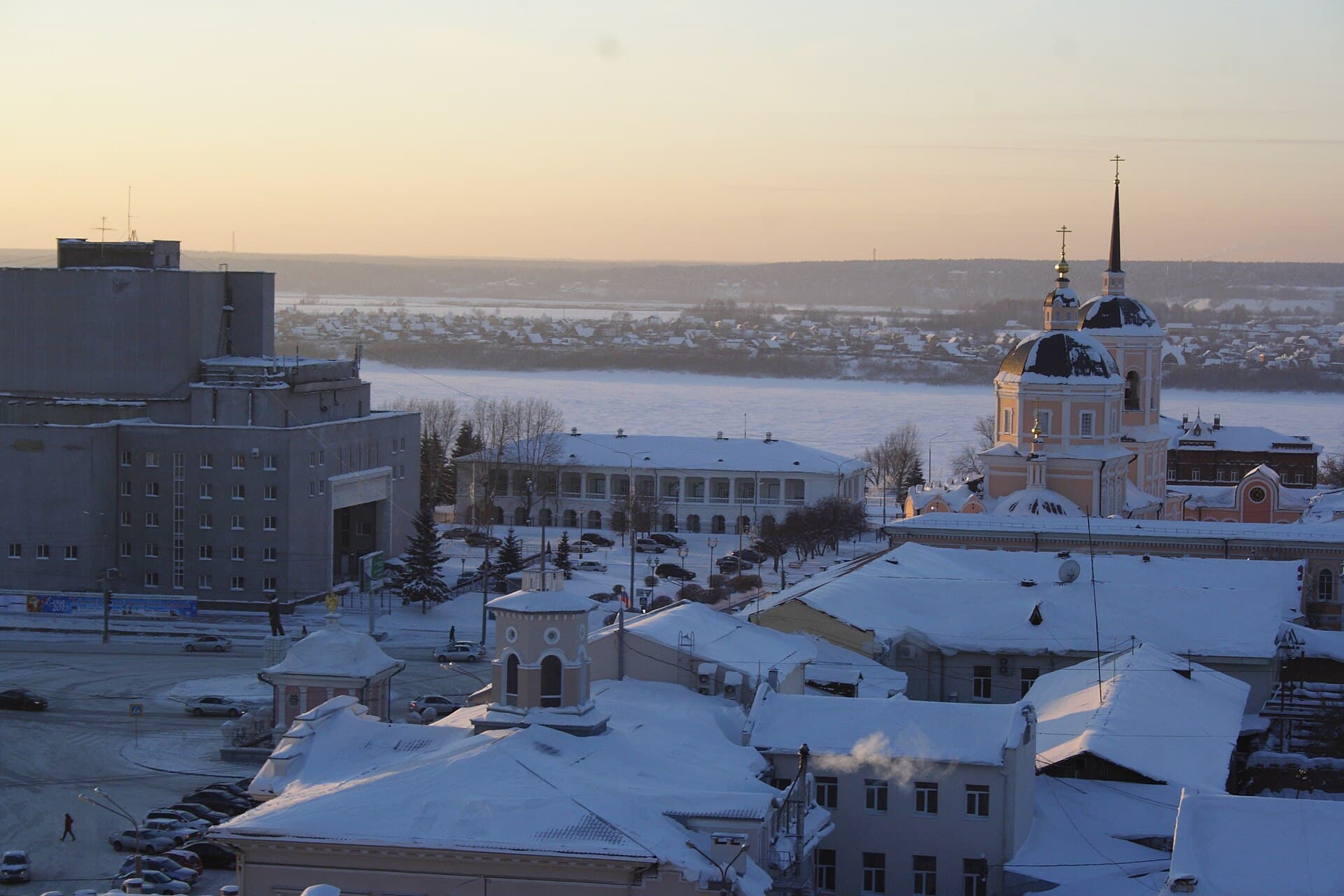 Igor Savin / Игорь Савин / Public domain, via Wikimedia Commons
“Where Siberian heritage meets academic innovation.”
Not the postcards. The stories even locals don't know — whispered in your ear, right where they happened.
Anton Chekhov, the renowned Russian writer, once visited Tomsk and departed with a rather unimpressed opinion.
The establishment of Tomsk State University in 1888 faced initial opposition from conservative voices.
During the Soviet era, a seemingly ordinary building in Tomsk held a grim secret within its walls.
Discover every secret of Tomsk
Every address, every reveal in full — in your ear, right where it happened.
You pick your stops. You walk. The voice reveals what the others miss.
No tours available yet. Check back soon — we're preparing them.
Tomsk, one of Siberia's most venerable cities, presents a compelling fusion of profound history and youthful academic fervor. Established in 1604, it has transformed from a defensive stronghold into a significant cultural, educational, and scientific center. The city is particularly acclaimed for its distinctive 18th- to 20th-century wooden and stone architecture, with many structures displaying intricate carvings and vivid colors. Frequently referred to as 'Siberian Athens' due to its numerous universities and over 100,000 students, Tomsk pulses with an intellectual vitality that belies its ancient origins.
Positioned on the Tom River, Tomsk offers visitors a singular glimpse into Siberian life, where historical preservation coexists with contemporary innovation. The city's allure resides in its capacity to maintain its unique traditions and architectural character amidst ongoing development. From its historic wooden dwellings to its lively university campuses, Tomsk provides a rich array of experiences for those seeking to explore beyond Russia's more commonly visited cities.
## From Fortress to Governorate Tomsk's origins trace back to a 1604 decree by Tsar Boris Godunov. The local Eushta Tatar duke, Toian, sought the Tsar's protection from neighboring tribes, leading to the construction of a fortress on the Tom River. This strategic location, on a high bank and near the mouth of the Ushaika river, provided natural defenses and access to waterways. Initially serving a purely military function, the Tomsk Ostrog successfully repelled attacks throughout the 17th century.
## A Hub of Trade and Administration The city's growth was significantly influenced by its geographical position on the Tom River, which provided crucial communication routes with other Siberian territories. The laying of the Siberian Tract in the 18th century further transformed Tomsk into a vital transit and trade center, connecting Moscow with Siberia and China. This period saw the flourishing of merchant activity, crafts, and goods warehousing. In 1804, Tomsk's status was elevated when it became the capital of the vast Tomsk Governorate, an administrative region that encompassed areas now home to cities like Novosibirsk, Kemerovo, and Krasnoyarsk. This new administrative role spurred rapid development and increased the city's political and economic influence.
## The Rise of "Siberian Athens" The 19th century brought a new impetus for growth with the Siberian "Gold Rush," leading to a surge in population and capital. However, a pivotal moment in Tomsk's history was not economic but academic. In 1878, Emperor Alexander II decreed the establishment of the first Imperial University in Siberia in Tomsk, which opened its doors in 1888. This transformed Tomsk into the primary educational and scientific center beyond the Ural Mountains, earning it the moniker "Siberian Athens." By World War II, students constituted a significant portion of the city's population.
## Twentieth Century Shifts During the 1920s, Tomsk was incorporated into the West Siberian Krai and later Novosibirsk Oblast. World War II saw many factories relocated to Siberian cities like Tomsk, contributing to its rapid growth. This expansion led to the creation of the Tomsk Oblast, with Tomsk as its administrative center. However, during the Cold War, Tomsk became a "closed city," restricting access for outsiders and foreigners. A nearby secret city, "Tomsk-7" (now Seversk), was established in 1949, housing a nuclear power plant.
Tomsk offers a rich array of sights, from its distinctive architecture to its lively academic institutions. Begin your exploration with a stroll through the city's historic wooden quarters, particularly on Krasnoarmeyskaya and Tatarskaya Streets, where you can admire ornate houses like the "House with Dragons" and the "House with Firebirds." These examples of early Russian and Siberian architecture, often painted in striking colors, are a testament to the city's unique heritage.
For expansive views of Tomsk and the Tom River, ascend Voskresenskaya Hill, home to the Tomsk History Museum. The museum itself offers insights into local history and culture. The city also contains several unique monuments, including the Wooden Ruble Monument, a Monument to Happiness (dedicated to a wolf from a local cartoon), and the quirky Monument to Slippers. Be sure to find the Chekhov Monument, a humorous nod to the writer's less-than-glowing review of the city.
Tomsk State University, the oldest university in Siberia, stands as a significant landmark with beautiful botanical gardens and historic buildings, offering a glimpse into the city's academic heart. For a peaceful escape, visit the Siberian Botanical Garden, where you can observe rare plants. Other cultural attractions include the Tomsk Regional Museum of Local Lore and the First Museum of Slavic Mythology.
Tomsk experiences a continental climate with distinct seasons. The most pleasant time to visit for warm-weather activities is from mid-June to mid-August, when average daytime temperatures range from 22°C to 25°C (71°F to 77°F). While summers are generally warm and sunny, be prepared for occasional rain and thunderstorms. Winters, from November to March, are profoundly cold and lengthy, with average January temperatures around -17.5°C (0.5°F) and significant snowfall. If you are prepared for freezing temperatures, December offers a unique winter charm with ice sculptures and festive decorations.
Tomsk is served by Tomsk Kamov Airport (TOF), also known as Bogashevo Airport, located approximately 20 km southeast of the city center. The airport, which received international status in 2013, connects Tomsk with major Russian cities and some international destinations. Bus route No. 119 provides convenient transportation from the airport to the city center, taking about an hour.
Within the city, a network of public transportation is available. Taxis are also readily accessible, with most rides within the city costing around 150-200 rubles. However, it's advisable to book taxis in advance and avoid hailing them from the street to prevent potential overcharging. The local currency is the Russian Ruble (RUB). Tomsk operates on Krasnoyarsk Time (KRAT), which is UTC+7 and does not observe Daylight Saving Time.