Piazza del Popolo
Beneath Todi's main square, a Roman marvel lies concealed.
Full story unlocks in the tour
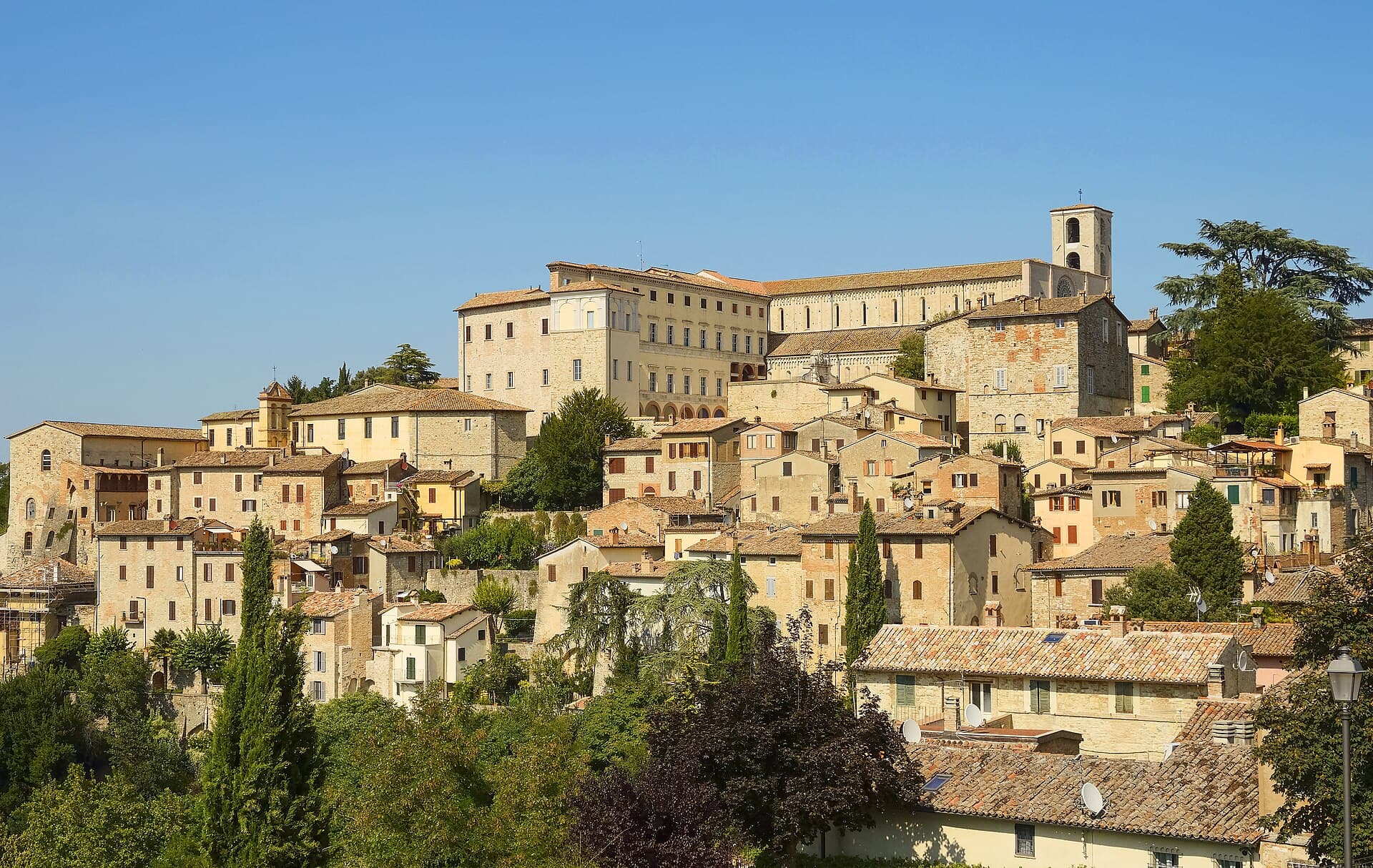 Livioandronico2013 / CC BY-SA 4.0, via Wikimedia Commons
“Todi: Where ancient echoes meet sun-drenched Umbrian hills.”
Not the postcards. The stories even locals don't know — whispered in your ear, right where they happened.
Beneath Todi's main square, a Roman marvel lies concealed.
This Gothic church conceals a surprising secret on its facade, whispered to be a sculptor's retribution.
The city's defenses narrate a layered story, quite literally.
Discover every secret of Todi
Every address, every reveal in full — in your ear, right where it happened.
You pick your stops. You walk. The voice reveals what the others miss.
No tours available yet. Check back soon — we're preparing them.
Todi ascends from the very core of Umbria, a city that feels as if time has paused, offering a window into millennia of human presence. Situated high above the Tiber River, its medieval stone walls and commanding position afford expansive views of undulating hills, olive groves, and vineyards. This ancient settlement, with origins reaching back to the Etruscan period, invites visitors to embrace a more measured pace, encouraging a thoughtful exploration of its well-preserved architecture and tranquil, stone-paved passages.
American researchers have even lauded Todi as the 'città ideale,' or ideal town, commending its manageable dimensions, its harmonious integration with the surrounding environment, and its conveniently positioned administrative and support services. It promises an authentic Italian encounter, removed from the more congested tourist circuits, where history, culture, and natural splendor converge.
Todi's narrative commences with the Umbrians, believed to have established the city around 2700 BC. Its strategic placement, at the confluence of the Naia and Tiber rivers, marked the ancient boundary between Umbrian and Etruscan lands, fostering a profound Etruscan cultural influence. The city, identified as 'Tutere' on pre-Roman coinage, later became the Roman 'Tuder' following its conquest in the 3rd century BC.
Under Augustus, Todi was rechristened Colonia Julia Fida Tuder, its colonists drawn from soldiers of the 41st legion. The Romans left an indelible mark, constructing an amphitheater, baths, and a forum. The city's elevated situation proved vital during the Gothic War and after the decline of the Western Roman Empire, establishing it as a formidable and significant stronghold. Todi endured a protracted siege by Totila and even repelled the Lombards.
The Middle Ages ushered in a period of prosperity for Todi, particularly from the 13th century, when it evolved into a free city-state. During this era, the city walls were extended to encompass surrounding spurs, shaping the physiognomy of Todi largely observed today. However, the 17th century brought a period of decline due to plagues, conflicts, and famines. Todi subsequently joined the Papal States and remained largely unaltered until Italian unification in 1860.
Begin your exploration in Piazza del Popolo, Todi's central square, often regarded as one of Italy's most visually appealing. It is embraced by striking medieval palaces, including the 13th-century Palazzo del Popolo, one of Italy's oldest municipal structures, and the Gothic-style Palazzo del Capitano, which houses the Civic Museum. The Concattedrale della Santissima Annunziata, Todi's Romanesque-Gothic cathedral, stands at one end of the square, notable for its 13th-century facade and a striking central rose window.
Just beyond the historic core, the Tempio di Santa Maria della Consolazione stands as a masterpiece of Renaissance architecture. This pilgrimage church, with its centralized, symmetric layout and soaring dome, was built over a century, commencing in 1508. For sweeping views of Todi and the Tiber Valley, ascend the 153 steps of the bell tower of the Chiesa di San Fortunato, a Gothic church that also contains the tomb of Jacopone da Todi, a celebrated medieval Italian poet. Do not overlook the Giardini Oberdan for another excellent vantage point.
The most pleasant times to visit Todi are during spring and autumn, specifically April, May, June, September, and October. In these months, the weather is comfortably mild, with temperatures ranging from 19°C to 28°C (66°F to 82°F), ideal for exploring the town and its surrounding countryside. July and August are the warmest months, with average highs around 31°C (87°F). Todi also hosts the Todi Festival in late summer, featuring theater, concerts, and art, and the Todi Arte Festival in autumn.
Todi's historic center is designated a ZTL (Zona a Traffico Limitato), meaning only authorized local vehicles may enter. It is advisable to park on the periphery of town; a recommended location is Viale Montecristo, which offers complimentary parking. Todi also provides an elevator from the Porta Orvietana car park to the Giardini Oberdan panoramic terrace, facilitating access to the hilltop. The town possesses a tranquil character, becoming more active on weekends but generally offering a serene experience. Wear comfortable shoes, as Todi involves considerable elevation changes and uneven stone pathways. Todi is well-connected by bus from Perugia, and while train travel from Rome is possible, it typically requires transfers. A rental car provides the greatest flexibility for exploring the Umbrian countryside.