Museo Regional de la Cerámica
Before you admire the lively pottery throughout Tlaquepaque, there's a specific piece in the Regional Ceramic Museum that reveals a surprising detail about the town's artistic legacy.
Full story unlocks in the tour
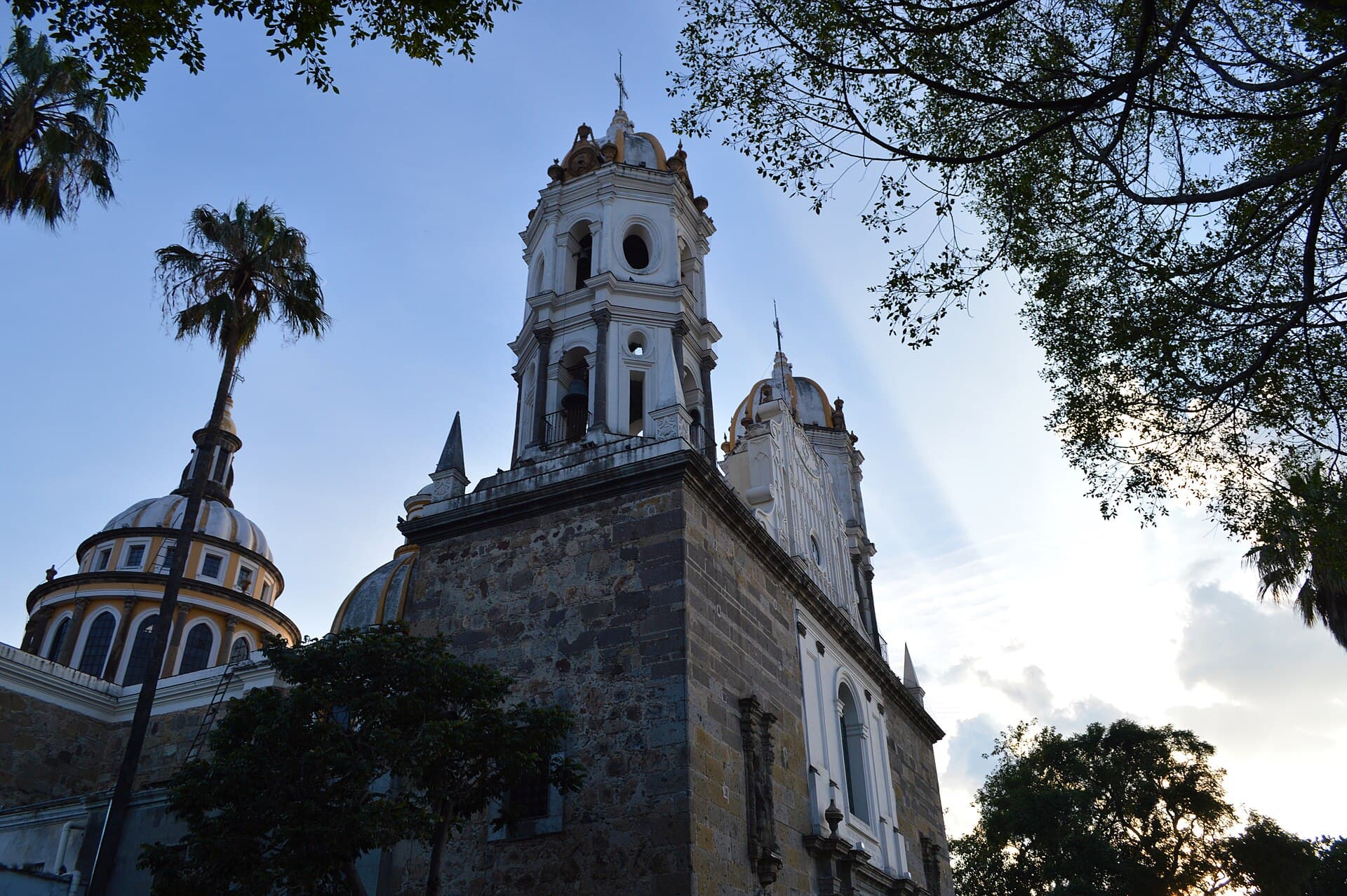 Antonio Renteria Navarro / CC BY-SA 3.0, via Wikimedia Commons
“Where clay tells a story and mariachi sets the rhythm.”
Not the postcards. The stories even locals don't know — whispered in your ear, right where they happened.
Before you admire the lively pottery throughout Tlaquepaque, there's a specific piece in the Regional Ceramic Museum that reveals a surprising detail about the town's artistic legacy.
This bustling central plaza, known for its mariachi, holds a secret about its original purpose that's quite different from its current lively atmosphere.
Beyond the colorful shops and galleries, a particular sculpture on Calle Independencia commemorates a pivotal moment in Mexican history, often overlooked by casual strollers.
Discover every secret of Tlaquepaque
Every address, every reveal in full — in your ear, right where it happened.
You pick your stops. You walk. The voice reveals what the others miss.
No tours available yet. Check back soon — we're preparing them.
Tlaquepaque, officially San Pedro Tlaquepaque, is a city in the Mexican state of Jalisco, widely recognized as a Pueblo Mágico (Magic Town) due to its profound cultural traditions and notable arts. Just a short drive from Guadalajara, Tlaquepaque offers a distinct colonial charm with its pedestrian avenues, artisan workshops, and animated plazas. The city's name, derived from Nahuatl, means 'place above clay land' or 'the best of everything,' a nod to its long-standing tradition of pottery and craftsmanship.
Travelers are drawn to Tlaquepaque for its exceptional handcrafted goods, including ceramics, blown glass, silver jewelry, and textiles, often of higher quality than found in many other Mexican tourist markets. The downtown area is a pedestrian-friendly hub, filled with galleries, boutiques, and restaurants housed in old historic mansions. Beyond shopping, Tlaquepaque offers a lively culinary scene with traditional Mexican food, mariachi music, and folkloric dance shows, especially at the iconic El Parián.
The history of Tlaquepaque stretches back to pre-Hispanic times, when the region, then known as Tonalteca, was inhabited by Tonalteca and Tecos Indians. They formed a kingdom allied under the rule of Queen Cihualpilli Tzapotzinco of Tonalá, and the indigenous inhabitants were already skilled in making ornaments and utensils from the abundant local clay.
In March 1530, the Spanish conquistador Nuño de Guzmán arrived in the region. After a confrontation, Nuño de Guzmán formally claimed the kingdom of Tonalá and its subject towns, including Tlaquepaque. In 1548, the town was renamed San Pedro Tlaquepaque at the suggestion of Fray Antonio de Segovia. During the colonial era, Tlaquepaque became a favored weekend retreat for Guadalajara's elite, who built neoclassical mansions that still contribute to the town's architectural character. The Spanish crown also encouraged the development of handicrafts, introducing new techniques and making Tlaquepaque an important center for producing floor tiles and bricks.
Tlaquepaque holds a significant place in Mexico's independence movement. In 1810, Miguel Hidalgo y Costilla, who initiated the independence movement, briefly occupied Guadalajara and decreed the abolition of slavery. On November 26, 1810, Hidalgo was presented with a feast in San Pedro as he marched with his army to take Guadalajara. Later, in 1821, San Pedro Tlaquepaque was the site where the 'Independence of Jalisco' was proclaimed, with the document signed in the town on June 13 of that year.
Throughout the 19th and 20th centuries, Tlaquepaque continued to evolve as an artistic hub. In the 1870s, glass-blowing artistry from Europe was introduced, further diversifying the local crafts. The Avalos brothers, who studied in Venice, Italy, in the 1920s, pioneered techniques seen in the area's glass workshops, expanding the traditional color palette. By the mid-20th century, Tlaquepaque had become a magnet for those seeking fine ceramics and glass, attracting jewelers, wood carvers, and weavers to establish workshops. In 2018, Tlaquepaque was officially designated a 'Pueblo Mágico' by the Mexican government, recognizing its unique historical, cultural, and aesthetic qualities.
Begin your exploration at Jardín Hidalgo, the main plaza in downtown Tlaquepaque, a central point for community gatherings and often adorned with colorful papel picado. From here, wander down Andador Independencia, a pedestrian-only street lined with boutiques, art galleries, and restaurants housed in restored colonial-era mansions. You'll find exquisite examples of regional folk art from Jalisco and across Mexico, including ceramics, blown glass, and textiles.
Do not miss the Museo Regional de la Cerámica, located on Andador Independencia, which showcases a fine collection of ceramic works from distinguished artisans, offering insight into Jalisco's unique pottery styles. The Centro Cultural El Refugio is another significant stop, a converted chapel hosting cultural events, art shows, and workshops, and home to hundreds of iconic ceramics. For a taste of local life and entertainment, head to El Parián, a 19th-century market that has transformed into a large cantina, featuring multiple restaurants and bars around a central bandstand with daily mariachi and folkloric dance shows. Also, look for sculptures by acclaimed Tlaquepaque-born artist Rodo Padilla and Guadalajara's Sergio Bustamante along the streets.
The best time to visit Tlaquepaque for pleasant weather and outdoor activities is during the dry season, which runs from November to May. Temperatures are mild year-round, but the months of late April to early June offer ideal conditions, with a peak in the third week of May. While the summer months from June to September are warmer, they also bring the rainy season, characterized by frequent afternoon showers that typically clear by sunset. Visiting during late October to early November can be particularly special, as the town is often decorated for Day of the Dead, adding an extra layer of beauty and cultural immersion.
Tlaquepaque is easily accessible from Guadalajara, with Uber or taxis being the most convenient options, taking approximately 20-30 minutes depending on traffic. The local currency is the Mexican Peso (MXN). While credit and debit cards are accepted in many hotels, restaurants, and larger shops, it's advisable to carry cash for smaller purchases, street food, and markets. ATMs are available, particularly along Calle Independencia, but it's generally safer to use those inside banks. When using an ATM, opt to be charged in Mexican pesos for a more favorable exchange rate. Tlaquepaque is considered a generally safe area for tourists, with a visible presence of Tourist Police, especially in the central areas. However, standard urban precautions apply: be aware of your surroundings, particularly late at night and away from main streets, and avoid displaying valuables openly.