Aït el Haj Ali (Old Jewish Quarter)
Beyond the bustling main streets of Tinghir, a maze of narrow passages reveals a surprising history.
Full story unlocks in the tour
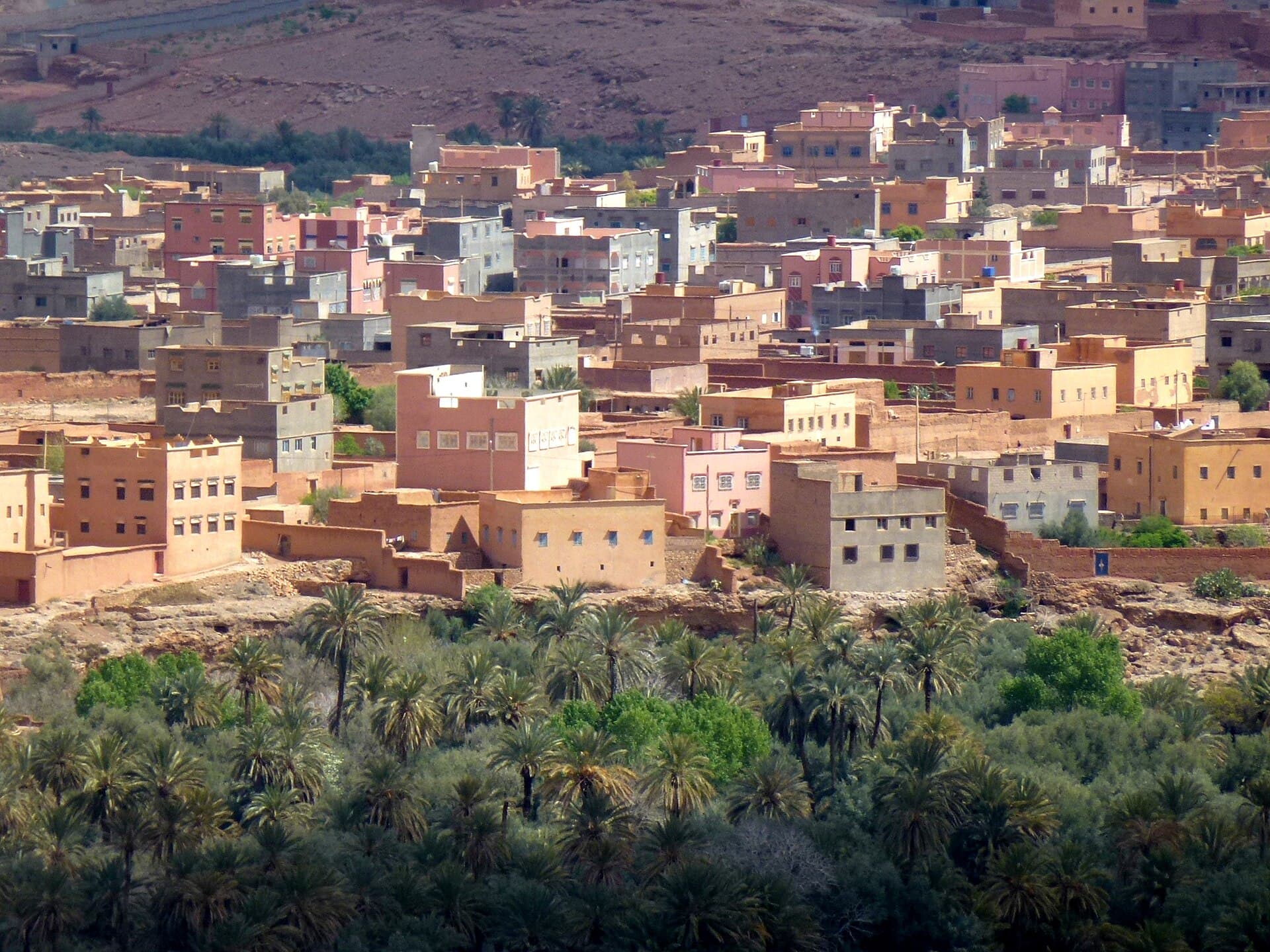 Hiroki Ogawa / CC BY 3.0, via Wikimedia Commons
“Where the Atlas Mountains meet the Sahara's edge, an oasis whispers ancient tales.”
Not the postcards. The stories even locals don't know — whispered in your ear, right where they happened.
Beyond the bustling main streets of Tinghir, a maze of narrow passages reveals a surprising history.
High above Tinghir, an imposing fortress stands sentinel, but its true story isn't immediately obvious.
The towering canyon walls of Todra Gorge are a sight to behold, yet their formation tells a story far older than human memory.
Discover every secret of Tinghir
Every address, every reveal in full — in your ear, right where it happened.
You pick your stops. You walk. The voice reveals what the others miss.
No tours available yet. Check back soon — we're preparing them.
Tinghir, an oasis town in Morocco's Drâa-Tafilalet region, is a captivating destination set between the High Atlas Mountains and the Sahara Desert. With a population of approximately 42,044, it serves as a gateway to dramatic landscapes and a profound cultural heritage. The town is known for its extensive palm groves, stretching for about 30 kilometers along the Todra River, creating a verdant ribbon against the arid terrain.
Beyond its natural beauty, Tinghir offers an authentic Moroccan experience, where ancient traditions blend with daily life. Visitors can explore historic kasbahs, wander through old quarters, and immerse themselves in Berber culture. The town's strategic location makes it a popular stop for travelers journeying between Marrakech and the Sahara Desert, offering a peaceful respite and a chance to explore natural wonders like the nearby Todra Gorge.
Tinghir's history is deeply interwoven with its strategic position as an oasis town, providing a vital passage through the High Atlas Mountains. For centuries, the Todra Gorge, just a short distance from Tinghir, served as a crucial route for Berber tribes and traders.
The town itself, and the surrounding valley, are dotted with kasbahs and ksour—fortified earthen villages that offered refuge and protection. These structures, built from local loam, reflect a collective architecture designed for security, safeguarding families, livestock, and water resources amidst inter-tribal conflicts.
One significant historical landmark is the Glaoui Kasbah, also known as Taglaouit, which dominates the Ighir n'Mehalt hill. This impressive fortress was constructed in 1919 following the submission of several local Ksour to Thami El Glaoui, a powerful pasha. The complex, encompassing two main residential buildings and numerous outbuildings like guardhouses, stables, and kitchens, was actively used until Morocco gained independence in 1956. After the fall of the Glaoui family, it was abandoned, like many other kasbahs across southern Morocco.
Another testament to Tinghir's past is the Aït el Haj Ali district, the town's old Jewish Quarter, or Mellah. This historic neighborhood, once home to seventy Jewish families, was a central commercial and social hub within the larger Ksar Tinghir, a settlement of three hundred homes. Observations from 1930 documented its central role in the ksar. The narrow passages and towering adobe structures of the Mellah serve as a living reminder of an era when Jewish and Amazigh communities coexisted and contributed to Tinghir's artistic and cultural identity.
The primary draw of Tinghir is the dramatic Todra Gorge, where limestone walls rise to 300 meters, creating a narrow canyon carved by the Todra River. Visitors can walk along the canyon floor, observe rock climbers on the towering cliffs, or simply enjoy the cool, shallow water of the river.
Beyond the gorge, explore the expansive Todra palm groves, an oasis stretching for approximately 30 kilometers. These lush green areas, fed by traditional irrigation systems, showcase an active agricultural landscape with cereal fields, vegetable gardens, and olive groves. Walking through the palmery offers a glimpse into local life and small Berber villages.
In Tinghir town, wander through the Aït el Haj Ali district, the old Jewish Quarter (Mellah). Its narrow streets and adobe dwellings preserve an authentic atmosphere, reflecting centuries of multicultural history. While the Glaoui Kasbah on Ighir n'Mehalt hill is not open for interior visits, it provides excellent panoramic views over Tinghir and the palm groves.
For a deeper cultural immersion, visit the local souk, particularly the bustling Monday market, one of the largest in southern Morocco, offering regional products and handicrafts. The Mosque Ikalalne, accessible through an old kasbah, is another point of interest within the old town.
The most pleasant times to visit Tinghir are during spring (mid-March to May) and autumn (September to early November). During these seasons, temperatures are comfortable, ranging from the low to mid-60s Fahrenheit (around 16-18°C) in spring, and skies are generally clear. Summers (June through September) bring intense heat, with July averages reaching 36°C (96°F). Winters can be quite cold, especially after sunset, with January temperatures dropping to around 3°C (38°F).
Getting to Tinghir is often part of a longer journey through Morocco. While there is no airport in Tinghir, the closest major airports are in Marrakech (approximately 6-7 hours by private car) and Ouarzazate (about 2.5 hours by private car). Shared taxis, known as 'grand taxis,' operate regularly from cities like Ouarzazate and Marrakech, offering a local travel experience. Buses from major operators like Supratours and CTM also serve the region, though some routes may require a transfer in nearby towns like Ouarzazate or Elkelaa Mgouna.
Within Tinghir, exploring the town's old medina and palm groves can be done on foot. For reaching Todra Gorge, grand taxis are readily available. When visiting, it's advisable to dress modestly out of respect for local customs, covering shoulders and knees, especially for women. While Tinghir is generally safe, standard precautions like being aware of your surroundings and avoiding walking alone at night are recommended.