Hamat Tiberias National Park
Beneath the surface of a quiet national park lies a surprising mosaic, revealing a story about ancient Jewish life.
Full story unlocks in the tour
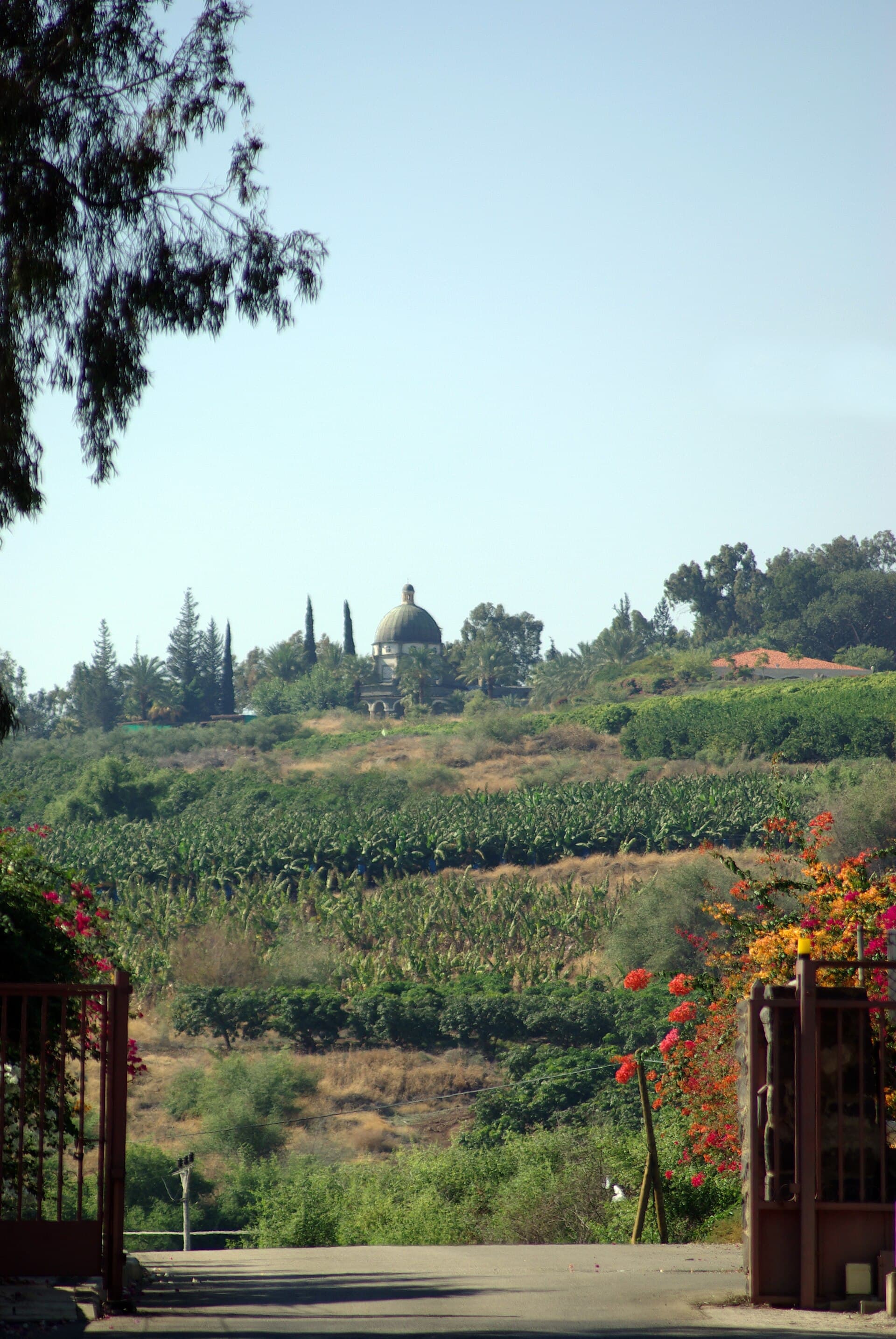 Berthold Werner / Public domain, via Wikimedia Commons
“Where ancient foundations meet the tranquil waters of the Sea of Galilee.”
Not the postcards. The stories even locals don't know — whispered in your ear, right where they happened.
Beneath the surface of a quiet national park lies a surprising mosaic, revealing a story about ancient Jewish life.
The soothing thermal waters of Tiberias hold a connection to one of history's most familiar kings.
While known by several names, the Sea of Galilee once bore a title reflecting the city's significant standing.
Discover every secret of Tibériade
Every address, every reveal in full — in your ear, right where it happened.
You pick your stops. You walk. The voice reveals what the others miss.
No tours available yet. Check back soon — we're preparing them.
Tiberias, a city along the western shore of the Sea of Galilee (also known as Lake Kinneret), is a destination where the echoes of antiquity and the allure of natural beauty converge. It stands as one of Judaism's four holy cities, alongside Jerusalem, Hebron, and Safed. Resting approximately 200 meters (656 feet) below sea level, Tiberias holds the distinction of being the second-lowest city in the world, just after Jericho. This distinct geographical position contributes to its warm climate, drawing both locals and international travelers seeking quiet contemplation and historical exploration.
The city serves as an excellent starting point for exploring the Galilee region, offering a blend of historical sites, religious pilgrimage locations, and opportunities for water sports on the Sea of Galilee. From its lively waterfront promenade, visitors can take in views of the lake and the distant Golan Heights. Tiberias presents a variety of experiences, from its archaeological remnants and sacred Jewish burial places to its contemporary resort amenities and active atmosphere.
Tiberias was established around 18–20 CE by Herod Antipas, the Roman client king of Galilee and Perea, and named in tribute to the Roman Emperor Tiberius. The city was strategically constructed near natural mineral hot springs, which had already developed into a spa. Initially, Tiberias was a predominantly pagan city, and its construction on the site of an ancient cemetery rendered it ritually unclean by strict Jewish standards, causing many Jews to avoid settling there.
However, after Jerusalem's destruction in 70 CE, Tiberias grew into a pivotal center for Jewish culture and religious study. The Sanhedrin, the supreme Jewish religious court, moved to Tiberias around 150 CE, making it its final seat before its eventual disbandment. From the 2nd to the 10th centuries CE, Tiberias was the largest Jewish city in Galilee, and it was here that much of the Mishnah and the Jerusalem Talmud were compiled and edited. Prominent Jewish sages such as Rabbi Judah HaNasi, who compiled the Mishnah, and Rabbi Yochanan ben Zakai, who established a yeshiva, lived and taught in Tiberias. The city also played a significant role in the development of the Masoretic text of the Hebrew Bible, with the system of Hebrew vocalization and cantillation being developed there in the 8th and 9th centuries.
Following the Islamic conquest in the 7th century, Tiberias prospered as the capital of Jund al-Urdunn and became a multicultural trading hub. During the Crusader period, Tiberias became the capital of the Principality of Galilee. However, its importance waned after the Crusader era. The city experienced periods of destruction and abandonment, particularly due to conflicts between local farmers and Bedouins.
A significant revival occurred in the 18th century when Rabbi Chaim Abulafia, a kabbalist from Turkey, led the resettlement of Tiberias, constructing synagogues and yeshivas. This arrival of rabbis, including Hassidim, re-established Tiberias as a center for Jewish learning and one of the holy cities of Palestine throughout the 18th and 19th centuries. The city continued to expand following the First Jewish Aliyah in the 1880s. Today, Tiberias remains a city with a strong and growing Jewish ultra-Orthodox community.
Begin your exploration at the Yigal Alon Promenade along the Sea of Galilee, an active waterfront area with restaurants, shops, and boat rentals for water activities like water skiing or banana boat rides. Just beyond the promenade, you can observe Saint Peter's Church, the Sea Mosque (Al-Bahr Mosque), and the Greek-Orthodox Monastery. For a deeper understanding of history, visit the Old City of Tiberias, where archaeological remains and historical structures can be found.
Discover the Hamat Tiberias National Park, home to the ancient Severus Synagogue with its unique Zodiac mosaic, and well-preserved 18th-century Turkish Hammam. The park is also known for its natural hot springs, used since Roman times. Pay respects at the significant Jewish burial sites, including the Tomb of Maimonides (Rambam), the Tomb of Rabbi Meir Baal Hanes, and the Tomb of Rabbi Akiva. For a glimpse into Roman-era Tiberias, explore the open archaeological park in the southeastern foothills of Berniki Hill, where you can see a Roman-era gate, bridge, and a theater that once seated 7,000 spectators.
The most pleasant times to visit Tiberias are during spring (March to May) and autumn (September to November). In these seasons, the weather is mild and agreeable, with average daytime temperatures ranging from 20°C to 28°C (68°F to 82°F), making it ideal for sightseeing and outdoor activities around the Sea of Galilee. Spring brings blooming flowers and lush landscapes, while autumn provides warm temperatures without the intense summer heat. These periods also tend to be less crowded than the peak summer months.
Summers (June to August) are hot and humid, with average daily highs often above 33°C (91°F) and reaching up to 36°C (97°F) in August, and water temperatures in the Sea of Galilee averaging 28°C (83°F). If you enjoy hot weather and water activities, summer can still be a good time, but prepare for high temperatures. Winters (December to February) are cooler, with average daily highs around 18°C (64°F) and occasional rain. The hot springs are particularly inviting during the cooler winter months.
Tiberias is well-connected by public transportation, with comfortable and reliable buses serving as an excellent way to travel between cities in Israel. Egged bus routes link Tiberias to Jerusalem (Bus 955, about 2.5 hours) and Tel Aviv (Bus 836, about 3 hours). Buses also run between Nazareth and Tiberias (Buses 31, 38, 431). The city features a central bus station for intercity and local routes.
While many tourist sites within Tiberias are accessible on foot, renting a car offers greater flexibility for exploring the surrounding Galilee region and its attractions. Car rental companies like Avis and Hertz operate in downtown Tiberias. Taxis are also available, with tariffs starting around ₪12.50. For accommodation, Tiberias offers a range of options, from luxury hotels to boutique hotels, bed and breakfasts, and youth hostels. Many hotels are situated along the waterfront, offering views of the Sea of Galilee.