Brihadeeswara Temple
The soaring vimana (temple tower) of the Brihadeeswara Temple is a wonder of ancient engineering, yet its midday shadow holds a curious secret.
Full story unlocks in the tour
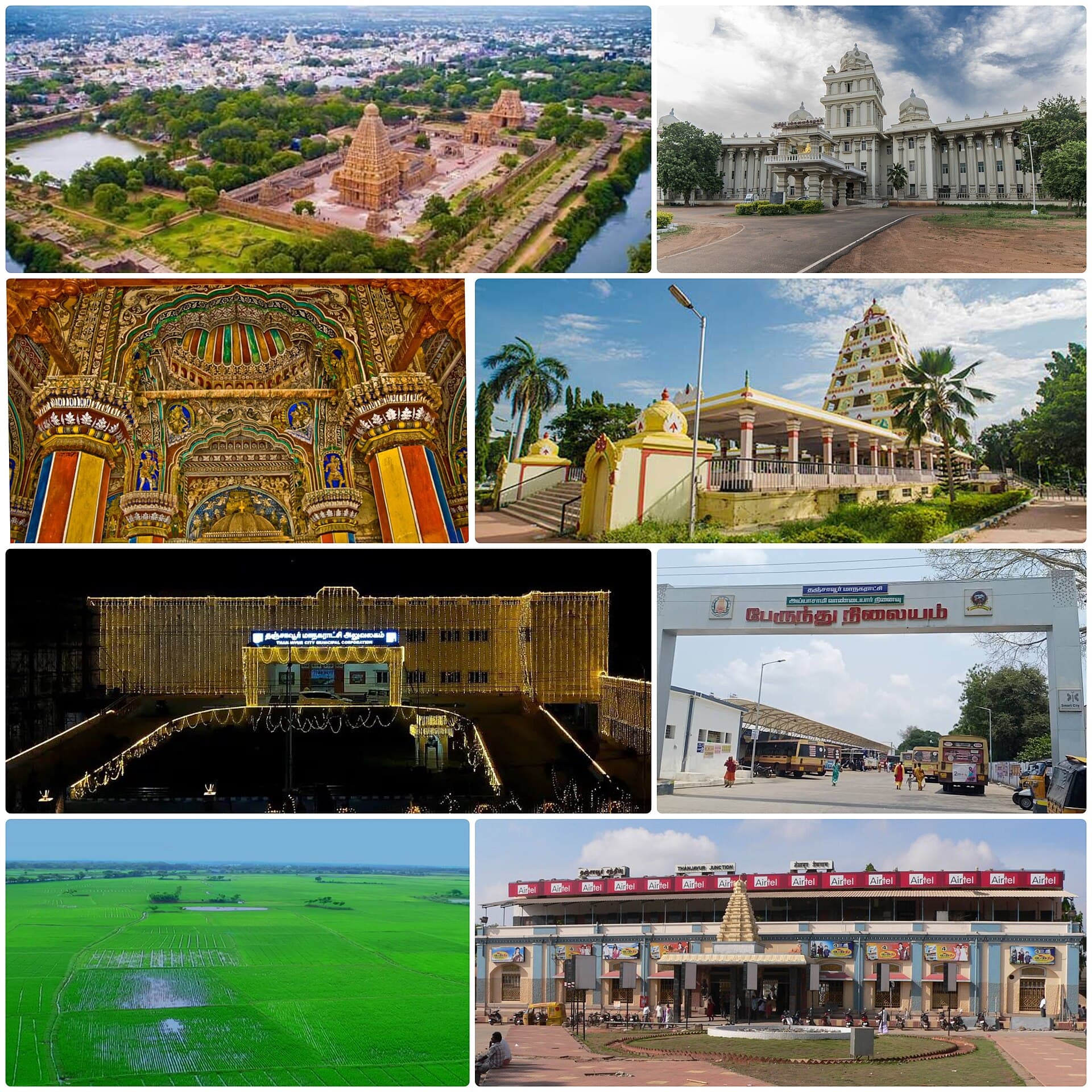 Arun2117dts 5 / CC BY-SA 4.0, via Wikimedia Commons
“Where ancient stones echo Chola grandeur and artistic traditions bloom.”
Not the postcards. The stories even locals don't know — whispered in your ear, right where they happened.
The soaring vimana (temple tower) of the Brihadeeswara Temple is a wonder of ancient engineering, yet its midday shadow holds a curious secret.
Within the expansive Thanjavur Maratha Palace, certain chambers possess an extraordinary acoustic property.
The vivid murals adorning the inner walls of the Brihadeeswara Temple narrate ancient stories, but some of them have a surprising history of being 'uncovered in plain sight.'
Discover every secret of Thanjavur
Every address, every reveal in full — in your ear, right where it happened.
You pick your stops. You walk. The voice reveals what the others miss.
No tours available yet. Check back soon — we're preparing them.
Thanjavur, often called Tanjore, is a city in the Indian state of Tamil Nadu, celebrated for its profound historical and cultural depth. Situated in the fertile Cauvery Delta, it is also known as the "Rice Bowl of Tamil Nadu" due to its agricultural abundance. For over a millennium, Thanjavur has been a crucible of art, architecture, and literature, shaped by the powerful Chola, Nayak, and Maratha dynasties.
The city's essence is woven into its architectural wonders, particularly the Brihadeeswara Temple, a UNESCO World Heritage Site, which stands as a testament to the engineering and artistic skill of the Chola Empire. Beyond its grand temples, Thanjavur is a living canvas of traditional arts, including the distinctive Tanjore paintings, classical music, and Bharatanatyam dance. A visit to Thanjavur offers an engaging journey through centuries of South Indian heritage, where every stone and brushstroke relates a story.
## The Chola Golden Age Thanjavur's history extends back over a thousand years, its ancient roots deeply entwined with the Chola dynasty. The city ascended to prominence as the capital of the Chola Empire between the 9th and 14th centuries. It was during this period that Thanjavur became a vital center for Tamil learning and culture, and the original home of Dravidian art and architecture.
The most significant contribution of the Cholas to Thanjavur's landscape is the Brihadeeswara Temple, also known as the Big Temple. Commissioned by King Rajaraja I in the early 11th century CE, this architectural marvel is built entirely of granite, a remarkable feat considering granite is not local to the region. The temple, dedicated to Lord Shiva, is distinguished by its soaring vimana (temple tower) and intricate carvings, making it a prime example of Dravidian architecture and a UNESCO World Heritage site.
## Nayak and Maratha Influence Following the decline of the Chola Empire in the 13th century, Thanjavur experienced successive rule by various dynasties, including the Pandyas, the Vijayanagar Empire, and later the Nayaks. The Nayaks, who followed the Cholas, continued the legacy of artistic patronage, contributing to the city's cultural heritage. The Thanjavur Maratha Palace, though often associated with the Marathas, was initially constructed by the Nayak rulers in the 16th century, with later enhancements by the Marathas.
The Marathas, who governed Thanjavur from 1674 to 1855, further enriched the city's cultural fabric, particularly by promoting Carnatic music, dance, and literature. The Saraswathi Mahal Library, one of Asia's oldest libraries, was significantly developed during the Maratha rule, housing an invaluable collection of manuscripts. The palace complex itself blends Nayak and Maratha architectural styles, featuring structures like the Durbar Hall and the Bell Tower.
Begin your exploration at the Brihadeeswara Temple, a UNESCO World Heritage Site and a monumental example of Chola architecture. Admire its towering vimana and the colossal Nandi statue, carved from a single stone. The temple's inner walls are adorned with Chola and Nayak period frescoes, offering a window into ancient artistic traditions.
Next, visit the Thanjavur Maratha Palace Complex, an expansive edifice that served as the residence of the Maratha rulers. Explore the Saraswathi Mahal Library, one of the oldest libraries in Asia, housing a vast collection of ancient manuscripts. Within the palace complex, you can also see the Durbar Hall, with its ornate pillars and murals, and the Royal Palace Museum, which displays sculptures and artifacts from various dynasties.
Beyond these central attractions, consider a visit to the Thanjavur Art Gallery within the palace, showcasing exquisite bronze sculptures from the Chola dynasty. For art enthusiasts, observing the creation of Tanjore paintings, characterized by their vivid colors and gold leaf embellishments, in local shops is a rewarding experience.
Nearby, the Shiva Ganga Garden offers a peaceful green space, and the Raja Raja Cholan Museum provides further historical insights.
The ideal time to visit Thanjavur is during the cooler months, from November to February. During this period, the weather is pleasant with temperatures ranging between 20°C and 30°C, making it perfect for exploring the city's many historical sites. Humidity is low, ensuring comfortable outdoor activities. This season also aligns with several lively festivals, enhancing the cultural experience. Summers, from March to May, are hot and dry, with temperatures often reaching 40°C, making daytime exploration challenging. The monsoon season, from June to October, brings heavy rainfall, which can limit outdoor activities, though the landscape becomes lush and green.
Thanjavur is well-connected by road and rail. The nearest airport is Tiruchirappalli International Airport (Trichy), approximately 60 km away, with regular flights to major Indian cities and some international destinations. From Trichy, you can reach Thanjavur by taxi, bus, or train. Thanjavur Junction railway station has connections to major cities across India. State-run and private buses operate frequently from various cities in South India.
Within Thanjavur, local buses, auto-rickshaws, and taxis are readily available for getting around. When visiting temples, it's advisable to remove your shoes at the entrance; carrying socks can provide comfort on warm surfaces. Dress modestly, especially when visiting religious sites. While exploring, stay hydrated, particularly during warmer months, and consider carrying a hat. Bargaining is common in local markets.