Batonis Tsikhe Fortress
Within the stout walls of Telavi's royal fortress, there's a surprising architectural influence that speaks volumes about Georgia's past diplomatic dances.
Full story unlocks in the tour
 Jelger Groeneveld / CC BY 2.0, via Wikimedia Commons
“Where ancient history and the aroma of Saperavi intertwine.”
Not the postcards. The stories even locals don't know — whispered in your ear, right where they happened.
Within the stout walls of Telavi's royal fortress, there's a surprising architectural influence that speaks volumes about Georgia's past diplomatic dances.
This colossal tree, a fixture of Telavi for centuries, is said to possess a peculiar power for those who stand beneath its ancient boughs.
Beyond the bustling stalls of fresh produce and spices, the Telavi Bazaar holds a secret corner where a different kind of local treasure is exchanged.
Discover every secret of Telavi
Every address, every reveal in full — in your ear, right where it happened.
You pick your stops. You walk. The voice reveals what the others miss.
No tours available yet. Check back soon — we're preparing them.
Telavi, the administrative heart of Georgia's Kakheti region, is a city where history is etched into every brick and the scent of ripening grapes hangs in the air. Situated in the fertile Alazani Valley, with the majestic Greater Caucasus Mountains as a dramatic backdrop, Telavi offers a captivating blend of ancient heritage and a thriving wine culture. It's a place that invites a slower pace, rewarding those who linger to uncover its layers.
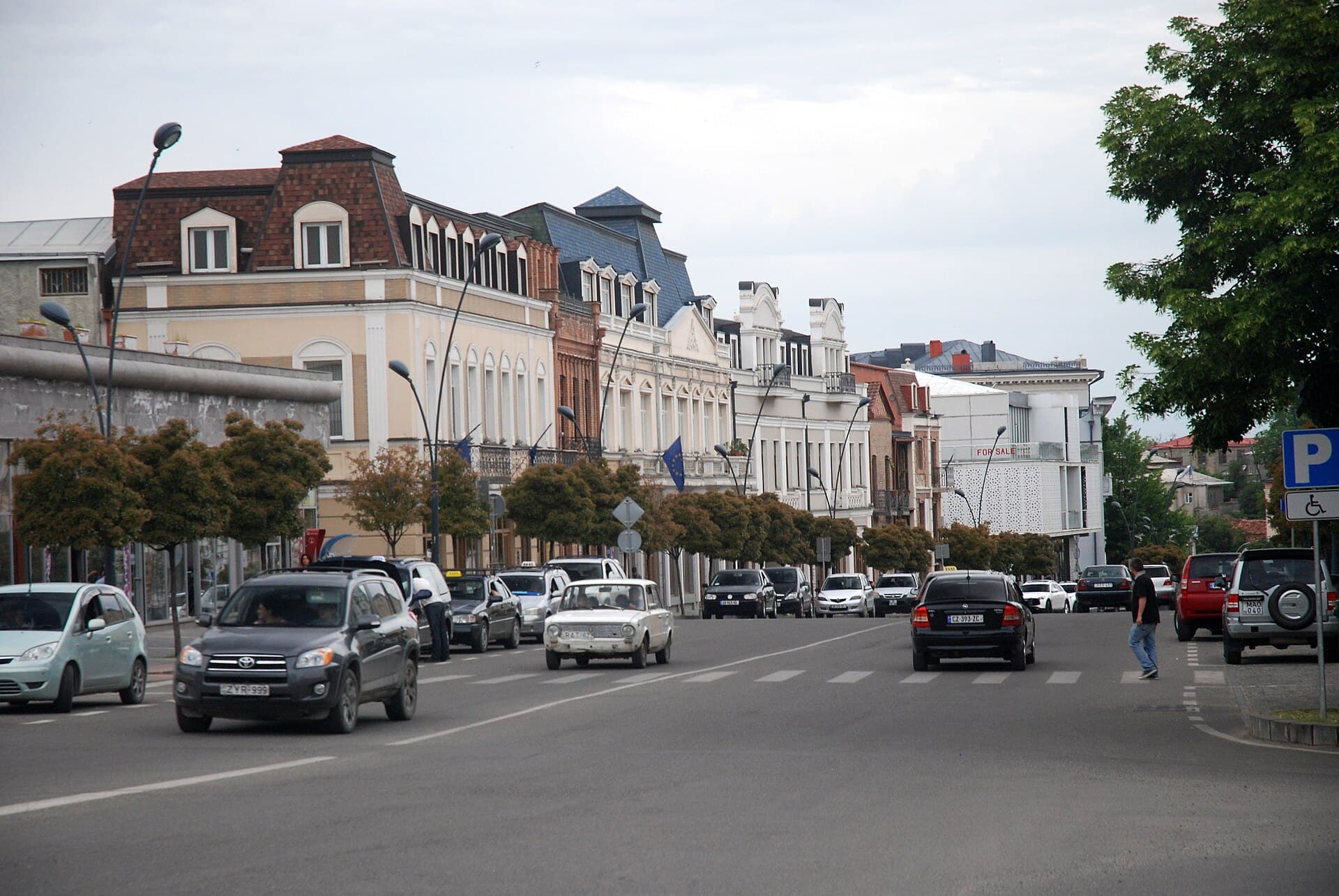
Often overshadowed by the more picturesque Sighnaghi, Telavi reveals its charm to those who take the time to explore. The city displays elegant old brick buildings, broad avenues, and traditional homes adorned with intricately carved wooden balconies, reflecting a unique Kakhetian architectural style. As the capital of Georgia's premier winemaking region, Telavi is an essential stop for anyone wishing to delve into the country's 8,000-year-old winemaking traditions.
The story of Telavi stretches back to the Late Bronze Age, with archaeological findings confirming early settlements in the area. The Greek geographer Claudius Ptolemaeus mentioned a town called Teleda in the 2nd century AD, likely referring to Telavi. By the 8th century, Telavi began to emerge as a significant political and administrative center. Arab geographer Al-Muqaddasi, in the 10th century, listed Telavi among important Caucasian cities like Tbilisi, noting its predominantly Christian population.
From the 10th to the 12th centuries, Telavi served as the capital of the Kingdom of Kakheti and later the Kingdom of Kakheti-Hereti, flourishing as a major hub for crafts and international trade during Georgia's Golden Age. However, its prominence waned after the disintegration of the united Georgian Kingdom in the 15th century, reducing it to an ordinary town of trade and crafts.
Telavi regained its political importance in the 17th century when it once again became the capital of the Kingdom of Kakheti. This period saw significant devastation from invasions by Persia's Shah Abbas I, who inflicted heavy losses on the Kakhetian population. The city was rebuilt in the 18th century under the reign of King Erekle II, who was born and died in Telavi. During his rule from 1744 to 1798, Telavi transformed into a strategic and cultural center, with Erekle II establishing a theological seminary and founding a theater. By 1762, it became the second capital, after Tbilisi, of the united Eastern Georgian Kingdom of Kartl-Kakheti. In 1801, with the annexation of Kartl-Kakheti by the Russian Empire, Telavi lost its capital status. Today, much of the modern city reflects construction from the 17th century, with significant renovations in 2018.
Begin your exploration at the Batonis Tsikhe Fortress, or 'The Lord's Fortress,' which served as the royal residence for Kakhetian kings in the 17th and 18th centuries. This complex houses two royal basilica chapels, remnants of a royal bathhouse, and the Telavi History Museum, offering insights into the region's past from the Bronze Age to the 19th century. Outside the fortress, a monument to King Erekle II stands guard, overlooking the city and the Alazani Valley.
A short walk from the fortress leads to the Giant Plane Tree, an estimated 900-year-old living monument with a circumference of 12 meters. Wander down Cholokashvili Street to admire the beautifully preserved heritage homes with their distinctive carved wooden balconies and tiled roofs. For a local experience, visit the Telavi Bazaar, a bustling market where you can find local produce, spices, churchkhela, and homemade cheeses. Conclude your day with panoramic views of the city, the Alazani Valley, and the Greater Caucasus from Nadikvari Park.
The best time to visit Telavi is during late spring (May-June) or autumn (late September-October). Spring offers pleasant temperatures and blooming landscapes, though be prepared for common rain. Autumn is particularly atmospheric due to the Rtveli wine harvest, though some smaller vineyards may be busy and require advance bookings for tours. Summer brings dry heat, with July being the hottest month, while winter offers mild temperatures and clear skies, providing crystal-clear mountain views.
Telavi is approximately 95 kilometers east of Tbilisi, a journey of about 2 hours by road via the scenic Gombori Pass. Marshrutka vans and shared taxis depart daily from Tbilisi's Isani and Ortachala stations, offering an affordable way to reach the city. For greater flexibility, especially when visiting surrounding wineries and monasteries, consider hiring a private driver or renting a car. Telavi itself is very walkable, and free street parking is readily available in the center if you drive. English is widely spoken in tourism-related areas, and the city is considered very safe. Bolt app works for taxis within Telavi.