Tel Aviv Central Bus Station
Beneath the busy platforms of Tel Aviv's sprawling central bus station, a surprising secret awaits.
Full story unlocks in the tour
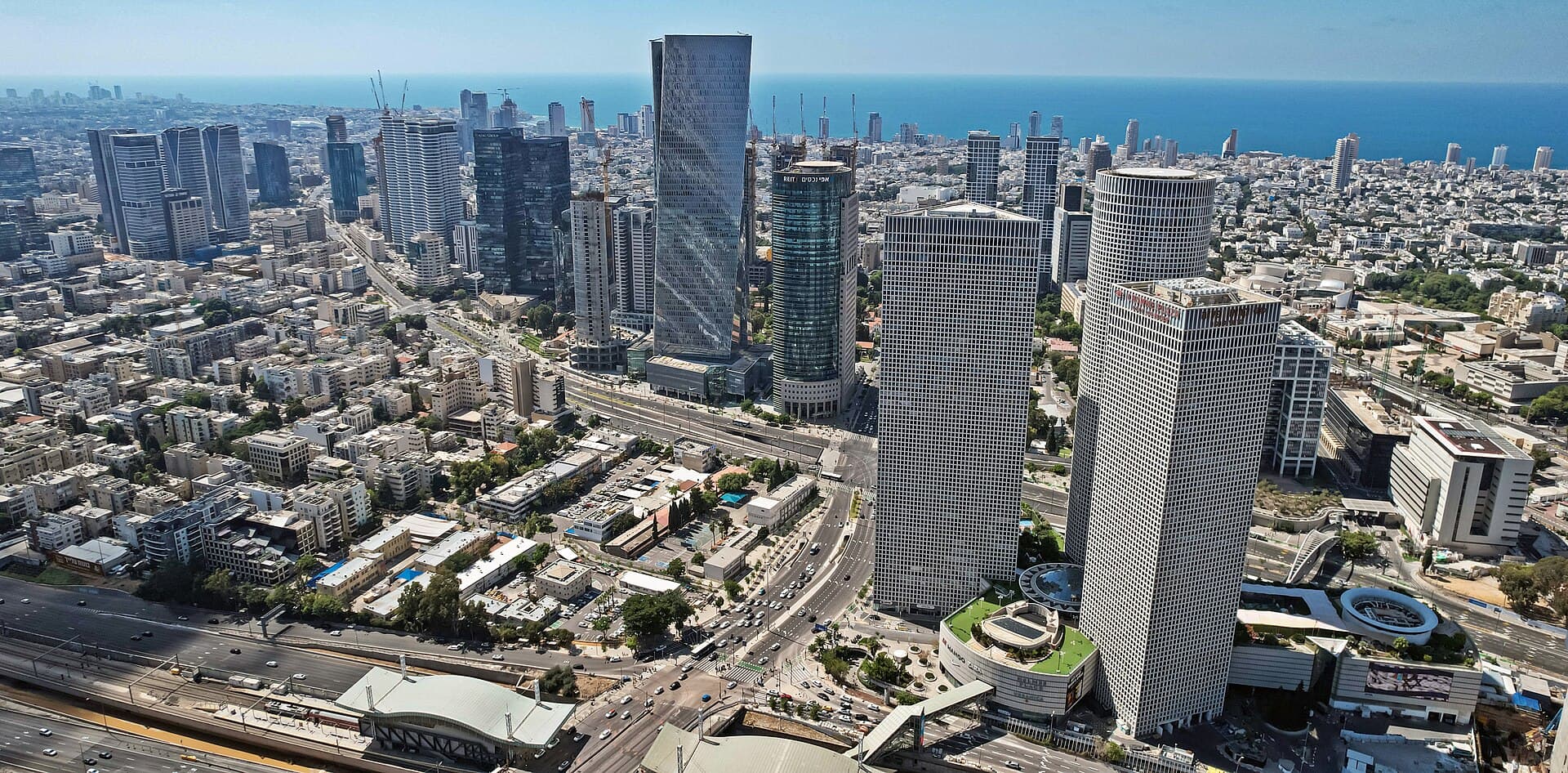 Ynhockey / CC BY-SA 4.0, via Wikimedia Commons
“Where ancient sands meet modern dreams, and the Mediterranean offers a constant reinvention.”
Not the postcards. The stories even locals don't know — whispered in your ear, right where they happened.
Beneath the busy platforms of Tel Aviv's sprawling central bus station, a surprising secret awaits.
The ancient port of Jaffa, a place of biblical importance, holds a direct connection to a legendary figure of Greek mythology.
As you walk along Rothschild Boulevard, appreciating the Bauhaus architecture, you might overlook a subtle acknowledgment of the city's unique beginnings.
Discover every secret of Tel Aviv
Every address, every reveal in full — in your ear, right where it happened.
You pick your stops. You walk. The voice reveals what the others miss.
No tours available yet. Check back soon — we're preparing them.
Tel Aviv-Yafo, frequently called Tel Aviv, is a metropolis on Israel's Mediterranean coast. It is a city that gracefully combines ancient history with a contemporary sensibility. From its origins as a small Jewish neighborhood established in 1909, Tel Aviv has quickly become a global high-tech center and a cultural capital.
Known as "the Non-Stop City" for its dynamic atmosphere and lively nightlife, Tel Aviv offers a diverse array of experiences. It is a place where you can explore ancient archaeological sites in Jaffa in the morning and enjoy a flourishing startup scene or world-class dining in the evening. The city's distinct character is a testament to its continuous reinvention and its embrace of both tradition and innovation.
Tel Aviv is also recognized for its Bauhaus architecture, earning it the designation "the White City." This architectural style, introduced by German Jewish architects in the 1930s, is a significant part of the city's identity and is acknowledged as a UNESCO World Heritage Site.
## From Sand Dunes to a Modern City Tel Aviv's modern story began on April 11, 1909, when a group of sixty Jewish families gathered on the sand dunes north of Jaffa to establish a new neighborhood called Ahuzat Bayit. Their aim was to create a modern Hebrew city, distinct from the crowded, traditional neighborhoods of Jaffa. To fairly divide the land, they conducted a lottery using 66 grey and 66 white seashells, with names on one set and plot numbers on the other. A year later, the name was changed to Tel Aviv, a name that combines the Hebrew words for "ancient mound" (tel) and "spring" (aviv), symbolizing both ancient history and new beginnings.
## The White City Emerges The city experienced rapid expansion, particularly during the Fifth Aliyah (1929–1939), when Jewish immigrants, many from Germany, sought refuge from Nazi persecution. This influx brought with it a significant architectural influence: the Bauhaus style. German-Jewish architects, many trained at the Bauhaus school, adapted the modernist principles to Tel Aviv's climate and culture. Between the 1930s and 1950s, over 4,000 Bauhaus-style buildings were constructed, creating what is now known as the "White City," the largest concentration of Bauhaus architecture in the world. This architectural ensemble was designated a UNESCO World Heritage Site in 2003.
## A Center of Independence and Innovation Tel Aviv quickly became the economic, cultural, and political center for the Jewish population in Palestine. In 1934, it was officially declared a city, and Meir Dizengoff became its first mayor. In 1948, David Ben-Gurion declared Israel's independence in Tel Aviv's Independence Hall. The city served as the temporary capital until 1967. In 1950, Tel Aviv formally merged with the ancient city of Jaffa, forming Tel Aviv-Yafo. Today, Tel Aviv continues to be a global high-tech center, often referred to as "Silicon Wadi," attracting entrepreneurs and fostering innovation.
Begin your exploration in Old Jaffa, an ancient port city with a history spanning thousands of years. Walk through its narrow, winding lanes, discover art galleries, and enjoy views of the Mediterranean. Do not miss Kikar Kdumim Square with St. Peter's Church and the old Port of Jaffa. Nearby, the Jaffa Flea Market (Shuk Hapishpeshim) offers a search for antiques, jewelry, and handicrafts.
For a look into Tel Aviv's modern architectural heritage, explore the White City. Walk along Rothschild Boulevard, Bialik Street, and Dizengoff Square to appreciate the thousands of Bauhaus-style buildings that earned the city its UNESCO World Heritage status. Visit Independence Hall on Rothschild Boulevard, where Israel's Declaration of Independence was signed.
Enjoy the city's outdoor lifestyle along the Tayalet (promenade), which extends for miles along the coastline, providing access to numerous beaches like Frishman Beach and opportunities for walking, biking, and observing people. For a quieter escape, the appealing neighborhood of Neve Tzedek, Tel Aviv's first Jewish neighborhood outside Jaffa, features picturesque streets, artist boutiques, and gardens. The Carmel Market (Shuk HaCarmel) is a busy open-air market where you can sample local delicacies and find fresh produce, spices, and clothing.
The best times to visit Tel Aviv are during the spring (March-April) and autumn (September-November). During these months, temperatures are mild and pleasant, ranging from the mid-60s to low 80s Fahrenheit (15-27°C), ideal for exploring the city and enjoying the beaches without the intense summer heat. While summer (May-August) is popular for beach activities, it can be very hot and humid, with temperatures often reaching the mid-80s to mid-90s Fahrenheit (30-35°C). Winter (December-February) is mild, with average highs around 63-66°F (17-19°C), but it is also the rainy season.
Tel Aviv is a city well-suited for exploration on foot or by bike, with over 140 km of bicycle lanes. Bike-sharing stations are widely available. Public transportation includes buses, and a light rail system is also being developed. Taxis are another convenient option for navigating the city. The official currency is the Israeli New Shekel (ILS). While English is commonly spoken, especially by younger generations, knowing a few basic Hebrew phrases can be appreciated. Tel Aviv is known for being a relatively expensive city, so plan your budget accordingly for accommodation, dining, and activities. Many restaurants and cafes cater to a variety of dietary needs, with a notable presence of vegan and vegetarian options.