Tangier American Legation
The first property acquired by the U.S. government on foreign soil was not in Europe or Asia, but in a North African city.
Full story unlocks in the tour
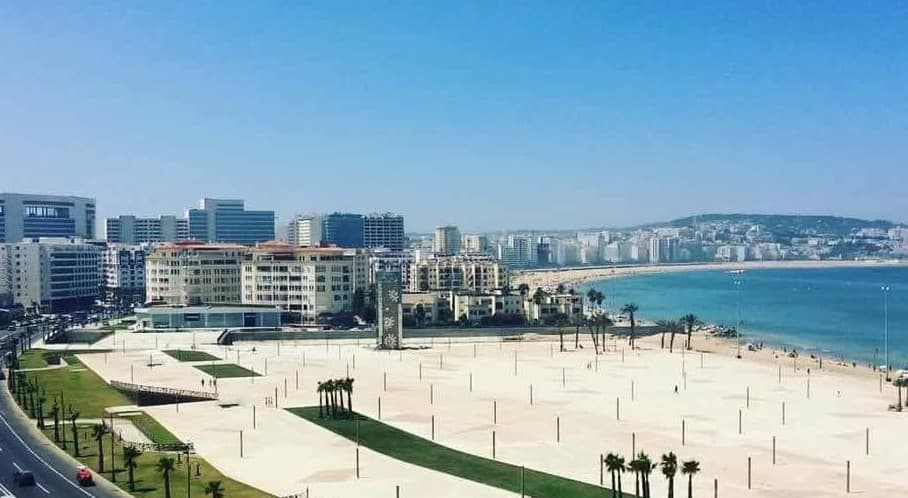 Ifni95 / CC BY-SA 4.0, via Wikimedia Commons
“Where the Atlantic greets the Mediterranean, and history unfolds through every alley.”
Not the postcards. The stories even locals don't know — whispered in your ear, right where they happened.
The first property acquired by the U.S. government on foreign soil was not in Europe or Asia, but in a North African city.
A lively market square in Tangier holds a story tied to Morocco's fight for independence, a narrative not immediately apparent amidst the daily commerce.
This seemingly ordinary café was a regular gathering place for a legendary group of writers and artists, influencing some of the 20th century's most impactful works.
Discover every secret of Tanger
Every address, every reveal in full — in your ear, right where it happened.
You pick your stops. You walk. The voice reveals what the others miss.
No tours available yet. Check back soon — we're preparing them.
Tangier, a city at the crossroads of continents, presents a singular blend of cultures where the Mediterranean Sea meets the Atlantic Ocean. Its strategic location on the Strait of Gibraltar has shaped its identity for over 2,500 years, making it a gateway between Europe and Africa. Once a bohemian sanctuary for writers, artists, and spies, Tangier today combines ancient heritage with a cosmopolitan energy.
Known as "the white city" for its immaculate white houses, Tangier's landscape features a mix of historical monuments and modern developments. From its intricate medina to its wide boulevards, the city offers a dynamic array of sights, sounds, and experiences. Tangier continues to undergo rapid modernization, with new tourism projects and infrastructure, yet retains its distinctive character.
## Ancient Origins and Shifting Powers Tangier's history extends back to the 5th century BC, when Carthaginian settlers established it. The city also held significance for the Berber people, bearing the name of a Berber god, Tinjis. Over centuries, it served as a Phoenician trading post, a Greek port, and later a Roman port, then known as Tingis. After five centuries of Roman governance, Tangier saw occupations by the Vandals and the Byzantine Empire before the arrival of the Arabs in the 7th century, ushering in a period of flourishing learning and commerce.
## European Influence and the International Zone In 1471, the Portuguese captured Tangier, followed by a period of Spanish rule. In 1662, it was given to the English crown as a wedding gift for King Charles II, a period during which it was known as 'English Tangier' until its abandonment to the Sultan of Morocco in 1684. By the 19th century, Tangier became the diplomatic capital of Morocco, drawing considerable British trade and political influence. A unique chapter in its history began in 1923 when Tangier was declared an International Zone, governed by a committee of multiple nations. This era transformed Tangier into a convergence of diplomats, spies, writers, and artists, fostering a reputation for its lively, sometimes illicit, activities.
## Post-Independence and Modern Development The International Zone status concluded with Moroccan independence, and Tangier was reintegrated into Morocco in 1956. Since then, the city has undergone significant development and modernization. Today, Tangier is a crucial port and trade center, with excellent road and rail connections to other major Moroccan cities, an international airport, and regular shipping services to Europe. It is Morocco's second most important industrial center after Casablanca, with diversified industrial sectors and a strong reliance on tourism.
Begin your exploration in the Medina, Tangier's historic walled old town. Unlike the medinas of Fes or Marrakech, Tangier's is compact and navigable, offering a rich atmosphere of discovery. Enter through the Bab el-Fahs gate from the Grand Socco and wander through narrow streets lined with shops selling jewelry, spices, and leather goods.
The Kasbah, a former fortress, offers expansive views of the Strait of Gibraltar and the rooftops of the medina. Within the Kasbah, explore the Kasbah Museum, housed in a former sultan's palace, which displays Moroccan art and archaeological remains from Roman cities.
At the heart of the city lies the Grand Socco (officially Place du 9 Avril 1947), a lively quasi-circular square that acts as a passage between the old medina and the newer parts of town. Here, you'll find the Sidi Bou Abid Mosque with its distinctive polychrome minaret. Nearby, the Cinema Rif stands as a cultural landmark, offering a café and screening a range of films.
For a taste of Tangier's artistic past, visit the Gran Café de Paris, a historic establishment frequented by renowned writers. Just outside the city, the Caves of Hercules are a popular natural attraction with a sea opening shaped like the map of Africa. Close by, Cap Spartel marks the meeting point of the Atlantic Ocean and the Mediterranean Sea.
The best times to visit Tangier are during the spring (March to May) and autumn (September to November). During these shoulder seasons, temperatures are mild and comfortable, ranging from 15°C to 25°C (59°F to 77°F), ideal for exploring the city's attractions without the intense summer heat. These periods also see fewer tourist crowds compared to the peak summer months, and accommodation prices are generally more reasonable. While summer (June to August) offers warm, sunny weather suitable for beaches, it also brings the highest concentration of visitors and higher prices.
Tangier is generally considered safe for tourists, but it's always wise to be aware of your surroundings, especially in crowded areas like markets and public squares, to guard against petty crime such as pickpocketing. It's advisable to carry cash for souks, taxis, and small vendors, as cards are more commonly accepted at hotels and larger restaurants. The official currency is the Moroccan Dirham (MAD). Darija Arabic and French are widely spoken, and Spanish is common due to the city's proximity to Spain; English is increasingly understood in tourist areas.
For getting around, the medina is best explored on foot. Petit taxis are available for longer distances, but it's good to note they typically take up to three passengers and may not use meters for inter-city travel. For day trips outside the city, car rentals offer flexibility. Most major passport holders (US, EU, UK, Canadian, Australian) can enter Morocco visa-free for 90 days, but ensure your passport has at least six months of validity remaining.