Observe the cobblestones in Žižka Square, and you might discern a recurring emblem. It is more than mere ornamentation; it is a silent affirmation of the town's foundational ideals.
Rudolf Kukačka=cs:User:Táborák=commons:User:Ruda / Public domain, via Wikimedia CommonsTábor
“Where medieval defiance echoes through ancient passages and sun-dappled squares.”
Tábor, as no one tells it.
Not the postcards. The stories even locals don't know — whispered in your ear, right where they happened.
Beneath Tábor's brightly painted houses lies a network of subterranean passages, initially constructed for practical ends. Yet, lore suggests they once concealed something far more extraordinary than stored provisions or a refuge from fire.
This formidable tower, a remnant of Tábor's original castle, affords expansive views. However, its evolution over centuries discloses a surprising shift in its primary purpose.
Discover every secret of Tábor
Every address, every reveal in full — in your ear, right where it happened.
You pick your stops. You walk. The voice reveals what the others miss.
How long do you have in Tábor?
No tours available yet. Check back soon — we're preparing them.
The story of Tábor
Tábor, a city in the South Bohemian Region of the Czech Republic, stands as a tangible monument to a pivotal era in Czech history. Established in 1420 by radical adherents of the Bohemian religious reformer Jan Hus, it became the bulwark of the Hussites, a Protestant reform movement that predated Martin Luther by a century. The town was named after the biblical Mount Tabor in Galilee, symbolizing a 'new Jerusalem' for its founders. Its historic core, a protected urban monument reservation, invites exploration with its well-preserved medieval architecture, winding lanes, and a palpable sense of its defiant past.
Positioned on a hill above the Lužnice River, Tábor's strategic location offered natural protection, further strengthened by its robust fortifications. Today, with a population of approximately 34,000, Tábor harmonizes its medieval charm with a spirited atmosphere, serving as a cultural hub that hosts festivals commemorating its Hussite origins. It is an ideal destination for those seeking to delve into a profound historical narrative while savoring the scenic South Bohemian countryside.
The Hussite Stronghold
Tábor's narrative commences in 1420, when it was founded by Petr Hromádka of Jistebnice and other radical Hussites, who became known as the Taborites. These followers of Jan Hus, a religious reformer executed for his beliefs, sought to forge a new commonwealth governed by divine law, rejecting human statutes and advocating for social and economic parity. The town swiftly became the military and spiritual heart of the Hussite movement, serving as a base for their triumphant campaigns during the Hussite Wars (1419–1434).
Jan Žižka, a legendary one-eyed general, commanded the Taborite forces, achieving remarkable victories against numerically superior Catholic armies. His innovative military strategies, including the deployment of mobile artillery, were centuries ahead of their time. The town's design, with its intricate, narrow streets fanning out from Žižka Square, was deliberately conceived to impede enemy ingress. Tábor was granted royal city status in 1437, gaining considerable autonomy.
However, Tábor's fortunes diminished in the 16th and 17th centuries. In 1547, the town faced punitive measures from King Ferdinand I for refusing military assistance, resulting in the confiscation of lands and assets. The Thirty Years' War (1618–1648) brought further desolation, with the city being plundered by both Austrian and Swedish forces. Despite these challenges, Tábor experienced a period of reconstruction and eventually emerged as a center for the Czech National Revival in the late 18th and early 19th centuries, reigniting interest in Czech culture, history, and language under Habsburg dominion.
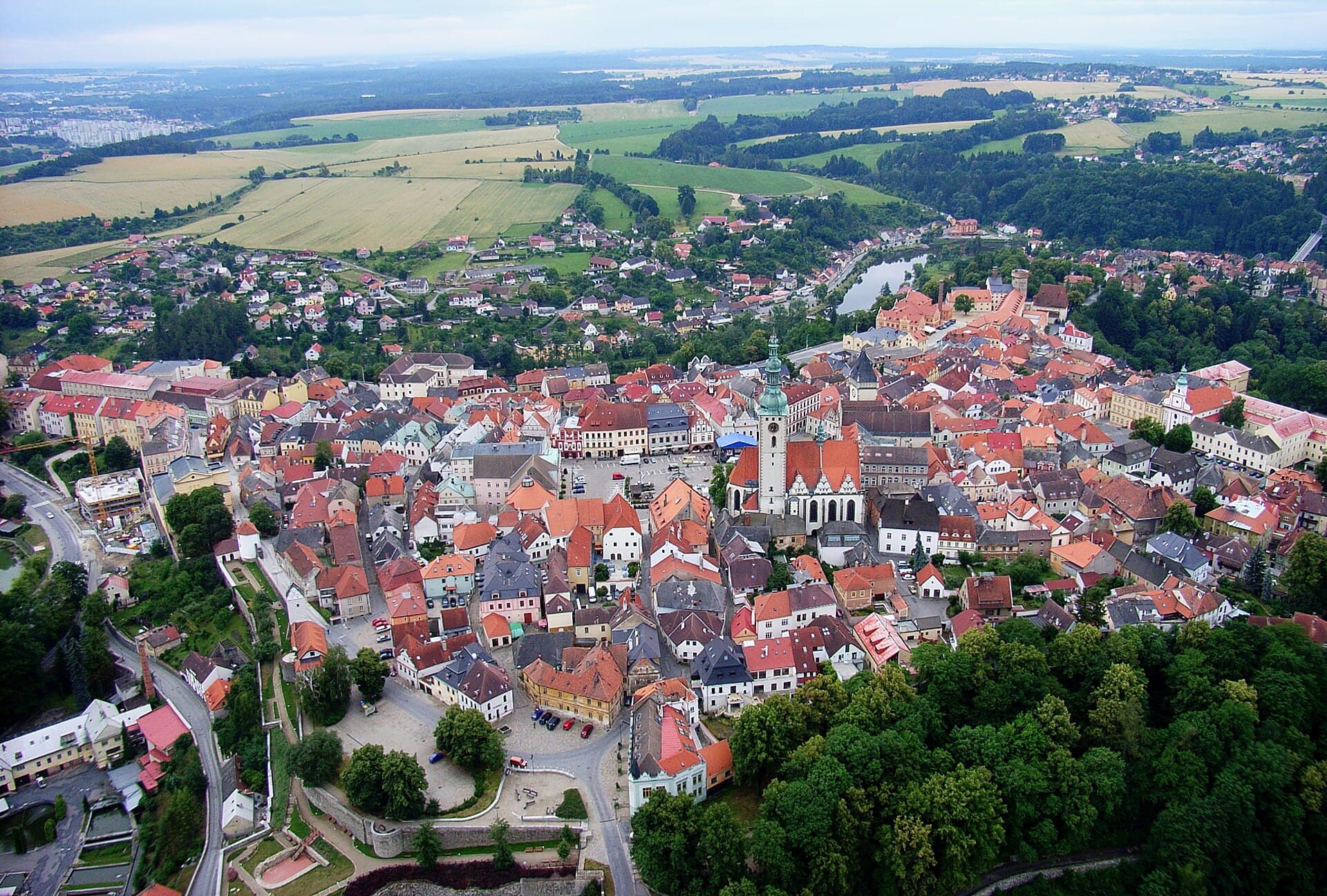
Begin your journey at Žižka Square (Žižkovo náměstí), the pulse of Tábor's Old Town. This central plaza is encircled by historic structures, including the late-Gothic Old Town Hall, which houses the Hussite Museum. The museum offers perspectives into the Hussite movement and provides entry to the intriguing underground tunnels.
Descend into the Tábor Underground, a network of 15th-century cellars and passages that once served as storage for provisions and a sanctuary during assaults and conflagrations. Approximately 500 meters of these tunnels are open to the public, offering an evocative yet captivating expedition beneath the town.
For expansive views of Tábor, the Lužnice River, and the surrounding terrain, ascend Kotnov Tower, the sole remaining tower of the original castle. Adjacent to the tower is the Bechyně Gate, which presents an exhibition on medieval life.
Stroll the narrow, winding lanes of the Old Town, admiring the varied architectural styles of the burgher houses, from Gothic to Renaissance. A brief walk from the Old Town Square leads to the Klokoty Monastery, an important pilgrimage destination. Do not overlook the Jordán Reservoir, Central Europe's oldest dam, constructed in 1492, which now functions as a recreational expanse with a waterfall.
Tábor is a destination that can be appreciated throughout the year, with each season presenting a distinct encounter. The most favored time to visit is during the summer months, from June to August, when the weather is mild and days are extended, though the town may be more populated, particularly on weekends. Spring (March-May) and autumn (September-October) are also excellent choices, with agreeable weather, fewer crowds, and various festivals. Notably, the Tábor Meetings (Táborská setkání), a renowned medieval festival featuring historical reenactments, occurs on the second weekend of September, offering a singular cultural experience. Winters are cold and often tranquil, but major attractions remain accessible, albeit with reduced hours.
Tábor is approximately 90 km (56 miles) south of Prague and readily accessible by train or bus, with journeys lasting about 1 to 1.5 hours. The train and bus stations are about a 15-20 minute walk from the Old Town center, with a pleasant path alongside the Jordán Reservoir as an alternative route. The historic center is compact and best explored on foot, so comfortable walking shoes are advised for the ancient lanes.
Parking in Tábor's center can be challenging if arriving by car. The local Tourist Information Center on Žižka Square provides maps, counsel, and details on lodging and dining. While the Hussite Museum is undergoing refurbishment, the underground tunnels and Gothic Town Hall remain accessible. Many establishments accept credit cards, but carrying some Czech Koruna (CZK) for smaller purchases is always a prudent choice.
- What is Tábor known for?
- Tábor is primarily recognized for its pivotal role in the Hussite Wars as a 15th-century Hussite stronghold, its colorful medieval architecture, and its extensive network of underground tunnels. It is also acknowledged for Jordán Lake, one of Central Europe's oldest reservoirs.
- How much time should I allocate for visiting Tábor?
- Most visitors can experience the main points of interest in Tábor, including the Old Town, Hussite Museum, and Jordán Lake, in a single day. However, spending one or two nights allows for a more thorough exploration of nearby parks and the Klokoty Monastery.
- Are the underground tunnels accessible?
- Yes, a section of Tábor's underground tunnels, approximately 500 meters long, is accessible to the public. The entrance is typically through the Old Town Hall, which also houses the Hussite Museum.
- What is the best way to get around Tábor?
- The town's historic center is very walkable, with most sights within easy reach of Žižka Square. Exploring on foot is the best way to experience its narrow, ancient lanes. Public transport or a car might be useful for sights slightly outside the historical core.
- Is Tábor a good day trip from Prague?
- Yes, Tábor is considered an excellent day trip from Prague. It is about 90 km south of Prague, with trains and buses taking roughly 1 to 1.5 hours.
- What is the Tábor Meetings festival?
- The Tábor Meetings (Táborská setkání) is an international medieval festival held annually in September. It features historical reenactments, parades, music, and jousting, celebrating the town's Hussite heritage.